Maa Shailputri AI Photo Prompts: 1st Day Navratri Prompts
G
By Gulshan Aggarwal·
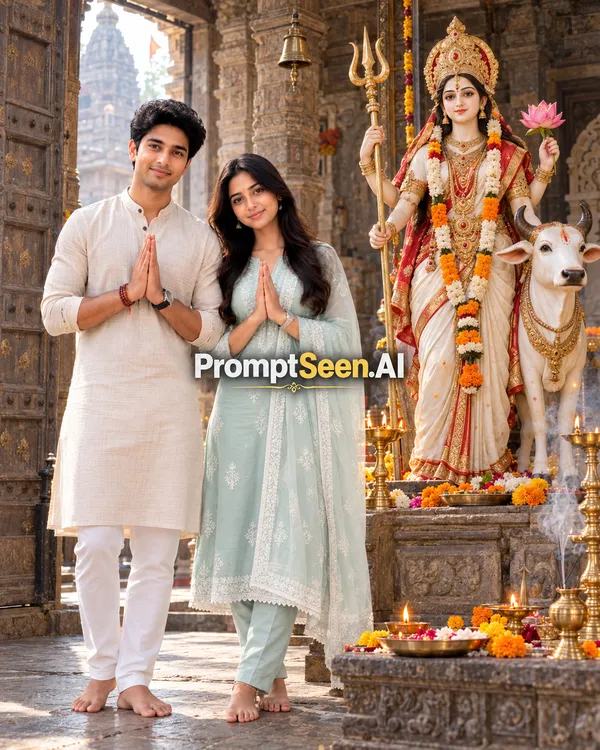
1. Maa Shailputri Darshan at an Ancient Temple
Begin the auspicious 1st day of navratri with a serene heritage portrait. This Maa Shailputri photo prompt places you inside an ancient carved sandstone temple complex during early-morning darshan, surrounded by burning brass diyas and marigold flowers.
Use the uploaded photo of the person as the reference for the person in the scene. Create a highly realistic, natural documentary-style photograph showing the person standing respectfully beside Maa Shailputri inside an authentic ancient Indian temple complex during darshan. Keep the person’s natural appearance and original facial features consistent with the uploaded photo.
The location should feel like a genuinely old heritage temple, with aged sandstone flooring, weathered carved pillars, traditional stone walls, wooden temple doors and subtle signs of real age. Maa Shailputri should appear in a graceful traditional devotional form, standing naturally beside the person with a calm and serene expression, carrying a trishul and lotus.
Scene & atmosphere: peaceful early-morning temple surroundings, a few real brass diyas burning near the stone steps, naturally placed marigold and white flowers, a small traditional पूजा थाली, subtle incense smoke in the background, and soft sunlight entering through the temple entrance. Keep the decorations tasteful and realistic rather than excessive.
Color theme: natural sandstone beige, muted cream, soft marigold yellow, earthy brown and subtle saffron accents. Use authentic colors found in an old Indian temple. Avoid neon colors, excessive saturation, purple lighting, artificial golden glow or dramatic fantasy colors.
Photography: candid full-body environmental portrait, natural standing posture, eye-level camera angle, 50mm documentary photography, realistic depth of field, soft directional morning sunlight, natural shadows, authentic skin texture, realistic fabric details and subtle photographic grain.
The final result must look like an actual photograph taken inside a real ancient Indian temple, with natural imperfections, believable lighting, realistic architecture and genuine photographic depth. It should not look AI-generated, digitally painted or like a fantasy poster. Avoid excessive HDR, plastic-looking skin, artificial glow, unrealistic bokeh, distorted hands, extra fingers, duplicated objects or overly perfect symmetry.
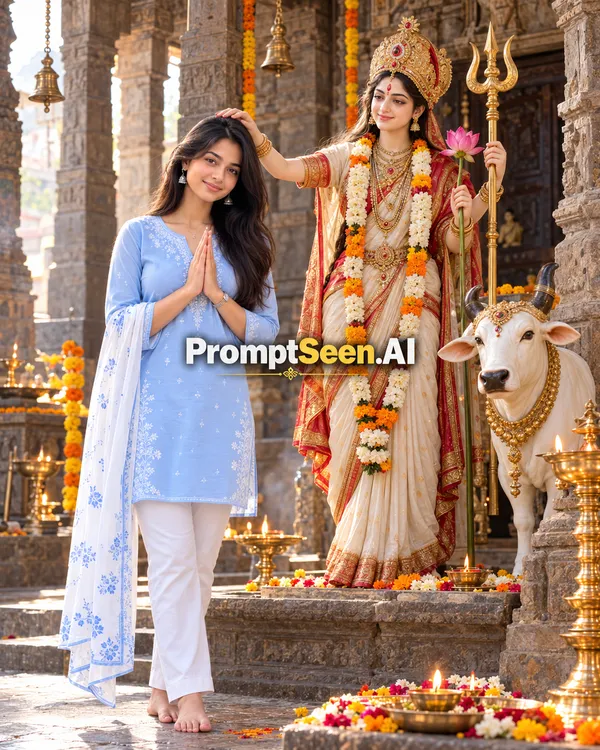
2. Maa Shailputri Blessing – Authentic Temple Darshan
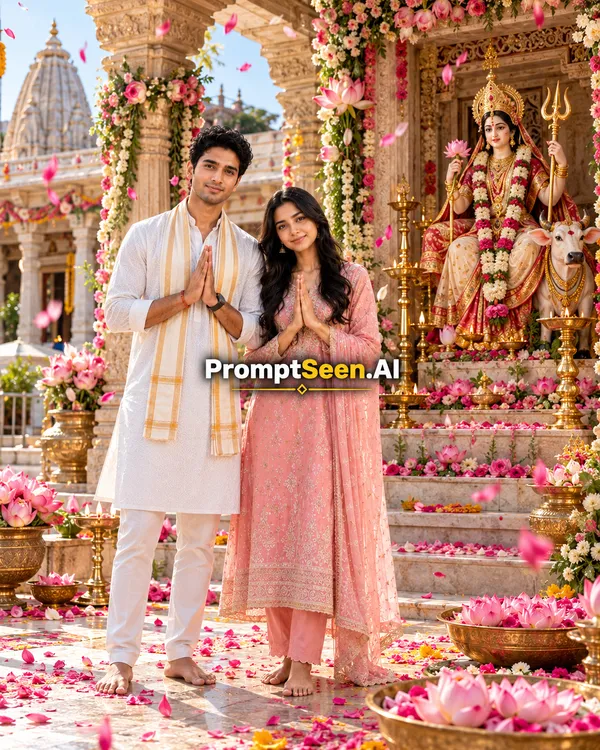
Experience divine grace with this Maa Shailputri AI photo prompt. It captures a deeply peaceful moment where Maa Shailputri gently raises her hand in blessing as you stand with folded hands inside a weathered heritage stone temple.
Use the uploaded person’s photo as the identity reference and place the person naturally in the scene. Preserve the person’s original facial identity and natural appearance exactly as shown in the uploaded photo. Create a highly realistic devotional photograph in which Maa Shailputri is gently blessing the person with her raised hand while the person stands respectfully with folded hands.
Set the scene inside a real-looking old Indian temple with aged sandstone walls, naturally weathered carved pillars, traditional stone flooring and an authentic heritage architecture. Avoid creating a grand fantasy temple; the location should feel like a genuine temple that could actually be photographed.
Maa Shailputri should have a dignified traditional appearance with a trishul and lotus, subtle traditional jewelry and naturally detailed fabric. Her expression should be peaceful and compassionate. Keep the divine portrayal respectful and grounded in realistic human photography.
The temple should have a few brass diyas placed naturally around the prayer area, fresh marigold and white flowers arranged around the entrance and nearby pillars, a simple पूजा थाली and a very subtle amount of incense smoke. Include small imperfections such as slightly uneven stone surfaces and naturally scattered flower petals to make the location feel genuinely photographed.
Color theme: warm natural sandstone, ivory cream, muted saffron, marigold yellow and soft earthy brown. Use gentle warm sunlight entering through an old temple doorway instead of an artificial glowing background. Avoid neon colors, excessive red, purple tones, extreme orange, oversaturation or fantasy-colored lighting.
Camera & composition: natural eye-level documentary photography, medium-wide environmental portrait, both the person and Maa Shailputri clearly visible, realistic body proportions, natural interaction and believable distance between them, 50mm lens look, subtle background depth, realistic shadows, authentic skin texture, natural fabric details and slight photographic grain.
The final image must look like a real photograph captured by a professional photographer inside an actual Indian heritage temple, not an AI-generated image, digital painting, fantasy artwork or overly polished devotional poster. Avoid excessive HDR, artificial skin smoothing, unrealistic glow, perfect symmetry, artificial bokeh, distorted hands, extra fingers, duplicated objects or unnatural poses.
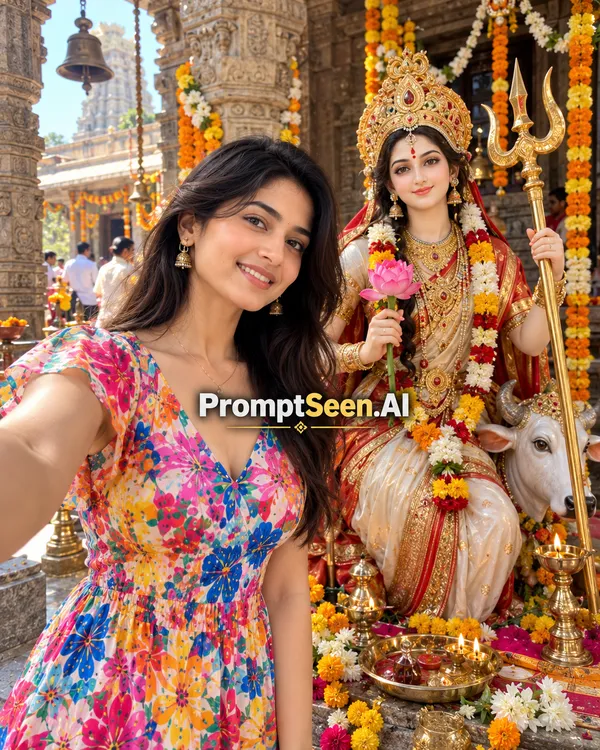
3. Maa Shailputri Temple Selfie — Natural Navratri Darshan
Looking for a spontaneous navratri pic for your social media status? This Maa Shailputri Gemini prompt creates a natural, handheld smartphone selfie inside a traditional temple courtyard while keeping your original face 100% recognizable.
Use the uploaded photo of the person as the identity reference. Preserve the person’s original facial identity, natural skin texture, hairstyle and overall appearance accurately. Do not unnecessarily change the person’s face or recognizable features.
Create a highly realistic smartphone selfie photograph of the person standing naturally beside Maa Shailputri during Navratri darshan. The person is holding a smartphone at a natural arm’s-length selfie angle, with a relaxed, genuine expression and a respectful posture. Maa Shailputri stands slightly beside and behind the person with a calm, compassionate expression, holding a trishul and lotus, portrayed in a dignified and traditional devotional form.
The selfie should feel like a real spontaneous photograph taken by a visitor inside an actual old Indian temple, not a staged studio portrait. Keep the interaction natural, with believable distance, realistic body proportions and authentic facial expressions.
Location: an authentic heritage temple courtyard with aged sandstone walls, weathered carved stone pillars, old wooden temple doors, traditional stone flooring and subtle signs of age. Include a naturally decorated Navratri prayer area in the background with modest marigold garlands, a few white flowers, brass diyas, a small पूजा थाली, temple bells and a few devotees softly visible in the distance. Decorations should look like they were genuinely arranged for a festival rather than digitally added.
Maa Shailputri styling: traditional ivory and muted saffron-red attire with tasteful gold jewelry, natural fabric folds, subtle floral garlands, trishul in one hand and lotus in the other. Her appearance should be graceful and devotional without exaggerated supernatural effects, glowing skin, fantasy aura or overly elaborate ornamentation.
Lighting & color: soft natural morning sunlight entering from one side of the temple courtyard, realistic ambient shadows and slightly warm daylight. Use a natural palette of aged sandstone beige, ivory, muted saffron, marigold yellow, earthy brown and small green accents. Avoid neon colors, excessive orange, strong red lighting, purple lighting, artificial golden glow or oversaturation.
Photography: authentic modern smartphone selfie, slightly wide-angle front-camera perspective, natural handheld framing, subtle smartphone lens characteristics, realistic exposure, natural highlights and shadows, genuine skin pores, fine hair strands, detailed fabric texture and slight real-world photographic imperfections. Keep the background naturally visible rather than heavily blurred. Include very subtle lens and exposure variation typical of an actual phone photograph.
Add “PromptSeen.AI” in a medium-size, clean and clearly readable style at the center of the image, integrated naturally as a watermark without covering the person’s face or Maa Shailputri’s face.
The final photograph must look like an authentic selfie captured by a real visitor during Navratri inside a genuine Indian heritage temple. It should feel candid, believable and naturally photographed rather than AI-generated, digitally painted or designed like a devotional poster.
Avoid: artificial HDR, plastic skin, excessive beauty retouching, fantasy glow, dramatic rays, unrealistic bokeh, perfect symmetry, duplicated people, distorted hands, extra fingers, malformed smartphone, unnatural facial expressions, floating objects, excessive decorations, overly polished CGI appearance or unrealistic temple architecture.
Aspect Ratio: 4:5
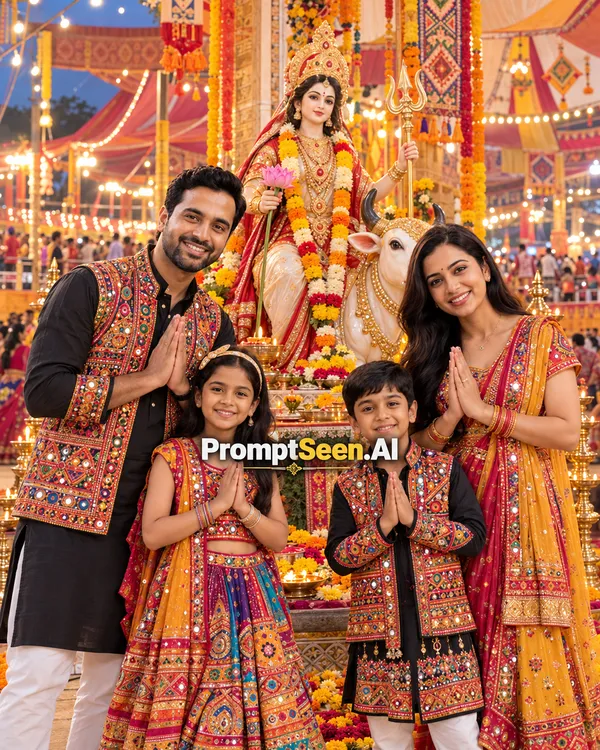
4. Maa Shailputri Idol at Grand Garba Pandal
Celebrate the festive spirit of Gujarat! This navratri prompt dresses you in traditional embroidered Garba attire while standing respectfully beside a handcrafted Maa Shailputri idol under a richly decorated evening pandal canopy.
Use the uploaded photo of the person as the identity reference. Preserve the person’s original facial identity, natural skin texture, hairstyle and recognizable appearance accurately. Do not unnecessarily alter the person’s facial features or overall appearance. Create a highly realistic professional Navratri festival photograph of the person standing respectfully beside a beautifully decorated Maa Shailputri idol installed inside a grand Garba pandal.
The person is wearing an authentic traditional Navratri outfit suitable for a real Gujarati Garba celebration, with detailed embroidery, subtle mirror work and natural fabric texture. The outfit should look elegant and naturally worn, with realistic folds and no overly perfect styling.
The Maa Shailputri statue should clearly look like a real handcrafted devotional idol made for a Navratri pandal, with carefully painted facial details, traditional ornaments, a trishul and lotus, and a decorated pedestal. It should have realistic handcrafted textures rather than looking like a digitally generated goddess. Keep the statue clearly identifiable as an idol, not a real person.
Location: a large authentic Gujarati Navratri Garba pandal at evening time. The background should include a beautifully constructed fabric canopy, traditional Gujarati textile patterns, handmade torans, subtle mirror-work decorations, marigold flower strings, decorative brass elements and a spacious Garba dance area. A few distant visitors and dancers can be naturally visible in the background, softly blurred.
Color theme: ivory, mustard yellow, earthy terracotta, warm red and muted teal accents, combined with natural warm-white decorative lights. Keep the palette festive but realistic and balanced. Avoid excessive purple, neon colors, artificial rainbow lighting or oversaturated colors.
Lighting: early evening ambient light mixed with warm practical lights from the pandal. The decorative bulbs should produce believable illumination on nearby surfaces rather than an artificial glowing aura. Include realistic shadows, gentle highlights on the idol’s ornaments and natural reflections from metallic decorations.
Camera & composition: vertical environmental portrait, approximately 50mm professional photography, eye-level perspective, person and Maa Shailputri idol clearly visible together, realistic proportions and natural distance between them. Keep the grand pandal architecture visible behind them while maintaining enough background depth to establish the festival location. Natural photographic grain, authentic skin tones, realistic fabric details and subtle lens imperfections.
The final image must look like a genuine photograph captured at a real Navratri Garba pandal by a professional photographer, not an AI-generated image, CGI render, digital painting or religious poster. Preserve realistic Indian festival architecture, believable lighting, natural crowd behavior and small imperfections in decorations. Avoid plastic skin, excessive HDR, artificial glow, unrealistic bokeh, distorted hands, extra fingers, duplicated people, warped idol features or unnaturally perfect decorations.
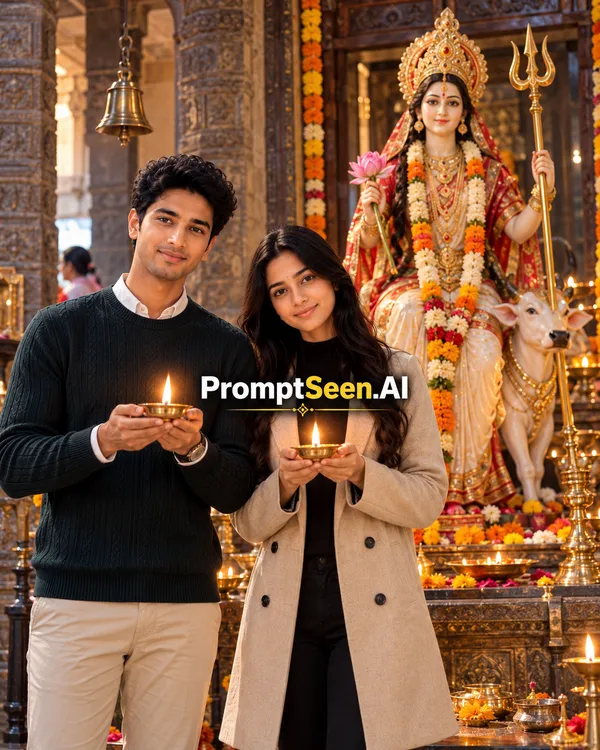
5. Maa Shailputri Deepak Darshan – Natural Temple Portrait
Hold a glowing brass diya in prayer. This Maa Shailputri photo editing prompt focuses on realistic warm firelight illuminating your hands and face inside a quiet, traditional sanctum during evening darshan.
Use the uploaded photo of the person as the identity reference. Preserve the person’s original facial identity, natural skin texture, hairstyle and recognizable appearance accurately, without unnecessary changes to their natural features. Create a highly realistic candid devotional portrait of the person standing respectfully in front of Maa Shailputri inside a peaceful traditional Indian temple, holding a single naturally burning brass diya in both hands.
Maa Shailputri should appear as a realistic handcrafted temple idol, not as a fantasy character or digitally generated human. The idol should have traditional devotional attire, subtle jewelry, a trishul and lotus, with authentic handcrafted surface details and natural imperfections visible in the paint and ornaments.
Location: a quiet old temple interior with aged stone walls, carved wooden details, slightly worn stone flooring and a simple sanctum area. Keep the setting believable and modest rather than making it look like an enormous fantasy temple. Add a few brass lamps and small flower offerings naturally placed around the shrine.
Main visual element: the warm flame of the diya should naturally illuminate the person’s hands and create a soft, realistic glow on the lower part of the face and clothing. The light should behave physically, with subtle highlights and gentle shadows rather than an artificial halo.
Color theme: warm ivory, aged sandstone, muted saffron, antique brass and natural brown tones, with small touches of marigold yellow. Keep the colors earthy and authentic. Avoid neon colors, excessive red, purple lighting, oversaturation or artificial golden effects.
Lighting & photography: photograph during a quiet evening darshan, combining the small warm diya flame with very subtle ambient temple lighting. Use a natural 85mm portrait-lens look, shallow but realistic depth of field, soft falloff into the background, accurate skin tones, visible fabric texture, realistic brass reflections and subtle photographic grain.
Composition: vertical portrait, waist-up framing, person positioned slightly to one side with Maa Shailputri clearly visible behind and slightly beside them. Keep the diya prominently visible between the camera and the person. The expression should be peaceful and naturally devotional, without an exaggerated smile or theatrical pose.
The final result must look like a genuine professional photograph taken inside a real Indian temple, with realistic light physics, authentic materials and natural imperfections. It must not look AI-generated, CGI, digitally painted or like a commercial devotional poster. Avoid plastic skin, excessive HDR, artificial glow, unrealistic bokeh, distorted hands, extra fingers, duplicated objects, warped idol details or perfectly symmetrical decorations.
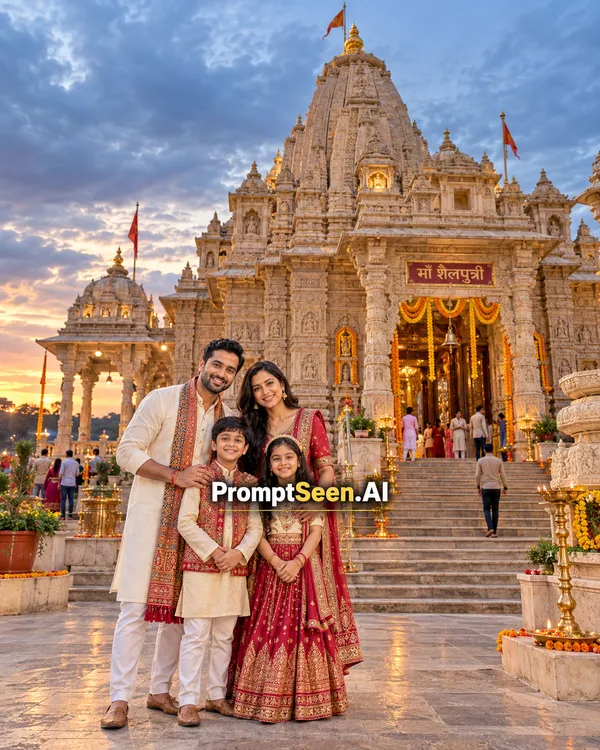
6. Maa Shailputri Temple Grandeur – Authentic Full-Body Portrait
Capture the majestic scale of North Indian temple architecture. This Maa Shailputri AI photo prompt frames your full-body portrait several meters in front of a towering pale sandstone shikhara under a dramatic evening monsoon sky.
Use the uploaded photo of the person as the primary identity reference. Preserve the person’s original facial identity, natural skin texture, hairstyle and recognizable appearance accurately. Do not unnecessarily alter or add personal facial features. Create a highly realistic full-body environmental photograph of the person standing respectfully in front of a magnificent temple dedicated to Maa Shailputri.
Location: a grand North Indian heritage-style temple complex built from pale cream and warm beige sandstone, with a tall traditional shikhara, intricately carved entrance arches, broad stone steps, stone jali work and subtle brass temple bells. The architecture should have realistic weathering, tiny surface imperfections and natural variations in stone so it feels like a genuine historic location rather than a computer-generated structure.
The temple should be the main visual subject and must be completely visible within the frame, from the lower entrance steps to the top of the main shikhara. The person should stand several meters in front of the entrance so their full body is clearly visible while the enormous scale of the temple remains obvious.
Composition: vertical full-body architectural portrait, wide environmental framing, camera positioned at a natural human eye level with a moderate distance from the subject. Use a realistic 28–35mm lens perspective with carefully controlled vertical lines so the temple does not look distorted. Keep sufficient sky above the shikhara and enough foreground stone courtyard below the person.
Temple surroundings: a spacious stone courtyard, a few naturally placed marigold garlands near the entrance, small brass diyas on the steps, traditional flags moving gently in the breeze and a small number of distant visitors softly visible. Keep the environment authentic and uncluttered.
Color theme: pale sandstone, warm ivory, muted terracotta, earthy brown and restrained saffron details. Add subtle cool blue-gray tones from the evening sky for natural contrast. Avoid neon colors, excessive orange, purple lighting, artificial golden glow or oversaturated colors.
Sky & lighting: dramatic natural evening sky with layered monsoon clouds, soft blue-gray atmosphere and a narrow warm band of sunlight near the horizon. Use realistic late-evening directional light across the temple façade and person, with naturally occurring shadows and gentle highlights. No artificial halo or fantasy lighting.
Photography style: premium architectural travel photography combined with authentic documentary portraiture, realistic dynamic range, natural skin tones, detailed stone textures, genuine fabric texture, subtle atmospheric haze and fine photographic grain. The image should feel captured with a professional full-frame camera and a high-quality wide-angle lens.
The final photograph must look completely authentic and naturally photographed at a real Indian temple, not AI-generated, CGI, digitally painted or like a promotional religious poster. Preserve believable scale, perspective, human proportions and physical lighting. Avoid excessive HDR, artificial sharpness, plastic skin, fake lens flare, unrealistic bokeh, distorted architecture, warped temple details, duplicated people, distorted hands or feet, extra fingers or overly perfect surfaces.
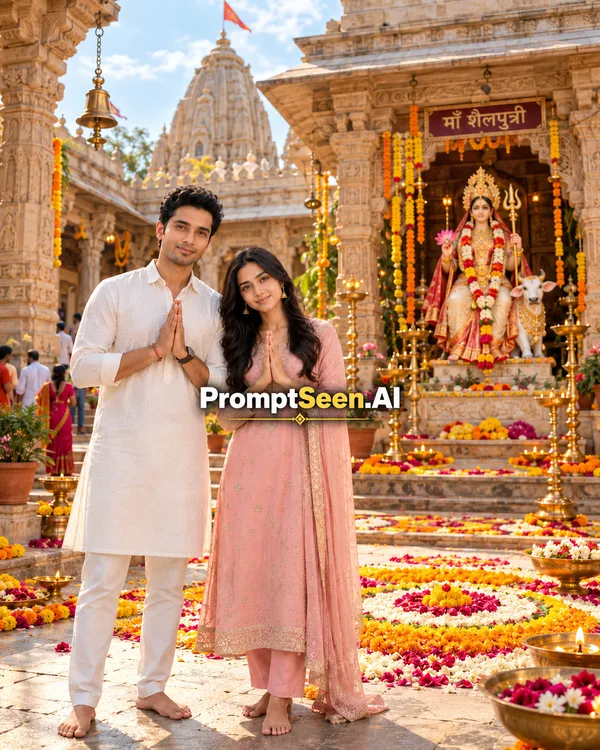
7. Maa Shailputri Temple Courtyard – Traditional Flower Rangoli
Bring vibrant festive colors to your navratri background. This template sets you inside an open sandstone courtyard decorated with handcrafted marigold and jasmine flower petal rangolis in front of a Maa Shailputri shrine.
Use the uploaded photo of the person as the primary identity reference. Preserve the person’s original facial identity, natural skin texture, hairstyle and recognizable appearance accurately. Do not unnecessarily alter or add personal facial features. Create a highly realistic full-body devotional environmental photograph of the person standing respectfully in the open courtyard of a magnificent Maa Shailputri temple.
The setting should be a realistic traditional Indian temple courtyard, surrounded by carved sandstone columns, aged cream-colored walls, wooden temple doors and a partially visible traditional shikhara in the background. The architecture should have authentic stone textures, subtle weathering and small natural imperfections, avoiding an overly perfect or fantasy appearance.
Main visual element — Flower Courtyard: Cover selected areas of the courtyard with naturally arranged fresh flowers in marigold yellow, white jasmine, soft pink and red tones. Create several traditional phoolon ki rangoli patterns directly on the stone floor using real flower petals. The designs should have handcrafted irregularities, varying petal sizes and natural gaps rather than perfectly computer-generated symmetry.
Place a beautifully crafted Maa Shailputri temple idol at the far side of the courtyard on a modest decorated platform. The idol should look like a real handcrafted devotional statue with authentic painted details, traditional clothing, ornaments, trishul and lotus. It must clearly appear as a physical temple idol, not a digitally generated human.
Person & composition: Show the person completely from head to feet, standing naturally beside the flower decorations while respectfully facing toward the Maa Shailputri shrine. Use a slightly wide environmental composition that gives equal importance to the person, colorful flower patterns and the spacious temple architecture.
Color theme: natural marigold yellow, jasmine white, muted rose pink, traditional red, warm sandstone beige and earthy brown. Balance the colorful flowers with the neutral stone architecture. Avoid neon colors, excessive saturation, purple-heavy palettes or artificial rainbow effects.
Lighting: soft late-afternoon sunlight entering diagonally into the courtyard, creating natural highlights on the flower petals and gentle shadows across the stone floor. Add a few small brass diyas near the shrine with subtle real flames. The lighting should feel like an authentic photograph taken during an actual temple visit.
Photography: premium Indian heritage travel photography, full-body environmental portrait, realistic 35mm lens perspective, natural depth of field, accurate skin tones, detailed flower petals, realistic stone texture, subtle atmospheric depth and fine photographic grain. Keep the camera at approximately eye level and avoid an exaggerated cinematic perspective.
The final result must look like a genuine photograph taken inside a real Indian temple courtyard, with naturally arranged flowers, authentic architecture and physically believable lighting. It must not look AI-generated, CGI, digitally painted or like a devotional poster. Avoid plastic skin, excessive HDR, artificial glow, perfect geometric flower patterns, unrealistic bokeh, distorted hands or feet, extra fingers, duplicated flowers, warped architecture or unnaturally flawless surfaces.
8. Maa Shailputri Lotus Courtyard – Natural Flower Shower
Maa Shailputri is revered with the sacred lotus flower. This Maa Shailputri Navratri prompt surrounds the temple shrine with fresh pink lotuses and captures a gentle, natural shower of flower petals falling through the morning sunlight.
Use the uploaded photo of the person as the primary identity reference. Preserve the person’s original facial identity, natural skin texture, hairstyle and recognizable appearance accurately. Do not unnecessarily alter or add personal facial features. Create a highly realistic elegant devotional photograph of the person standing peacefully beside a beautifully decorated Maa Shailputri shrine in an authentic Indian temple courtyard.
Location: an open heritage temple courtyard with warm cream sandstone flooring, aged carved pillars, traditional stone walls and a modest shrine area in the background. The architecture should feel genuinely photographed, with subtle weathering, small imperfections and realistic Indian temple details rather than a perfectly designed digital environment.
Main visual concept — Lotus & Flower Shower: Large fresh pink and pale-lotus flowers should be naturally arranged around the shrine, along the edges of the stone courtyard and on a few traditional brass vessels. A gentle shower of real flower petals should be falling from above, with only a small number of petals visible in the air. The petals should have different sizes, shapes and natural movement, avoiding a digitally repetitive pattern.
Maa Shailputri should be represented as a real handcrafted temple idol, seated or standing naturally within the shrine, with traditional devotional attire, subtle jewelry, trishul and lotus. The idol should have realistic handcrafted paint, fabric and ornament textures and clearly appear to be a physical temple statue.
Person & composition: Full-body composition with the person standing naturally beside the lotus-decorated shrine, looking peacefully toward Maa Shailputri. Keep enough open space around the person so the falling petals and lotus arrangements remain visible. The composition should feel elegant and calm rather than crowded or theatrical.
Color theme: soft lotus pink, natural white, muted peach, fresh green leaves, warm ivory sandstone and subtle antique brass. Use the natural colors of real flowers and temple materials. Avoid neon pink, excessive red, purple-heavy lighting, oversaturation or artificial fantasy colors.
Lighting: gentle early-morning natural sunlight entering from one side of the courtyard, creating soft highlights on the lotus petals and realistic shadows on the stone floor. A few small brass diyas near the shrine may provide subtle warm accents without overpowering the natural daylight.
Photography: premium Indian heritage photography, full-body environmental portrait, natural 50mm lens perspective, realistic depth of field, authentic skin tones, detailed flower petals, natural fabric texture, subtle atmospheric softness and fine photographic grain. Capture the falling petals with slight variation in focus and motion, just as they would appear in a real photograph.
The final image must look like a genuine photograph captured at a real Indian temple during a peaceful floral decoration ceremony, not AI-generated, CGI, digital artwork or a devotional poster. Keep the lighting physically believable and the flowers naturally imperfect. Avoid artificial glow, excessive HDR, plastic skin, perfectly identical petals, unrealistic bokeh, distorted hands or feet, extra fingers, duplicated flowers, floating objects or unnaturally perfect arrangements.
9. Maa Shailputri Aarti – Authentic Devotional Photography
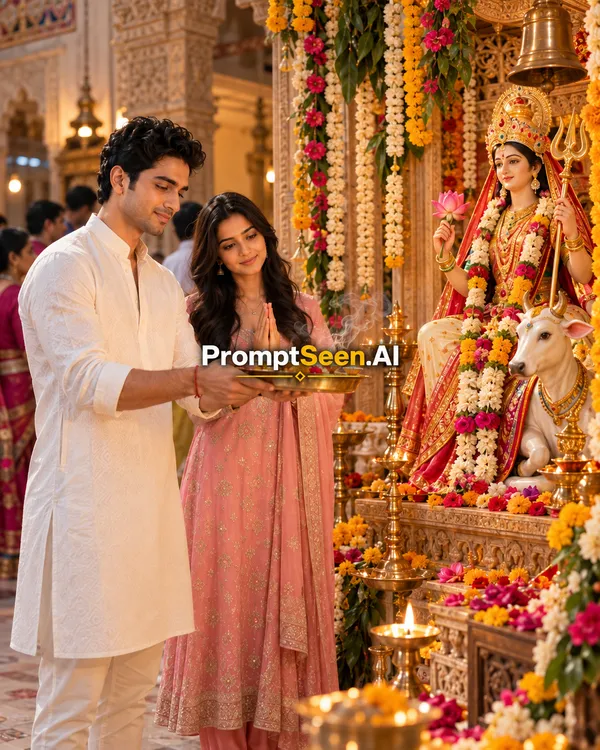
Perform evening aarti with a hammered brass thali. This Navratri AI photo prompt captures the warm, flickering reflections of cotton-wick flames and subtle incense smoke inside a peaceful prayer hall.
Use the uploaded photo of the person as the primary identity reference. Preserve the person’s original facial identity, natural skin texture, hairstyle and recognizable appearance accurately. Do not unnecessarily alter or add personal facial features.
Create a highly realistic candid devotional photograph of the person performing aarti in front of a beautifully decorated Maa Shailputri shrine. The person is standing naturally with both hands holding a traditional brass aarti thali containing several small burning diyas, gently moving the thali in front of Maa Shailputri with a peaceful and respectful expression.
Location: a real-looking Indian temple prayer area with warm cream sandstone walls, carved wooden details, an aged stone floor and a modest decorated shrine. Keep the location generic and non-specific—no famous temple, recognizable landmark or particular city. The environment should contain realistic imperfections and feel like an actual place of worship.
Maa Shailputri should appear as a real handcrafted temple idol, dressed in traditional devotional clothing with subtle jewelry, trishul and lotus. Preserve realistic handcrafted paint, fabric and ornament textures so the statue looks physically present rather than digitally generated.
Background decoration: fresh marigold garlands, white jasmine strings, a few pink flowers, green leaves and traditional floral torans arranged naturally around the shrine. Add a small number of brass lamps and पूजा items around the platform without making the scene excessively decorated.
Aarti thali: a genuine hammered brass thali with several small cotton-wick flames, a small amount of natural incense smoke and subtle reflections from the firelight. The flames should illuminate the person’s hands and lower face naturally, with realistic light falloff and soft moving shadows.
Color theme: warm ivory, aged sandstone beige, natural marigold yellow, muted rose pink, earthy brown and antique brass. Keep the palette elegant and realistic. Avoid neon colors, excessive orange, purple lighting, oversaturation or artificial golden effects.
Lighting & photography: quiet evening darshan, combining the warm light from the aarti flames with soft ambient temple illumination. Use an authentic 50mm documentary photography look, medium-full body framing, natural depth of field, realistic skin tones, detailed fabric texture, believable fire reflections and subtle photographic grain.
Capture the moment as if a professional photographer naturally photographed the person during an actual aarti ceremony—not as a staged poster. The final image must look completely real and naturally photographed, not AI-generated, CGI, digitally painted or overly cinematic.
Avoid plastic skin, excessive HDR, artificial divine glow, unrealistic bokeh, perfectly symmetrical decorations, distorted hands, extra fingers, duplicated flames, warped facial features, floating objects or unnaturally perfect temple surfaces.
10. Grand Deepmala Aarti – Maa Shailputri Temple Steps
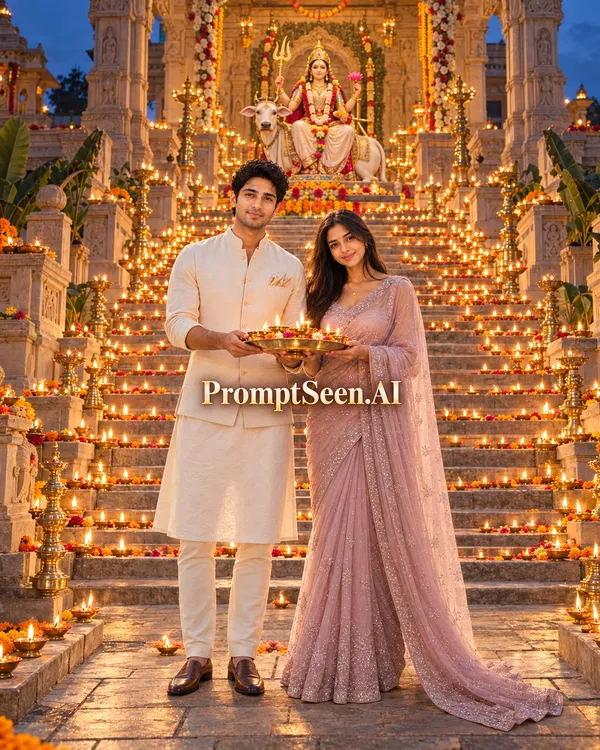
Create a breathtaking visual spectacle for the first night of Navratri. This Maa Shailputri ChatGPT prompt positions you on broad heritage temple steps lined with thousands of glowing clay diyas leading up to the shrine during blue hour.
Use the uploaded photo of the person as the primary identity reference. Preserve the person’s original facial identity, natural skin texture, hairstyle and recognizable appearance accurately. Do not unnecessarily alter or add personal facial features.
Create a highly realistic grand evening devotional photograph showing the person performing aarti in front of Maa Shailputri on the broad stone steps of an authentic Indian temple. The person stands naturally at the center of the composition, holding a traditional brass aarti thali with several small burning diyas, facing the Maa Shailputri shrine respectfully.
Location: a large but believable heritage-style Indian temple staircase leading toward a modest shrine. The entire staircase should be constructed from naturally weathered warm beige sandstone, with uneven stone textures, subtle age marks and realistic architectural details. Keep the location generic and non-specific—no famous temple, city or recognizable landmark.
Main visual element — Grand Deepmala: thousands of small traditional clay and brass diyas should be arranged in long, naturally spaced rows along both sides of the staircase and across selected steps. The lamps should have individual flame shapes, varying brightness and realistic spacing rather than appearing as a digitally repeated pattern. The deepmala should extend upward toward the temple entrance, creating natural depth and perspective.
Maa Shailputri: place a beautifully handcrafted Maa Shailputri idol at the upper end of the staircase, clearly visible in front of the temple entrance. She should have traditional devotional attire, subtle ornaments, trishul and lotus. The statue must look like a real physical temple idol, with authentic handcrafted paint, fabric and ornament textures.
Person & composition: full-body view of the person positioned centrally on the middle section of the staircase. Keep the entire body naturally proportioned and clearly visible, with the aarti thali prominently visible. The Maa Shailputri shrine should remain clearly recognizable beyond the person, while the rows of diyas lead the viewer’s eye naturally toward the shrine.
Color theme: warm sandstone beige, antique brass, natural amber, muted saffron, deep earthy brown and subtle cream tones. Let the thousands of diya flames provide the main warm color accents. Avoid neon colors, excessive orange, purple lighting, artificial golden glow or oversaturation.
Lighting: blue-hour evening sky with a subtle cool ambient atmosphere contrasting naturally against the warm diya flames. Each diya should cast a small realistic pool of light onto the nearby stone surface. The person should receive a believable combination of warm firelight and soft ambient evening illumination. Include natural shadows between rows of lamps.
Photography: premium Indian heritage and festival documentary photography, wide environmental composition, realistic 28–35mm lens perspective, full-body subject, strong natural leading lines created by the temple steps and deepmala, realistic atmospheric depth, accurate skin tones, authentic stone textures, subtle smoke from hundreds of diyas and fine photographic grain.
The final result must look like a real professional photograph taken during an actual grand temple aarti, not an AI-generated scene, CGI render, digital painting or devotional poster. Every diya, flame, stone surface and decoration should have natural variation and believable physical lighting. Avoid artificial symmetry, repeated identical flames, excessive HDR, plastic skin, fake lens flare, unrealistic bokeh, distorted hands or feet, extra fingers, duplicated objects, warped stairs or an artificial glowing aura around Maa Shailputri.
11. Introduction – Maa Shailputri AI Photo Prompts
The sacred festival of 9 days of navratri begins with the worship of Maa Shailputri on Pratipada, the auspicious 1st day of navratri. Revered as the daughter of the Himalayas (Shail) and the first manifestation among the Navdurga, Maa Shailputri holds a trishul in one hand and a lotus in the other while riding her divine mount, Nandi. Whether devotees are celebrating chaitra navratri 2026, Sharad navaratri 2026, or observing gupt navratri, sharing a devotional navratri pic on Day 1 is a cherished tradition across India, right through to the 9th day of navratri.
Instead of sharing generic, over-edited greeting cards, you can now use a specialized navratri prompt to create authentic, documentary-style temple darshan photographs featuring your own face. Our curated collection of Maa Shailputri AI Photo Prompts is designed for Google Gemini and ChatGPT, allowing you to place yourself respectfully inside ancient sandstone temples, lotus-filled courtyards, and grand Garba pandals while keeping your facial identity completely natural.
12. How to Use Maa Shailputri AI Prompts in Gemini & ChatGPT
Creating a realistic First Navratri AI photo takes less than a minute when you follow the proper reference-photo workflow in Google Gemini or ChatGPT:
Select a Clear Reference Photo: Choose a well-lit front-facing or three-quarter angle photo of yourself where your facial features are sharp and unobstructed.
Copy Your Preferred Prompt: Browse the 10 Maa Shailputri AI Prompts above and click the ChatGPT or Gemini button on any card. Our tool will automatically copy the prompt text to your clipboard and open the AI app.
Upload & Paste: Attach your reference photo in the chat box, paste the copied Maa Shailputri Gemini AI prompt or Maa Shailputri ChatGPT AI prompt, and hit generate.
Refine if Needed: If you want to customize your clothing color (such as white, yellow, or red for Day 1), simply edit that single line in the prompt rather than rewriting the entire instruction.
13. Tips for Creating Realistic Maa Shailputri AI Photos
To ensure your Navratri photo editing prompt produces a photograph that looks like it was genuinely captured at an Indian heritage temple rather than a CGI poster, keep these tips in mind:
Avoid Fantasy Glows: Many AI models default to neon halos and oversaturated orange skies. Our Navratri Gemini prompts explicitly command natural sandstone tones, realistic diya firelight, and documentary 50mm lens physics.
Specify Handcrafted Idol Textures: When generating temple darshan scenes, instructing the AI to render Maa Shailputri as a physical, handcrafted temple idol with natural paint and ornament textures keeps the composition grounded and respectful.
Use High-Resolution Inputs: Avoid blurry, heavily filtered, or low-light selfies as your reference image so the AI can lock onto your natural skin texture and facial proportions accurately.
14. FAQ – Maa Shailputri AI Photo Prompts
How can I use a Navratri prompt in english for the 1st day of Navratri?
Simply upload your clear photo to Google Gemini or ChatGPT, copy any of our English Maa Shailputri prompts above, and paste it to generate a realistic devotional portrait for the 1st day of Navratri.
Where can I find a Prompt seen Navratri girl template for Maa Shailputri?
All 10 prompts on this PromptSeen page work seamlessly for girls and women. They preserve your natural face while styling you in authentic traditional attire inside a heritage temple or Garba pandal.
Can I use a Navratri prompt for baby girl with these templates?
Yes! Upload a clear photo of your baby girl and use the 'Maa Shailputri Blessing' or 'Lotus Courtyard' prompt. The AI will preserve her cute facial features and create a gentle, respectful devotional portrait.
Do these templates work as a Navratri prompt boy for temple darshan photos?
Absolutely. Each prompt is written in a gender-neutral way so boys and men can upload their reference photo and generate authentic temple darshan, aarti, and deepmala portraits.
What is the best Navratri prompt for Gemini girl?
The 'Maa Shailputri Idol at Grand Garba Pandal' and 'Lotus Courtyard' prompts are the best Navratri prompt for Gemini girl options, offering rich festive colors, marigold decor, and natural facial identity preservation.
Which is the best Navratri prompt for Gemini boy?
For boys using Google Gemini, the 'Maa Shailputri Temple Grandeur' and 'Grand Deepmala Aarti' prompts create striking full-body devotional portraits with realistic sandstone temple architecture.
Can I combine a Garba prompt for girl with Maa Shailputri darshan?
Yes, Prompt #4 ('Maa Shailputri Idol at Grand Garba Pandal') specifically combines a traditional Gujarati Garba outfit and pandal setting with a handcrafted Maa Shailputri idol.
Are these prompts suitable for Chaitra Navratri 2026 and Gupt Navratri?
Yes, whether you are celebrating Chaitra Navratri 2026, Sharad Navaratri 2026, or Gupt Navratri, Maa Shailputri is worshipped on the 1st day across all traditions, making these prompts timeless.