Maa Chandraghanta AI Photo Prompts Gemini & ChatGPT
G
By Gulshan Aggarwal·
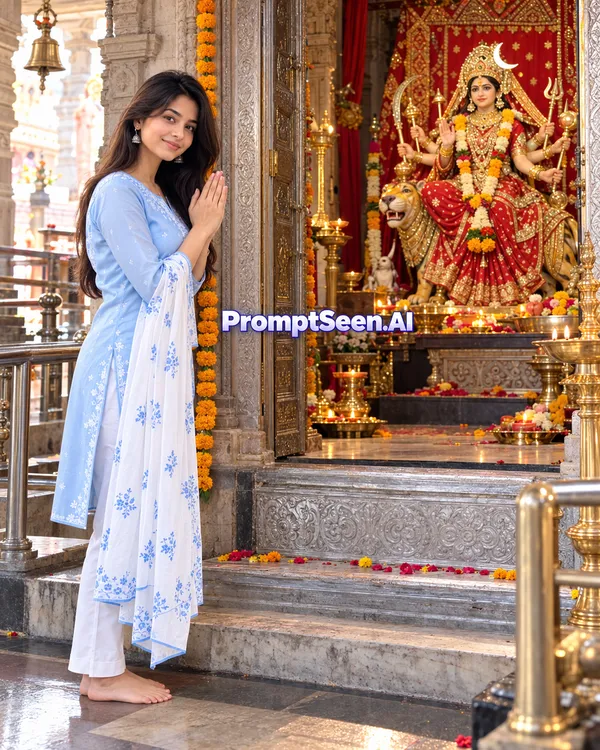
1. Garbhagriha Darshan — Maa Chandraghanta
Celebrate the sacred 3 day of navratri with an authentic temple sanctum portrait. This Maa Chandraghanta photo prompt places you respectfully outside the threshold of an ancient Garbhagriha with folded hands while preserving your exact facial identity.
Use the uploaded photo of the person as the primary identity reference. Preserve the person's exact facial identity, natural skin texture, facial proportions, hairstyle, age appearance and recognizable features accurately. Do not beautify, reshape, slim, or artificially modify the face.
Create a highly photorealistic, natural-looking photograph of the person standing just outside the entrance of a traditional Indian temple sanctum (Garbhagriha), respectfully having darshan of **Maa Chandraghanta**. The person is positioned slightly to one side of the frame, shown in a natural **three-quarter side angle**, with both hands joined in a sincere namaste gesture while looking toward the deity.
Inside the sanctum, place a beautifully decorated and traditional **Maa Chandraghanta idol** clearly visible in front of the person. The idol should look like a real temple murti, with authentic Indian devotional decoration, traditional red and golden fabric, fresh marigold flowers, subtle ornaments and a small natural diya glow. Keep the deity respectful and traditionally represented, without making it excessively fantasy-like or overly elaborate.
The temple interior should have realistic stone or carved architectural details, slightly aged surfaces, natural devotional decorations and a genuine Indian temple atmosphere. Show the **threshold of the Garbhagriha** between the person and the deity so it feels like the person is actually standing outside and taking darshan rather than entering the sanctum.
Use warm, soft temple lighting mixed with a little natural ambient daylight coming from behind the person. Keep the color palette authentic: muted sandstone, warm beige, natural wood tones, deep but realistic red fabric, subtle gold accents and fresh marigold orange. Avoid excessive saturation, neon colors, dramatic cinematic lighting or artificial glowing effects.
The person's clothing should look naturally photographed and appropriate for visiting a Hindu temple, with realistic fabric texture, natural folds and believable colors. If the uploaded photo contains shoes, slippers or other unnecessary footwear/items that do not fit the temple scene, remove them naturally and show the person appropriately barefoot where suitable.
Composition should feel like a candid real-life temple photograph: medium-full body framing, slightly side-oriented perspective, realistic depth of field, natural shadows, authentic skin texture, subtle imperfections, physically accurate lighting, realistic temple textures and no artificial HDR effect.
Do not make the image look like an AI artwork, studio portrait, digital painting or heavily edited devotional poster. Avoid excessive background blur. Maintain realistic proportions and natural perspective throughout.
**Aspect Ratio: 4:5**
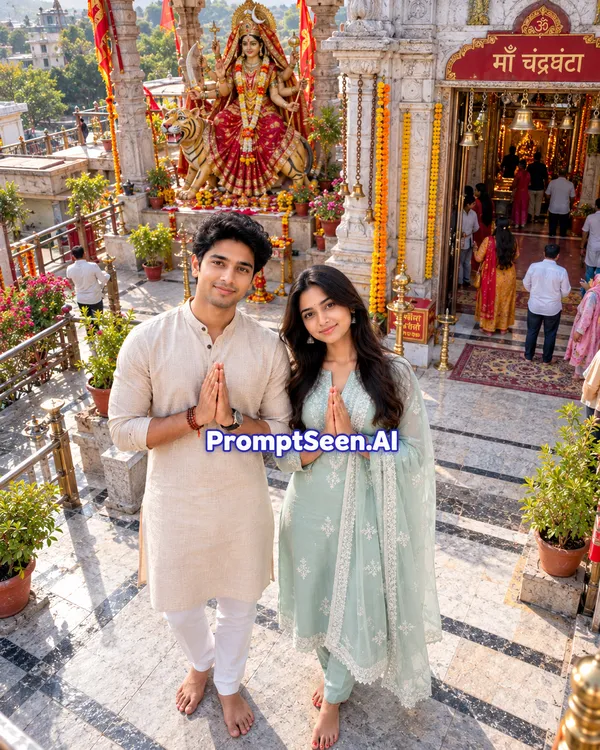
2. Chandraghanta Temple — Natural Drone Darshan
Capture an elevated outdoor perspective of your temple visit. This Maa Chandraghanta AI photo prompt uses a natural drone angle to frame you in the foreground while showcasing the traditional temple entrance and murti behind you.
Use the uploaded photo of the person as the primary identity reference. Preserve the person's exact facial identity, natural skin texture, facial proportions, hairstyle, age appearance and recognizable appearance accurately. Do not beautify, reshape, slim, age or artificially modify the face.
Create a highly photorealistic **real-life drone photograph** of the person standing outside a traditional Indian temple dedicated to **Maa Chandraghanta**. The camera is positioned slightly above eye level in a natural drone-style perspective, capturing the person in the foreground while also showing the authentic temple entrance and surrounding devotional environment.
The person should stand naturally near the temple entrance, slightly turned toward the camera rather than directly facing it, with a calm and respectful expression. Avoid a stiff studio-pose appearance. The body posture should feel like an actual moment captured by a drone camera during a temple visit.
Behind the person, **a visible statue of Maa Chandraghanta should naturally appear near the temple entrance or within an open devotional area**, positioned far enough in the background to create realistic depth. The statue should look like an authentic Indian temple murti with traditional decoration, marigold garlands, red and golden cloth and subtle devotional ornaments. Do not make the statue gigantic, floating, glowing excessively or fantasy-like.
Show realistic temple architecture around the scene: stone flooring, carved pillars, entrance details, small bells, flower decorations and a few naturally placed devotional elements. The surroundings should feel like a genuine Indian temple rather than a digitally designed set.
Use **soft late-morning natural daylight** with gentle shadows. Color palette should be realistic and earthy: warm sandstone, off-white walls, natural green plants, muted red and saffron fabrics, fresh marigold orange and subtle golden details. Avoid neon colors, excessive saturation, purple-heavy tones or dramatic artificial lighting.
The drone perspective should have realistic wide-angle depth without excessive distortion. Keep the person recognizable and naturally proportioned. Include enough surrounding environment to clearly communicate that this is an outdoor temple visit.
If the uploaded photo contains shoes, slippers, footwear or other unwanted objects that do not belong naturally in the scene, remove them seamlessly and realistically. Keep clothing, skin texture, hair and facial details natural.
The final image must look like an **authentic photograph captured by a professional drone camera**, with realistic sunlight, natural shadows, genuine textures, subtle imperfections and believable depth. No AI-art appearance, no plastic skin, no excessive HDR, no fantasy atmosphere, no artificial glow and no cinematic over-processing.
**Aspect Ratio: 4:5**
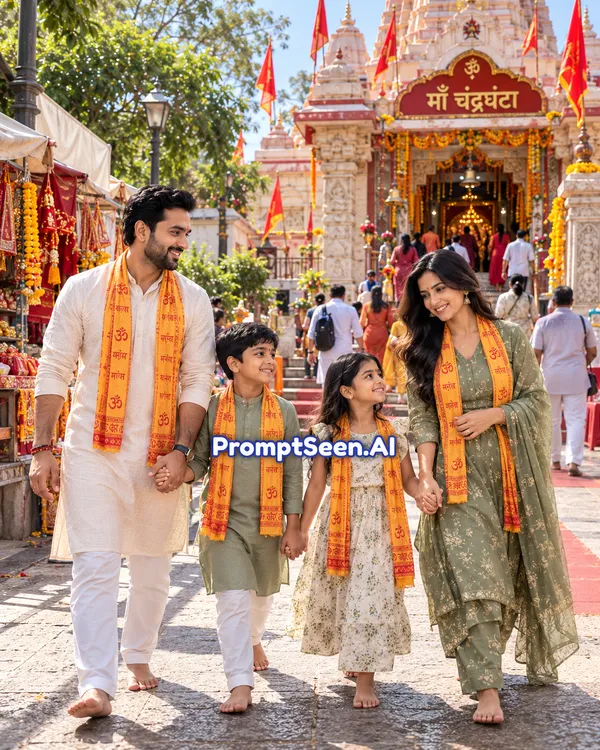
3. Chandraghanta Mandir Yatra — Natural Walking Moment
Share a candid pilgrimage memory as your navratri pic. This Maa Chandraghanta Gemini prompt captures you walking naturally along a temple pathway with flower stalls and saffron flags in the morning light.
Use the uploaded photo of the person as the primary identity reference. Preserve the person's exact facial identity, natural skin texture, facial proportions, hairstyle, age appearance and recognizable features accurately. Do not beautify, reshape, slim, age or artificially modify the face.
Create a highly photorealistic **candid travel photograph** showing the person naturally walking toward a traditional Indian temple dedicated to **Maa Chandraghanta**. The scene should look like a genuine moment captured during a temple yatra, not a posed photoshoot.
The person is walking along a realistic temple approach road or pedestrian pathway, slightly turned toward the temple, as if naturally looking ahead while going for darshan. Capture the person in a relaxed walking posture with natural arm and body movement. The expression should be peaceful and devotional without looking staged.
In the background, show the **Maa Chandraghanta temple entrance clearly but naturally at a distance**, with traditional Indian architecture, temple flags, bells, marigold decorations and a few subtle devotional elements. The temple should feel like a real place that the person is actually approaching.
Include a believable yatra environment around the pathway: a few distant devotees walking toward the temple, small flower or prasad stalls, natural trees, simple roadside details and authentic Indian surroundings. Keep the background people secondary and slightly softer so the uploaded person's identity remains the main focus.
Use **soft early-morning daylight**, with gentle sunlight falling across the pathway and subtle natural shadows. Color palette should be warm and realistic: earthy beige and sandstone, natural green foliage, muted saffron and red devotional fabrics, soft marigold orange and natural sky tones. Avoid oversaturated colors, neon effects, excessive golden glow or fantasy lighting.
The camera perspective should resemble a **real handheld travel photograph**, taken slightly from the side and a little behind the person's walking direction, giving the image a natural sense of movement and depth. Do not make it look like a fashion shoot or a perfectly symmetrical portrait.
If the uploaded photo contains shoes, slippers, footwear or any unnecessary object that does not suit the temple-yatra setting, remove it naturally and realistically. Preserve the person's clothing and appearance unless changes are required to make the scene physically believable.
The final result must look like an authentic photograph taken during a real temple journey: realistic skin pores, natural hair, genuine fabric texture, physically accurate shadows, believable perspective, subtle imperfections and natural environmental details. No AI-generated appearance, no plastic skin, no excessive HDR, no artificial blur, no fantasy elements and no cinematic over-processing.
**Aspect Ratio: 4:5**
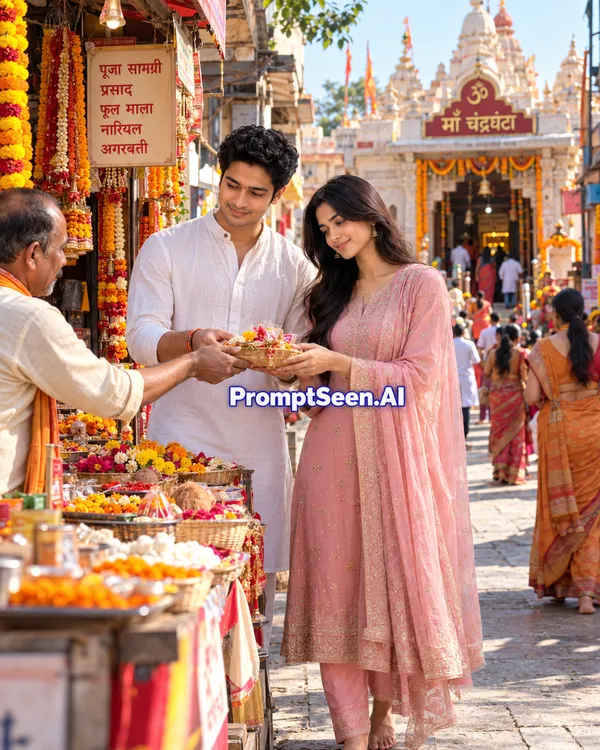
4. Chandraghanta Yatra — Prasad Shopping Moment
Tell a complete visual story of your temple visit. This navratri prompt captures a spontaneous moment of you purchasing marigold flowers, coconut, and sweets at a traditional temple-side prasad stall.
Use the uploaded photo of the person as the primary identity reference. Preserve the person's exact facial identity, natural skin texture, facial proportions, hairstyle, age appearance and recognizable appearance accurately. Do not beautify, reshape, slim, age or artificially modify the face.
Create a highly photorealistic **candid real-life photograph** of the person on the way to a traditional Maa Chandraghanta temple, naturally stopping at a small local temple-side shop to purchase prasad before continuing the yatra.
Show the person standing casually at a genuine Indian prasad stall, slightly turned toward the shopkeeper, naturally reaching toward or receiving a small traditional prasad packet or offering. The moment should feel spontaneous, as if captured during an actual pilgrimage rather than intentionally posed for a camera.
The prasad stall should look authentic and modest, with realistic trays and baskets containing marigold flowers, loose flowers, coconut, traditional sweets, batasha, mishri and simple पूजा सामग्री. Keep everything naturally arranged with slight imperfections instead of making the shop look perfectly organized.
In the background, show a **traditional Maa Chandraghanta temple entrance at a believable distance**, partially visible through the temple lane. Include a few naturally moving devotees, temple bells, small saffron flags and subtle marigold decorations. The temple should remain recognizable but should not dominate the frame because the main story is the person buying prasad.
Create an authentic **North Indian temple-town environment** with slightly weathered shopfronts, natural stone or cement pavement, simple signboards, hanging flower garlands and everyday street details. Avoid mixing unrelated famous landmarks or creating an unrealistic composite location.
Use **soft natural morning daylight** with gentle shadows and realistic ambient light. Keep the color palette earthy and natural: warm beige walls, muted saffron, natural marigold orange, soft red, brown wooden textures and subtle green from nearby plants. Avoid neon colors, excessive saturation, purple-heavy grading, artificial golden light or dramatic cinematic effects.
The camera should feel like a real photographer captured the person from a short distance while walking through the temple lane. Use a natural eye-level perspective with slight environmental framing from the shop and surrounding lane. The person should remain clearly recognizable while the background has realistic depth.
If the uploaded photo contains **shoes, slippers, footwear or any other unnecessary object**, remove them naturally when they do not fit the temple setting. The removal must look physically authentic, with natural feet, clothing and shadows and no visible editing artifacts.
Preserve realistic skin pores, natural hair strands, facial details, clothing texture and body proportions. Keep the scene slightly imperfect and documentary-like so it feels like a genuine photograph taken during a real temple visit.
Absolutely avoid an AI-generated appearance, plastic skin, excessive face enhancement, unrealistic symmetry, artificial background blur, HDR look, fantasy lighting, glowing objects or digitally painted textures.
**Aspect Ratio: 4:5**
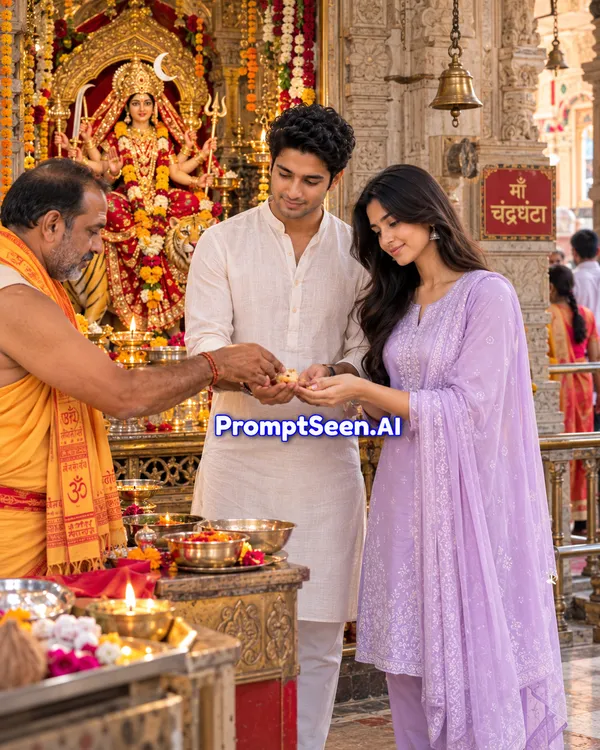
5. Chandraghanta Darshan — Prasad from the Priest
Experience a blessed temple interaction. This Maa Chandraghanta Day 3 prompt shows you respectfully receiving prasad from a temple priest right in front of the decorated Maa Chandraghanta murti.
Use the uploaded photo of the person as the primary identity reference. Preserve the person's exact facial identity, natural skin texture, facial proportions, hairstyle, age appearance and recognizable appearance accurately. Do not beautify, reshape, slim, age or artificially modify the face.
Create a highly photorealistic **candid temple photograph** showing the person respectfully receiving prasad from a traditional Indian temple priest near the idol of **Maa Chandraghanta**.
The person should stand naturally beside the temple's devotional area, slightly angled toward the priest rather than directly facing the camera. The priest is extending one hand toward the person, gently giving a small portion of prasad. The person's hands should be naturally positioned together or extended respectfully to receive it. Capture the interaction as an authentic, unposed moment during darshan.
Place the **Maa Chandraghanta idol clearly and naturally behind the interaction**, close enough to establish the devotional setting but without making the statue unnaturally oversized. The idol should look like a genuine temple murti with traditional red and saffron cloth, modest golden ornaments, fresh marigold garlands and realistic devotional decoration. Avoid fantasy elements or excessive divine glow.
The priest should look like a real Indian temple priest wearing simple traditional devotional clothing, with natural facial features, realistic skin texture and believable clothing folds. His appearance should not look stereotypically exaggerated or digitally generated.
Build the surrounding location as an authentic North Indian temple interior or semi-open shrine area: slightly aged stone surfaces, carved pillars, brass bells, a few flower offerings, a small brass diya and simple पूजा सामग्री. Include subtle signs of everyday temple activity in the background, such as a couple of distant devotees, but keep them unobtrusive.
Use **warm natural temple daylight mixed with gentle ambient indoor light**. Keep the color palette realistic and restrained: natural sandstone and beige, muted saffron, deep but believable red fabric, brass-gold tones, fresh marigold orange and small areas of natural green. Avoid neon colors, excessive saturation, artificial golden glow, purple-heavy grading or dramatic cinematic lighting.
Use a **natural close-to-medium camera perspective**, as if a photographer standing nearby captured the exact moment when the priest handed over the prasad. Keep both the person and priest naturally proportioned, with realistic depth of field and enough background detail to identify Maa Chandraghanta.
Preserve the uploaded person's exact identity, natural skin pores, facial details, hair texture, age appearance and clothing characteristics. Do not create a polished studio-portrait effect.
If the uploaded photo contains **shoes, slippers, footwear or any other unwanted item**, remove it naturally when it does not belong in the temple setting. Ensure the feet, floor contact, shadows and surrounding surfaces remain physically realistic after removal.
The final image must look like a genuine photograph captured inside a real temple during an actual darshan: natural imperfections, authentic textures, realistic shadows, believable lighting and physically accurate proportions. No AI-art appearance, no plastic skin, no excessive HDR, no artificial blur, no fantasy atmosphere, no glowing outlines and no digital painting effect.
**Aspect Ratio: 4:5**
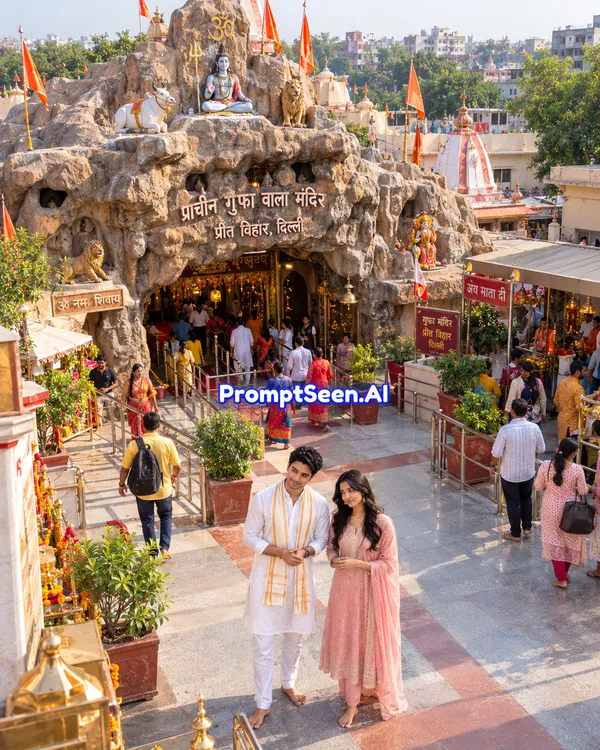
6. Preet Vihar Cave Temple — Authentic Drone View
Capture the lively spiritual atmosphere of Delhi’s famous cave-style shrine. This Maa Chandraghanta AI photo prompt frames you from an elevated diagonal drone perspective outside the iconic Gufa Wala Mandir entrance during morning darshan.
Use the uploaded photo of the person as the primary identity reference. Preserve the person's exact facial identity, natural skin texture, facial proportions, hairstyle, age appearance and recognizable appearance accurately. Do not beautify, reshape, slim, age or artificially modify the face.
Create a highly photorealistic **professional drone-shot photograph** of the person naturally visiting the **Gufa Wala Mandir in Preet Vihar, Delhi**. The person should be standing naturally within the temple premises, captured from a slightly elevated diagonal drone perspective rather than looking directly at the camera.
Show the person as part of the real temple environment, with the **distinctive cave-style temple entrance and surrounding temple architecture clearly visible** in the composition. The temple should feel like an actual busy Delhi religious site, with realistic pathways, stairs, railings, entrance details and modest devotional decorations.
The person should have a relaxed, natural posture, as if they have just arrived for darshan. Avoid a formal photoshoot pose. A few devotees may be visible naturally in the background, walking toward the entrance or standing near the temple, but they should remain secondary and realistically proportioned.
Capture the scene from a **moderately high drone angle**, wide enough to show the temple structure, courtyard and surrounding environment while keeping the uploaded person recognizable. Use realistic perspective and avoid an excessively high aerial view that makes the person too small.
Create an authentic Delhi atmosphere with realistic urban surroundings subtly visible beyond the temple premises: nearby buildings, trees, boundary walls and everyday city details. Keep the environment clean and believable without turning it into a generic or fantasy temple.
Use **soft natural daylight**, preferably late-morning light with gentle shadows. Keep the color palette realistic and slightly warm: natural cream and sandstone tones, muted saffron and red devotional fabrics, earthy brown, natural green trees and realistic grey concrete surfaces. Avoid neon colors, excessive saturation, purple-heavy grading, artificial golden glow or dramatic cinematic color effects.
The drone photograph should have realistic aerial-camera sharpness, natural atmospheric depth and subtle lens characteristics. Keep the person's skin texture and facial identity natural rather than applying beauty filters or excessive sharpening.
If the uploaded photo contains **shoes, slippers, footwear or any other unwanted removable object**, remove them naturally when appropriate for the temple environment. Ensure the feet, ground contact, shadows and surrounding floor remain completely realistic.
The final image must look like a **real photograph captured by a professional drone over an actual Delhi temple**, with natural imperfections, authentic architecture, realistic people, physically accurate lighting and believable depth. No AI-generated appearance, no plastic skin, no fantasy temple design, no excessive HDR, no artificial glow, no unrealistic crowd duplication and no digital-painting effect.
**Aspect Ratio: 4:5**
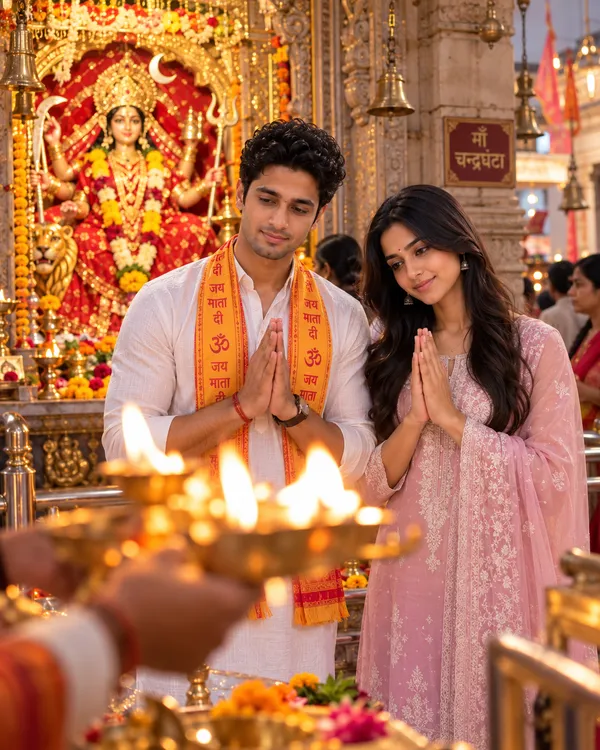
7. Aarti Flame — Chandraghanta Darshan
Add artistic three-layer depth to your navratri background. This Maa Chandraghanta prompt places a softly blurred brass diya flame in the foreground while keeping your face in crisp focus beside the shrine.
Use the uploaded photo of the person as the primary identity reference. Preserve the person's exact facial identity, natural skin texture, facial proportions, hairstyle, age appearance and recognizable appearance accurately. Do not beautify, reshape, slim, age or artificially modify the face.
Create a highly photorealistic **candid temple photograph** captured during an evening aarti at a traditional Maa Chandraghanta temple.
Place a real brass aarti diya with a small natural flame prominently in the **foreground**, very close to the camera. The flame and brass diya should be **slightly out of focus**, creating a realistic shallow-depth-of-field foreground layer. The flame must have natural soft edges, subtle warm illumination and slight exposure bloom, but should never look artificially glowing or digitally enhanced.
Behind the foreground flame, show the person's **face clearly and naturally visible**, with the uploaded person's exact facial identity preserved. The person should be standing respectfully near the devotional area, with a calm natural expression and slightly turned toward Maa Chandraghanta rather than posing directly for the camera.
Place the **Maa Chandraghanta idol naturally behind or slightly beside the person**, clearly recognizable but at a realistic distance. The idol should look like an authentic Indian temple murti with traditional red and saffron cloth, modest ornaments, fresh marigold garlands and natural पूजा decorations. Avoid an oversized deity or fantasy-style divine effects.
The composition should create three realistic visual layers:
1. **Foreground:** softly blurred brass diya and aarti flame.
2. **Middle ground:** the person's naturally focused face and upper body.
3. **Background:** Maa Chandraghanta's realistically decorated temple idol and subtle shrine details.
Use realistic temple surroundings with stone or plaster surfaces, brass bells, flower offerings, a few natural पूजा items and subtle background devotees. Keep the environment slightly imperfect and authentic, like a genuine photograph captured during an actual aarti.
Use **warm ambient temple lighting mixed with gentle natural evening light**. The main color palette should remain realistic: warm amber from the flame, natural brass-gold, muted red and saffron fabrics, earthy beige stone, subtle brown and small touches of marigold orange. Avoid excessive orange tint, neon colors, purple-heavy grading, artificial golden haze or dramatic cinematic lighting.
Use a realistic **50mm–85mm photographic perspective with shallow depth of field**. The foreground flame should be softly blurred while the person's face remains naturally sharp. The Maa Chandraghanta idol should have slightly softer focus than the person's face but remain clearly identifiable. Avoid excessive background blur that makes the temple look artificial.
Preserve natural skin pores, facial texture, hair strands, realistic age appearance and genuine clothing texture. Do not apply beauty filters, skin smoothing or artificial facial enhancement.
If the uploaded photo contains **shoes, slippers, footwear or any other unwanted removable object**, remove them naturally when appropriate for the temple environment. Make sure the feet, floor contact, shadows and surrounding surfaces remain physically realistic.
The final result must look like an **authentic photograph taken inside a real temple during aarti**, with realistic flame behavior, natural depth of field, genuine temple textures, subtle imperfections and physically believable lighting. No AI-art appearance, no plastic skin, no excessive HDR, no artificial lens effects, no fantasy glow, no floating flame and no digital-painting look.
**Aspect Ratio: 4:5**
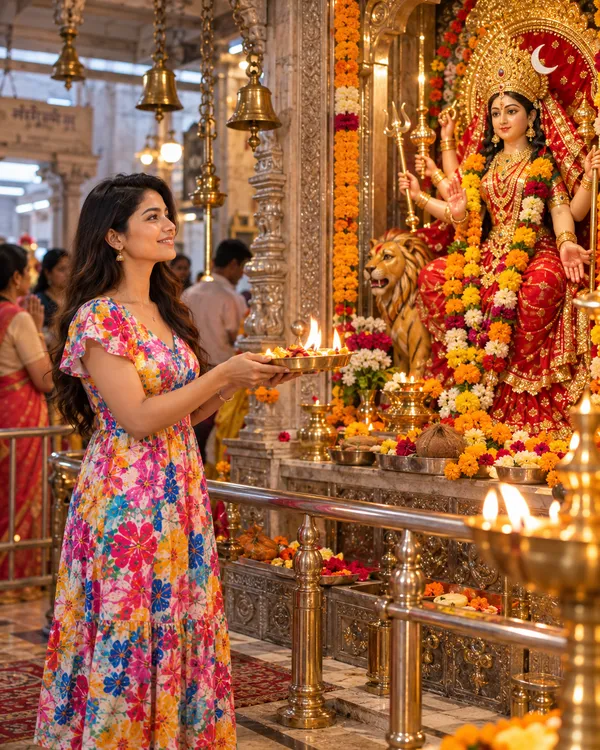
8. Chandraghanta Aarti — Brass Thali Darshan
Perform evening aarti with a traditional brass पूजा thali. This Maa Chandraghanta Navratri prompt illuminates your hands and face with natural oil-diya firelight right in front of the temple murti.
Use the uploaded photo of the person as the primary identity reference. Preserve the person's exact facial identity, natural skin texture, facial proportions, hairstyle, age appearance and recognizable appearance accurately. Do not beautify, reshape, slim, age or artificially modify the face.
Create a highly photorealistic **authentic temple photograph** of the person standing respectfully in front of **Maa Chandraghanta's idol**, performing aarti with both hands while holding a traditional brass aarti thali.
The person should be standing naturally at a comfortable distance from the deity, facing Maa Chandraghanta with a peaceful and devotional expression. Both hands should visibly and naturally hold the brass aarti thali at chest-to-waist level. The hands, fingers and grip on the thali must be anatomically correct and realistic.
The **brass aarti thali** should look like a real traditional Indian पूजा thali, with a few small oil diyas, cotton wicks, subtle marigold petals and a small amount of traditional पूजा सामग्री. The flames should be naturally sized and physically believable, producing a soft warm illumination on the person's hands, clothing and lower face.
Place the **Maa Chandraghanta idol directly in front of the person**, clearly visible and naturally proportioned. The idol should look like a genuine temple murti with traditional red and saffron fabric, modest ornaments, fresh marigold garlands and authentic devotional decoration. Avoid oversized statues, fantasy styling or exaggerated divine effects.
Create a realistic temple shrine around the deity with stone or plaster surfaces, brass bells, subtle flower offerings, a few brass पूजा vessels and naturally arranged devotional objects. Include very subtle background temple activity without distracting from the person and deity.
Use the **light from the diyas as the primary warm light source**, supplemented by soft existing temple ambient light. The flame should create realistic highlights on the brass thali and gentle warm reflections on the person's hands and face. Keep shadows physically accurate and soft.
Use a natural color palette: warm brass-gold, earthy beige and stone tones, muted saffron, realistic deep red fabric, marigold orange and subtle brown. Avoid excessive orange color grading, neon colors, purple-heavy tones, artificial golden haze or dramatic cinematic lighting.
Frame the photograph from approximately **waist-to-full-body distance**, keeping both the person and Maa Chandraghanta clearly visible. Use a natural eye-level camera angle rather than a dramatic low or high angle. The composition should feel like a real photographer standing inside the temple during aarti.
Preserve the uploaded person's exact identity, natural skin pores, facial proportions, hair texture, age appearance and clothing details. Do not smooth the skin or apply artificial beauty effects.
If the uploaded photo contains **shoes, slippers, footwear or any other unnecessary removable object**, remove them naturally when appropriate for the temple environment. Make sure the person's feet, temple floor contact and shadows remain completely realistic.
The final photograph must look like a **genuine moment captured during real temple aarti**, with authentic brass reflections, realistic flame behavior, natural skin texture, believable shadows, genuine temple materials and subtle imperfections. No AI-generated appearance, no plastic skin, no excessive HDR, no fantasy glow, no artificial smoke, no digital painting and no over-processed devotional-poster look.
**Aspect Ratio: 4:5**
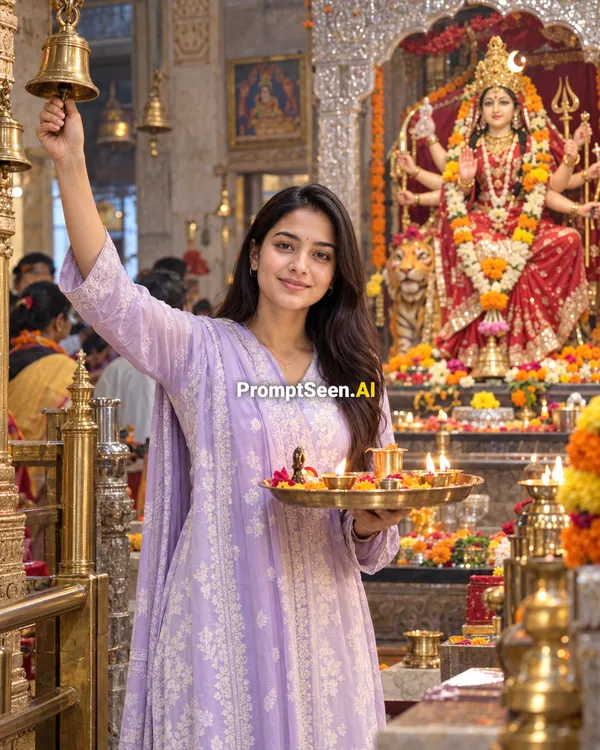
9. Bell & Aarti — Candid Chandraghanta Darshan
Maa Chandraghanta is revered for the sacred bell (Ghanta) on her forehead. This Navratri photo prompt captures a spontaneous moment of you ringing an aged brass temple bell with one hand while holding an aarti thali in the other.
Use the uploaded photo of the person as the primary identity reference. Preserve the person's exact facial identity, natural skin texture, facial proportions, hairstyle, age appearance and recognizable appearance accurately. Do not beautify, reshape, slim, age or artificially modify the face.
Create a highly photorealistic **candid documentary-style photograph** of the person performing aarti inside a traditional Indian temple dedicated to **Maa Chandraghanta**.
Capture the person in a natural devotional moment, **ringing a small traditional brass temple bell with one hand while holding a brass aarti thali in the other hand**. The gesture should look spontaneous and authentic, as if a temple photographer captured the moment during an ongoing aarti rather than asking the person to pose.
The person's body should be slightly turned toward the Maa Chandraghanta shrine, with natural movement in the raised arm holding the bell. The other hand should hold the aarti thali securely and realistically. Fingers, wrists, hands and the grip on both objects must be anatomically accurate.
The small temple bell should be made of realistic aged brass, with a visible hanging clapper and subtle natural reflections. The aarti thali should contain a few small diyas, cotton wicks, marigold petals and simple पूजा सामग्री. The diya flames should be small and realistic, providing gentle warm highlights on the brass surface.
Place **Maa Chandraghanta's idol naturally in the background**, clearly recognizable but not oversized. The idol should look like a real temple murti with traditional red and saffron cloth, modest ornaments, fresh marigold garlands and authentic devotional decoration. Avoid fantasy styling, excessive jewelry or artificial divine effects.
Create a genuine temple environment around the scene: aged stone or plaster surfaces, brass bells hanging nearby, flower offerings, small पूजा vessels, subtle incense atmosphere and a few distant devotees naturally participating in the aarti. Keep background activity imperfect and realistic rather than perfectly arranged.
Use **existing temple ambient light combined with the warm natural light from the small diyas**. Keep the color palette grounded and authentic: aged brass, warm beige stone, muted saffron, natural red fabric, marigold orange and subtle brown tones. Avoid neon colors, excessive saturation, purple-heavy grading, artificial golden haze or dramatic cinematic color effects.
Use a **documentary photography perspective**, approximately eye-level and slightly off-center, as if the photographer was standing nearby during the actual ritual. Capture a little natural motion in the bell hand while keeping the person's face recognizable and naturally detailed. Use moderate depth of field so Maa Chandraghanta remains identifiable in the background.
Preserve the uploaded person's exact facial identity, natural pores, facial proportions, hair texture, age appearance and clothing details. Do not apply beauty filters, excessive skin smoothing or artificial facial enhancement.
If the uploaded photo contains **shoes, slippers, footwear or any other unnecessary removable object**, remove them naturally when appropriate for the temple setting. Ensure the feet, floor contact, shadows and surrounding surfaces remain physically realistic.
The final image should look like a **real documentary photograph captured during an actual temple aarti**, with natural imperfections, authentic brass textures, realistic flame behavior, believable hand gestures, physically accurate shadows and genuine temple atmosphere. No AI-art appearance, no plastic skin, no excessive HDR, no artificial glow, no fantasy effects, no digital painting and no overly polished devotional-poster look.
**Aspect Ratio: 4:5**
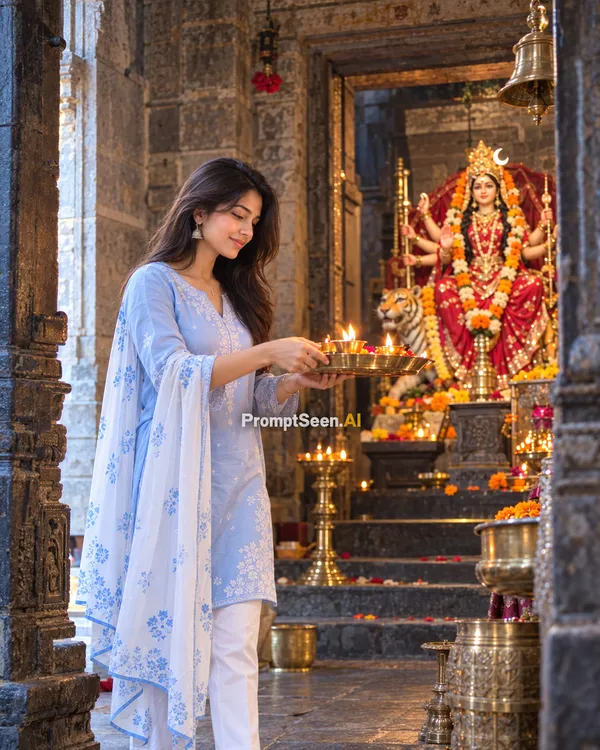
10. Ancient Stone Sanctum — Chandraghanta Aarti
Experience timeless heritage devotion on the 3 day of navratri. This Maa Chandraghanta ChatGPT prompt places you inside a hand-carved ancient stone Garbhagriha where soft doorway daylight blends with warm diya flames.
Use the uploaded photo of the person as the primary identity reference. Preserve the person's exact facial identity, natural skin texture, facial proportions, hairstyle, age appearance and recognizable features accurately. Do not beautify, reshape, slim, age or artificially modify the face.
Create a highly photorealistic **documentary-style temple photograph** of the person performing aarti inside an **old stone Garbhagriha** of a traditional Maa Chandraghanta temple.
The camera is positioned slightly to the side and a little farther back, capturing the person naturally from a three-quarter angle while they perform aarti facing the deity. Do not make the person look directly at the camera. The moment should feel completely unposed, as if a real photographer quietly captured the ritual without interrupting it.
Surround the scene with **genuinely aged stone architecture**: uneven hand-carved stone walls, subtle discoloration from time, small natural cracks, worn edges around the doorway, old stone flooring and traditional architectural details. The surfaces should have realistic variations in texture and color rather than looking freshly constructed or digitally perfect.
Place the **Maa Chandraghanta idol deeper inside the sanctum**, naturally visible beyond the person. The idol should look like a real temple murti with traditional red and saffron cloth, modest ornaments and fresh flowers. Keep the statue appropriately proportioned to the shrine and avoid exaggerated divine effects.
The person should hold a traditional brass aarti thali naturally, with a few small diyas producing realistic flames. The hands, fingers and grip must be anatomically correct. Capture subtle warm reflections from the diya on the brass and nearby stone surfaces.
Allow a **small amount of soft daylight to enter through the old temple doorway**, mixing naturally with the warm light from the diyas. The two light sources should create believable contrast: cooler, gentle daylight around the entrance and warmer amber illumination closer to the shrine.
Use a restrained, earthy color palette based on the actual surroundings: weathered grey-brown stone, muted sandstone beige, natural brass, soft saffron and deep but realistic red fabric, with small accents of marigold orange. Avoid oversaturated colors, purple-heavy grading, neon tones or artificial golden color casts.
Include subtle real-world temple details such as a few brass bells, flower offerings, an old brass vessel and minimal पूजा सामग्री placed naturally around the shrine. Do not overcrowd the scene.
Use realistic **environmental depth and moderate depth of field**. Keep the person's face naturally sharp while allowing the farthest stone details to soften slightly. Preserve realistic perspective and avoid exaggerated wide-angle distortion.
Preserve the uploaded person's exact facial identity, natural skin pores, facial proportions, hair texture, age appearance and clothing details. Avoid beauty filters, skin smoothing or artificial facial enhancement.
If the uploaded photo contains **shoes, slippers, footwear or any other unwanted removable object**, remove them naturally when appropriate for the temple environment. The feet, stone floor contact, shadows and surrounding surfaces must remain physically accurate.
The finished image should look like an **authentic photograph taken inside an old Indian temple**, with real stone texture, natural light falloff, believable diya flames, subtle imperfections and genuine documentary photography characteristics. No AI-generated appearance, no plastic skin, no excessive HDR, no artificial glow, no fantasy atmosphere, no digitally perfect stone walls and no devotional-poster styling.
**Aspect Ratio: 4:5**
11. Introduction – Maa Chandraghanta AI Photo Prompts
On Tritiya, the auspicious 3 day of navratri, devotees worship Maa Chandraghanta, the third married form of Goddess Parvati among the nine Navdurga manifestations. Adorned with a half-moon (Chandra) shaped like a sacred bell (Ghanta) on her forehead, she rides a fearless lion or tiger and carries a trishul, lotus, and kamandalu across her ten hands to bestow peace, courage, and protection upon her devotees. Whether you are celebrating chaitra navratri 2026, Sharad navaratri 2026, or observing gupt navratri, sharing a devotional navratri pic on the 3rd day is a cherished tradition.
Instead of posting generic graphics or heavily filtered posters, our collection of Maa Chandraghanta AI Photo Prompts lets you generate authentic, documentary-style temple darshan photographs using your own reference selfie. Engineered specifically for Google Gemini and ChatGPT, each navratri prompt above locks onto your real facial identity while placing you respectfully outside ancient stone Garbhagriha sanctums, buying prasad in North Indian temple lanes, or performing evening brass-thali aarti.
12. How to Use Maa Chandraghanta Prompts in Gemini & ChatGPT
Creating a lifelike 3rd day Navratri AI photo takes less than 60 seconds when you follow this step-by-step reference workflow:
Choose a Sharp Reference Photo: Select a clear, well-lit selfie or portrait where your facial features are unobstructed and natural.
Click ChatGPT or Gemini: Pick your favorite Maa Chandraghanta prompt from the 10 cards above and tap the ChatGPT or Gemini button. Our page automatically copies the prompt text to your clipboard and opens the AI app.
Upload & Paste: Attach your reference photo in the AI chat box, paste the copied Maa Chandraghanta Gemini prompt or Maa Chandraghanta ChatGPT prompt, and hit generate.
Automatic Footwear Cleanup: Every template includes smart instructions to remove shoes or slippers seamlessly if your full-body reference photo includes footwear, keeping your temple darshan scene respectful and realistic.
13. Tips for Creating Realistic Maa Chandraghanta AI Photos
To make sure your Maa Chandraghanta photo editing prompt produces an image that looks like a real DSLR or smartphone camera capture rather than CGI art, keep these tips in mind:
Use Three-Layer Depth: Prompts like #7 ("Aarti Flame") place an out-of-focus brass diya in the foreground, your sharp face in the middle ground, and the murti in the background—replicating real 50mm–85mm optical lens physics.
Avoid Fantasy Halos: Real Indian temples have weathered sandstone walls, brass bells, and warm oil-lamp reflections. Keeping our anti-CGI rules intact ensures your navratri background looks genuinely photographed.
Try Candid Angles: Instead of stiff front-facing studio poses, templates like #3 ("Mandir Yatra") and #9 ("Bell & Aarti") use three-quarter side angles and natural motion for a documentary pilgrimage feel.
14. FAQ – Maa Chandraghanta AI Photo Prompts
Why is Maa Chandraghanta worshipped on the 3 day of navratri?
Maa Chandraghanta is worshipped on Tritiya (the 3 day of navratri) for peace, bravery, and protection. She wears a crescent moon shaped like a bell (Ghanta) on her forehead.
How do I use a Maa Chandraghanta Gemini prompt?
Upload a clear reference selfie to Google Gemini, copy any Maa Chandraghanta Gemini prompt from this page, and paste it to generate a realistic temple darshan photo.
Can I use these templates as a Maa Chandraghanta ChatGPT prompt?
Yes, every template on this page works as a Maa Chandraghanta ChatGPT prompt. Simply attach your photo in ChatGPT and paste the copied text.
Will the AI preserve my real face in the navratri pic?
Yes, each navratri prompt starts with strict identity-preservation instructions that keep your natural facial features, skin texture, and hairline intact.
Are these prompts suitable for chaitra navratri 2026 and gupt navratri?
Yes, whether you observe chaitra navratri 2026, Sharad navaratri 2026, or gupt navratri, these Day 3 devotional prompts can be used year-round.
What makes a realistic navratri background in AI photos?
Natural sandstone textures, physical diya firelight, marigold garlands, and authentic temple sanctum thresholds create a believable navratri background without CGI glow.