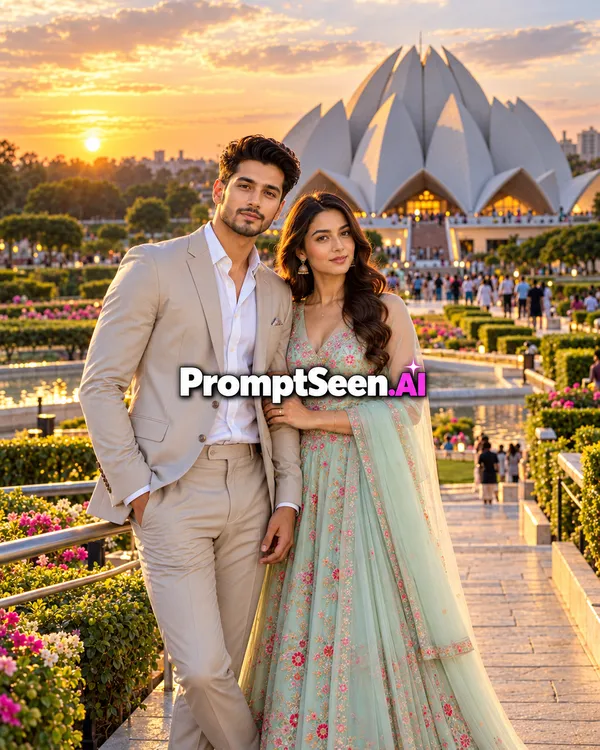
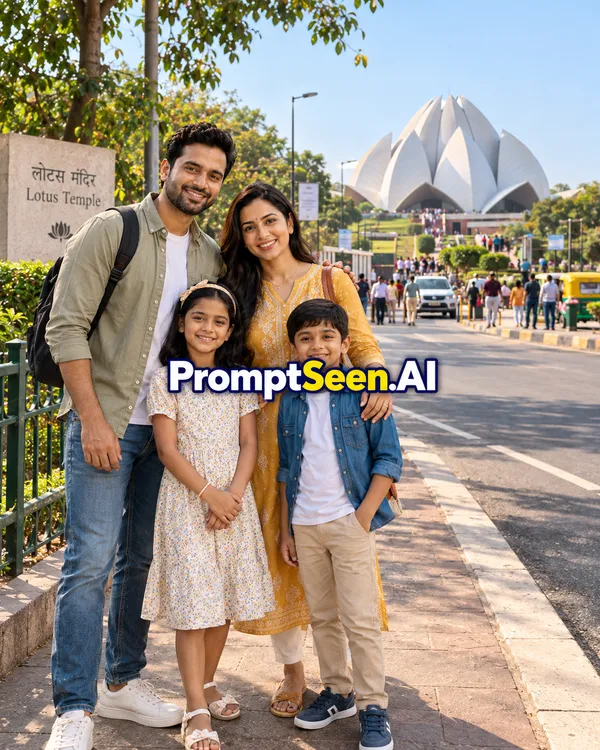
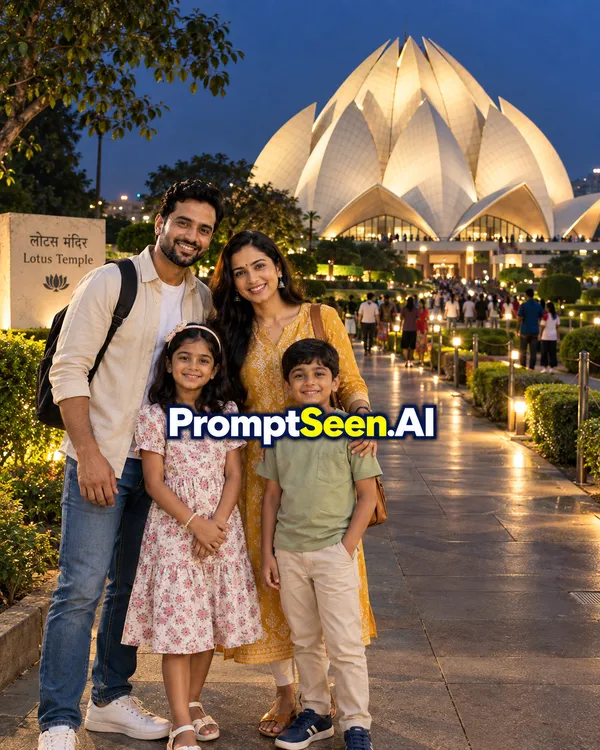
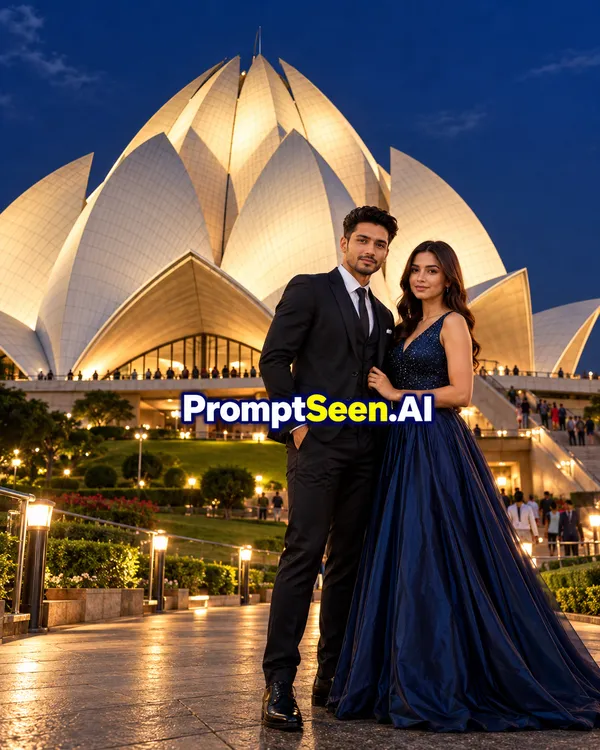
For a beautiful, warm aesthetic, a lotus temple picture prompt utilizing golden hour lighting is ideal. This instruction explicitly prevents "plastic" AI skin, ensuring the final result looks like genuine travel photography.
REFERENCE & IDENTITY LOCK — HIGHEST PRIORITY
Use the uploaded photo as the ONLY identity reference for the subject.
Preserve exactly:
• Same facial identity and recognizable facial features
• Same natural skin tone
• Same face shape and realistic facial proportions
• Same hairstyle and hair texture
• Same body proportions
• Same overall appearance
• Preserve the natural character of the person without beautification or facial modification
Create a highly realistic, authentic travel photograph of the subject at the Lotus Temple, New Delhi, during the evening golden hour.
SCENE & COMPOSITION:
• Lotus Temple clearly visible in the background and naturally recognizable
• Subject positioned slightly off-center rather than perfectly centered
• Subject looking directly into the camera
• Relaxed, natural expression with subtle confidence
• Natural standing posture, as if photographed spontaneously during a real trip
• Medium-to-three-quarter portrait framing
• Use the temple architecture and surrounding garden to create genuine depth and perspective
• Keep the environment naturally imperfect and believable
GOLDEN HOUR LIGHTING:
• Real late-evening golden-hour sunlight
• Warm sunlight falling naturally across the subject from one side
• Soft directional sunlight with realistic exposure
• Natural shadows on the face, clothing, and surrounding environment
• Subtle sunlight highlights on hair and shoulders
• Realistic transition between illuminated and shaded areas
• No artificial glow, no fake lens flare, no excessive HDR
REAL PHOTOGRAPH APPEARANCE:
• Make the image look like an actual photograph captured by a professional travel photographer
• Full-frame DSLR/mirrorless camera quality
• Natural 50mm lens perspective
• Realistic optical depth of field
• Genuine lens characteristics
• Natural background separation without excessive blur
• Extremely realistic skin pores and fine facial texture
• Preserve tiny natural imperfections in skin and hair
• Realistic fabric texture and clothing details
• Natural exposure and believable white balance
• Accurate architectural textures on the Lotus Temple
• Realistic atmospheric depth
AUTHENTICITY — VERY IMPORTANT:
• The final image must NOT look AI-generated
• Avoid plastic-looking skin
• Avoid perfectly symmetrical facial features
• Avoid excessive skin smoothing
• Avoid unnatural sharpness
• Avoid artificial cinematic effects
• Avoid fantasy lighting
• Avoid exaggerated bokeh
• Avoid oversaturated colors
• Avoid fake HDR
• Avoid overly perfect hair
• Avoid unrealistic facial details
• Avoid unnatural body proportions
• Avoid CGI or 3D-rendered appearance
TRAVEL PHOTOGRAPHY STYLE:
Premium Indian travel photography with an authentic documentary feel.
The photograph should look like a real photographer captured the subject naturally at the Lotus Temple during a beautiful evening.
COLOR:
• Warm but realistic golden-hour tones
• Natural skin color must remain accurate
• Soft greens in the garden
• Realistic white marble architecture
• Balanced highlights and shadows
• Subtle professional color correction
• No excessive orange or yellow tint
FINAL RESULT:
A believable, high-resolution, professionally photographed travel portrait that could genuinely come from a real camera.
It should feel like a real photograph taken during an actual visit to the Lotus Temple — not an AI-generated image, digital painting, CGI render, or heavily edited social-media photo.
Aspect Ratio: 4:5
AI Photo Editing Prompts for Lotus Temple
The Lotus Temple in New Delhi is arguably one of the most stunning pieces of modern architecture in India. Its magnificent, flower-like white marble petals draw millions of visitors every year. However, capturing the perfect photograph without hundreds of other tourists in the frame can be incredibly challenging.
With generative AI, you no longer need to worry about crowds, bad weather, or missing the golden hour. Using our carefully engineered lotus temple prompts with tools like Google Gemini Advanced or ChatGPT (DALL-E 3), you can upload a simple reference photo and seamlessly generate breathtaking, photorealistic travel memories set against this iconic landmark.
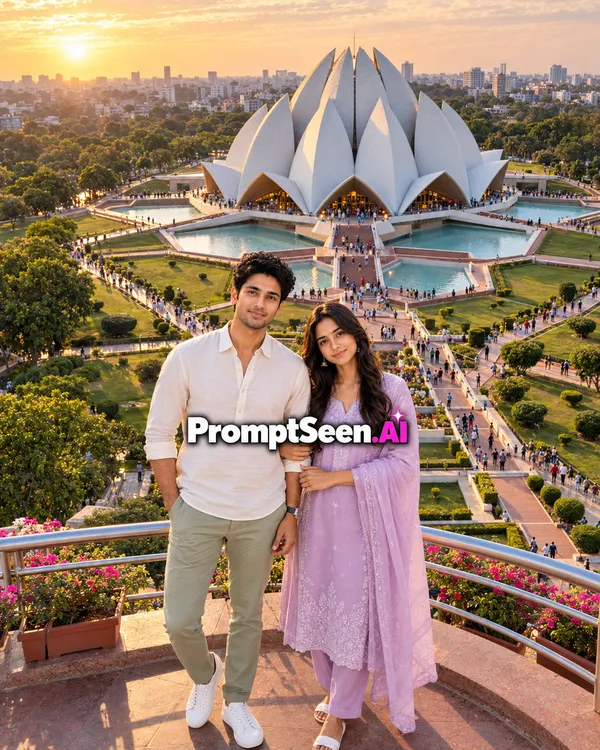
2. Lotus Temple Aerial Drone View
Take your travel photos to the next level. This lotus temple ai photo prompt requests a highly dramatic, downward-angled aerial perspective, showing the spectacular geometry of the temple petals and the surrounding landscaped pathways.
REFERENCE & IDENTITY LOCK — HIGHEST PRIORITY
Use the uploaded photo as the ONLY identity reference for the subject.
Preserve the subject’s exact:
• Facial identity and recognizable facial features
• Natural skin tone
• Face shape and facial proportions
• Hairstyle and hair characteristics
• Body proportions
• Overall recognizable appearance
Create a highly photorealistic aerial drone photograph of the subject visiting the Lotus Temple in New Delhi, India.
DRONE VIEW & COMPOSITION:
• Capture the scene from a realistic elevated drone perspective, approximately 12–20 meters above ground
• Camera positioned at a slightly diagonal downward angle, not directly overhead
• Subject clearly visible within the environment while remaining naturally proportioned
• Lotus Temple prominently visible behind and around the subject
• Use the temple’s distinctive white petal-shaped architecture as the main environmental landmark
• Show a meaningful portion of the surrounding gardens, pathways and landscape
• Create natural geometric leading lines from the pathways toward the temple
• Maintain realistic spatial relationships between the person, temple and surroundings
• Composition should feel like a professionally planned travel-drone photograph
SUBJECT:
• Subject naturally looking toward the drone camera
• Relaxed, authentic expression
• Natural standing pose
• No exaggerated model pose
• Clothing remains realistic with believable folds and fabric texture
• Subject should look like a real visitor photographed during an actual trip
LIGHTING:
• Late-afternoon golden-hour sunlight
• Warm sunlight naturally illuminating the temple and landscape
• Soft directional shadows from trees, architecture and the subject
• Realistic sunlight falloff across the gardens
• Subtle atmospheric haze at greater distances
• Natural exposure with preserved highlight and shadow detail
REAL DRONE PHOTOGRAPH APPEARANCE:
• Looks like an actual professional drone photograph captured with a modern high-end camera
• Realistic aerial perspective and lens characteristics
• Natural depth and atmospheric perspective
• Authentic optical detail
• Realistic fine textures in marble, grass, trees and pathways
• Slight natural variation in vegetation
• Realistic distant people and environmental details where appropriate
• No artificial miniature or tilt-shift appearance
ANTI-AI REALISM:
• Absolutely no AI-generated appearance
• No plastic skin
• No wax-like face
• No artificial facial symmetry
• No excessive sharpening
• No fake HDR
• No unrealistic clarity
• No fantasy lighting
• No excessive saturation
• No artificial lens flare
• No impossible shadows
• No distorted architecture
• No warped temple structures
• No duplicated people
• No floating objects
• No unnatural body proportions
• No CGI or 3D-rendered appearance
COLOR & FINISH:
• Natural travel-photography color grading
• Warm sunlight but accurate skin tones
• Realistic white marble tones
• Natural green vegetation
• Moderate contrast
• Subtle professional tonal correction
• Preserve realistic atmospheric colors
IMPORTANT:
The Lotus Temple must remain architecturally accurate and instantly recognizable.
The aerial viewpoint must obey real-world perspective and believable drone-camera geometry.
The subject must remain recognizable as the person in the uploaded reference image.
FINAL LOOK:
The finished image should look like a genuine photograph captured by a professional travel photographer using a high-quality camera drone during an actual visit to the Lotus Temple.
It must look photographic, natural and physically believable — NOT like an AI-generated image, CGI render, digital painting or heavily edited composite.
Aspect Ratio: 4:5
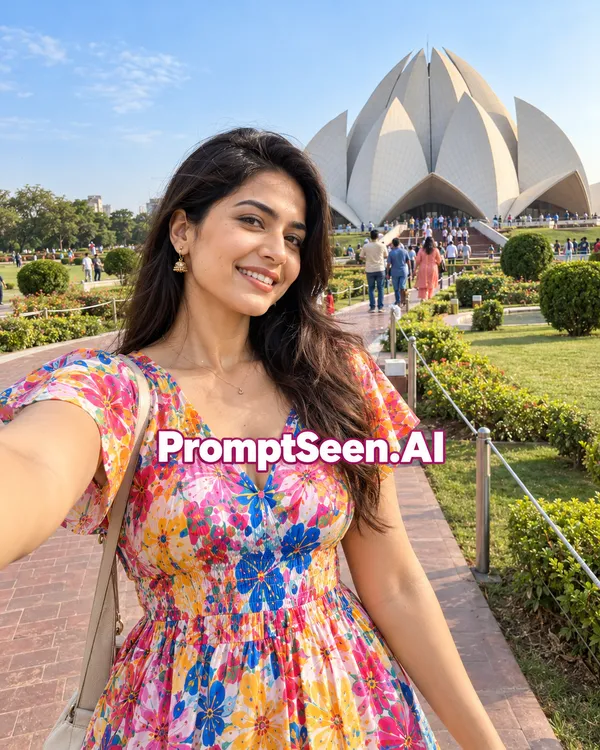
3. Lotus Temple Authentic Travel Selfie
Sometimes you just want a casual, relatable photo for Instagram. This lotus temple selfie prompt replicates the exact lens characteristics and slightly imperfect framing of a modern smartphone front-facing camera.
REFERENCE & IDENTITY LOCK — HIGHEST PRIORITY
Use the uploaded photo as the ONLY identity reference for the person taking the selfie.
Preserve exactly:
• Same facial identity
• Same recognizable facial features
• Same natural skin tone
• Same face shape and facial proportions
• Same hairstyle and hair texture
• Same body proportions
• Same overall recognizable appearance
Create an extremely realistic travel selfie captured by the subject during a real visit to the Lotus Temple, New Delhi, India.
SELFIE COMPOSITION:
• Genuine handheld smartphone selfie perspective
• Camera held naturally at arm’s length
• Subject positioned in the foreground, slightly off-center
• Lotus Temple clearly recognizable in the background
• Subject looking directly into the smartphone camera
• Natural relaxed expression, as if casually taking a memorable travel selfie
• Slight natural variation in framing, as happens with a real handheld selfie
• Keep enough background visible to establish the location
• Do not make the composition look like a professionally staged studio portrait
LOCATION:
• Authentic Lotus Temple surroundings
• Realistic white marble petal-shaped temple structure
• Natural landscaped gardens
• Realistic pathways, lawns and trees
• A small number of naturally positioned visitors in the distance
• Genuine New Delhi outdoor atmosphere
• Correct real-world scale between the subject, visitors, gardens and temple
• No imaginary architecture or fantasy scenery
LIGHTING:
• Soft late-afternoon natural daylight
• Warm sunlight gently illuminating the subject and temple
• Realistic natural shadows from trees and surrounding structures
• Balanced exposure between the bright sky, subject and white temple
• Natural reflected light from the surrounding marble and pathways
• No artificial studio lighting
• No dramatic cinematic glow
COLOR THEME:
• Natural warm-white daylight
• Soft green garden tones
• Clean neutral-white Lotus Temple
• Accurate natural skin tones
• Slightly warm travel-photography color balance
• Realistic blue sky
• Moderate contrast and saturation
• No excessive orange, yellow or teal color grading
REAL SMARTPHONE CAMERA LOOK:
• Authentic modern smartphone camera quality
• Realistic computational photography
• Natural HDR behavior
• Fine but believable image detail
• Mild smartphone sharpening
• Natural exposure roll-off
• Realistic skin texture
• Subtle lens characteristics
• Background should remain recognizable rather than being artificially blurred
• Slight natural imperfections typical of a real handheld phone photograph
PHOTOREALISM — VERY IMPORTANT:
The result must look like an actual selfie taken during a real trip.
Avoid:
• AI-generated appearance
• Plastic or wax-like skin
• Excessive face smoothing
• Perfectly flawless skin
• Artificial facial symmetry
• Overly sharp facial details
• Unrealistic eyes
• Fake reflections
• Excessive HDR
• Artificial bokeh
• Cinematic color effects
• Fake lens flare
• CGI appearance
• 3D-rendered textures
• Unrealistic crowd placement
• Distorted temple architecture
• Warped hands or fingers
• Extra fingers
• Duplicate people
• Floating objects
• Unrealistic shadows
• Over-saturated colors
NATURAL HUMAN DETAILS:
• Preserve subtle real-world skin texture
• Include tiny natural variations in hair
• Maintain believable facial expression
• Natural clothing folds
• Realistic hand and arm proportions
• Smartphone should have believable size and perspective
• No unnatural posing or exaggerated smile
FINAL PHOTOGRAPH STYLE:
A genuine personal travel selfie captured on a high-quality smartphone during an actual visit to the Lotus Temple.
The image should feel spontaneous, authentic and geographically believable, like a real photograph from someone's phone gallery.
It must NOT look like an AI-generated portrait, professional studio image, CGI render, digital painting or heavily edited social-media photograph.
Aspect Ratio: 4:5
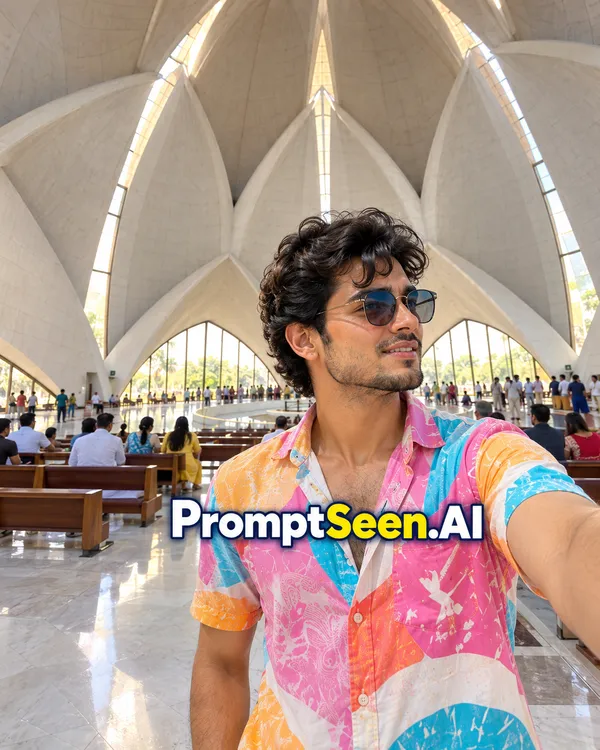
4. Lotus Temple Interior Prayer Hall Selfie
Did you know you can also generate realistic interior views? This text command focuses on the stunning, minimalist curved architecture of the prayer hall ceiling rather than the exterior facade.
REFERENCE & IDENTITY LOCK — HIGHEST PRIORITY
Use the uploaded photo as the ONLY identity reference for the subject.
Preserve exactly:
• Same recognizable facial identity
• Same facial structure and natural proportions
• Same skin tone
• Same hairstyle and natural hair texture
• Same body proportions
• Same natural appearance
• Do not alter, beautify or replace the face
Create an ultra-photorealistic personal travel selfie of the subject inside the Lotus Temple, New Delhi, captured from within the main prayer hall.
CORE VISUAL CONCEPT:
This is an INTERIOR architectural selfie, completely different from an outdoor landmark selfie.
The photograph should feel like the subject has just entered the quiet prayer hall and casually captured a personal selfie while experiencing the architecture.
INTERIOR ENVIRONMENT:
• Authentic Lotus Temple prayer hall interior
• Tall white marble architectural surfaces
• Distinctive curved/petal-inspired interior geometry
• Spacious, peaceful and uncluttered atmosphere
• High ceiling creating a strong sense of vertical scale
• Long, elegant architectural lines extending behind the subject
• Realistic seating arrangement appropriate to the prayer hall
• Natural architectural symmetry visible in the background
• No artificial decorations
• No colorful religious objects
• No fantasy interior
• No invented chandeliers or ornate temple decorations
• Preserve the minimalist character of the actual Lotus Temple interior
SELFIE COMPOSITION:
• Genuine handheld smartphone selfie
• Camera held naturally at approximately face level
• Subject positioned slightly toward the lower-right portion of the frame
• Subject occupies only part of the image
• The majority of the frame shows the impressive interior architecture
• Use the ceiling and curved architectural lines as natural leading elements
• Slightly wide smartphone perspective
• Keep the background architecture clearly visible
• Do not use portrait-mode blur
• Do not make this look like a studio portrait
SUBJECT:
• Subject looking naturally into the smartphone camera
• Calm, respectful expression
• Very subtle natural smile
• Relaxed posture
• No influencer-style pose
• No exaggerated gestures
• No artificial fashion pose
• The subject should appear like an ordinary visitor capturing a genuine travel memory
LIGHTING:
Use realistic natural daylight entering through the Lotus Temple's architectural openings.
• Soft diffused daylight
• Gentle illumination across the subject's face
• Natural light falling across the white marble
• Soft architectural shadows
• Subtle variation between brighter and darker areas
• Realistic indoor exposure
• No dramatic studio lighting
• No artificial golden-hour glow
• No colored LED lighting
• No cinematic light beams
COLOR THEME:
Keep the interior naturally neutral and elegant:
• Warm-white marble
• Soft neutral daylight
• Very subtle beige/cream tonal variation
• Natural skin tones
• Gentle gray architectural shadows
• Low-to-moderate saturation
• Clean realistic white balance
Do NOT use:
• Purple lighting
• Neon colors
• Teal-orange cinematic grading
• Heavy golden color cast
• Oversaturated colors
• Artificial colored lights
REAL SMARTPHONE PHOTOGRAPH CHARACTER:
Make it look like an authentic photograph captured on a premium modern smartphone.
• Natural computational HDR
• Realistic indoor exposure
• Natural highlight preservation on white marble
• Slight authentic smartphone sharpening
• Realistic facial texture
• Natural fine detail
• Mild wide-angle perspective
• Believable smartphone lens characteristics
• Natural shadow noise in darker interior areas
• No excessive clarity
• No artificial depth blur
ARCHITECTURAL REALISM:
The Lotus Temple interior must obey real-world architecture.
• Correct structural proportions
• Realistic curved surfaces
• Consistent architectural geometry
• Natural perspective convergence
• Realistic marble texture
• No warped walls
• No impossible ceiling structures
• No duplicated architectural elements
• No floating objects
• No fantasy decorations
AUTHENTIC HUMAN DETAILS:
• Natural skin pores
• Fine facial texture
• Individual hair strands
• Realistic clothing texture
• Natural clothing folds
• Correct hands and fingers
• Correct smartphone proportions
• Realistic arm perspective
• Natural facial asymmetry
• No beauty-filter appearance
STRICT ANTI-AI REALISM:
The final photograph must look like a genuine personal smartphone photograph, NOT an AI-generated image.
Avoid:
• Plastic skin
• Wax-like face
• Perfect artificial skin
• Unrealistic eyes
• Excessive face smoothing
• Perfect facial symmetry
• CGI appearance
• 3D-rendered surfaces
• Excessive HDR
• Over-sharpening
• Fake lens flare
• Artificial glow
• Unrealistic reflections
• Artificial bokeh
• Distorted architecture
• Extra fingers
• Warped hands
• Duplicate people
• Impossible shadows
• Unrealistic perspective
IMPORTANT LOCATION REALISM:
Do not invent a conventional Hindu-temple interior, idols, statues, religious paintings, colorful decorations or ornate ornamentation.
The Lotus Temple is known for its minimalist, non-iconic prayer-hall interior. Keep the environment architecturally restrained and believable.
FINAL LOOK:
The finished image should resemble a real travel selfie captured inside the Lotus Temple during an actual visit.
It should feel quiet, natural, documentary and personal — as if the subject genuinely took the photograph on their smartphone while appreciating the unique interior architecture.
NO AI-ART LOOK.
NO CGI.
NO STUDIO PORTRAIT.
NO FANTASY INTERIOR.
NO HEAVY EDITING.
Aspect Ratio: 4:5
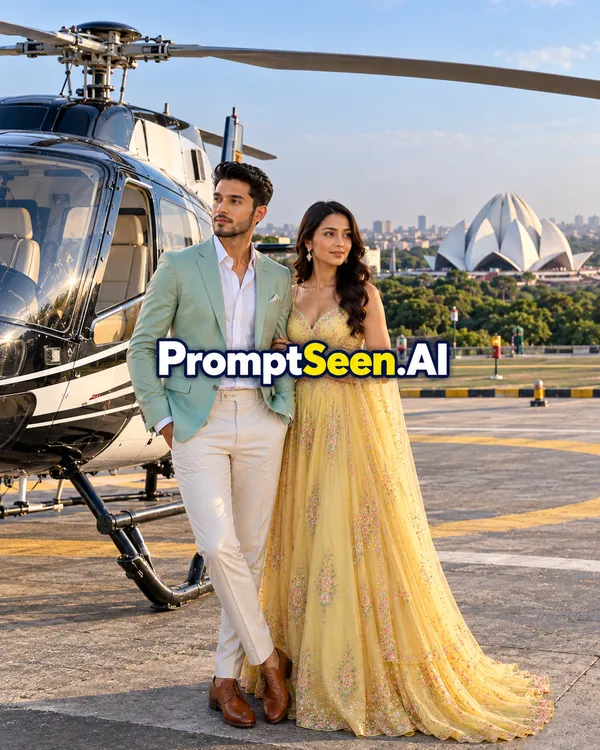
5. Lotus Temple Helicopter Sightseeing Portrait
If you want a true luxury travel vibe, this lotus temple ai photo editing template places you beside a realistic sightseeing helicopter, establishing the temple as a massive architectural landmark in the distant background.
REFERENCE & IDENTITY LOCK — HIGHEST PRIORITY
Use the uploaded photo as the ONLY identity reference for the subject.
Preserve exactly:
• Same recognizable facial identity
• Same facial structure and natural proportions
• Same skin tone
• Same hairstyle and natural hair texture
• Same body proportions
• Same overall appearance
• Do not replace, redesign or beautify the face
Create an ultra-photorealistic travel photograph of the subject at a realistic helicopter sightseeing location in New Delhi, with the Lotus Temple visible in the distant background.
CORE CONCEPT:
This is a professional-looking HELICOPTER TRAVEL PHOTOGRAPH, not a selfie and not a conventional temple portrait.
The subject has just arrived for a scenic helicopter experience and is photographed naturally near the helicopter.
SCENE & COMPOSITION:
• Full-size realistic civilian sightseeing helicopter parked on a legitimate landing area
• Subject standing several meters beside the helicopter
• Subject positioned in the foreground but not directly centered
• Helicopter occupies a strong portion of the frame
• Lotus Temple visible farther in the background as a recognizable landmark
• Maintain realistic physical distance between helicopter, subject and temple
• Use the helicopter body and landing area as foreground visual elements
• Capture the scene from approximately chest-to-eye level
• Medium-wide travel photograph composition
• Subject naturally looking toward the camera
• Relaxed, confident travel expression
• Natural standing posture
• No fashion-model pose
• No selfie gesture
HELICOPTER REALISM:
• Modern civilian sightseeing helicopter with realistic proportions
• Correct rotor, tail boom, landing skids/wheels, windows and doors
• Physically believable construction
• Realistic metal, composite and glass textures
• Subtle reflections on the windows
• Rotor blades correctly attached and proportioned
• Natural contact between landing gear and ground
• No military weaponry
• No futuristic helicopter design
• No impossible aircraft geometry
LOCATION:
Create a believable New Delhi aviation/tour environment.
• Realistic paved helicopter landing area
• Low safety barriers where appropriate
• Subtle aviation ground markings
• Natural surrounding greenery
• Distant urban environment kept understated
• Lotus Temple recognizable in the far background
• Realistic atmospheric perspective between the subject and temple
• A few distant staff or visitors only if naturally appropriate
• No crowded artificial scene
LIGHTING:
Use bright late-afternoon natural daylight.
• Warm but realistic sunlight
• Sunlight coming from a side angle
• Natural shadows beneath the helicopter
• Realistic shadows cast by the subject and aircraft
• Soft highlights on the helicopter body
• Natural reflection on cockpit glass
• Balanced exposure between sky, helicopter and subject
• No dramatic cinematic lighting
• No artificial rim light
• No fake lens flare
COLOR THEME:
Use a realistic premium travel-photography palette:
• Natural blue sky
• Neutral white and subtle metallic tones on the helicopter
• Natural green vegetation
• Warm beige-gray ground
• Accurate white Lotus Temple in the distance
• True-to-life skin tones
• Moderate saturation
• Natural contrast
Avoid:
• Purple-heavy color grading
• Teal-orange cinematic grading
• Excessive golden-orange tones
• Neon colors
• Oversaturated greens
• Artificial color effects
CAMERA & PHOTOGRAPHY:
• Professional full-frame travel camera
• Approximately 35mm lens perspective
• Natural wide environmental composition
• Subject and helicopter both clearly detailed
• Lotus Temple slightly softer because of real-world distance, but still recognizable
• Realistic optical depth
• Natural atmospheric haze
• Authentic exposure
• Subtle professional color correction
• No excessive HDR
• No artificial background blur
REALISTIC HUMAN DETAILS:
• Preserve natural skin pores
• Individual hair strands
• Realistic clothing texture
• Natural fabric folds
• Anatomically correct hands
• Natural body proportions
• Realistic facial asymmetry
• Genuine expression
• No beauty-filter appearance
STRICT ANTI-AI REALISM:
The final photograph must look like an actual photograph taken by a professional travel photographer.
DO NOT create:
• Plastic skin
• Wax-like face
• Perfect artificial skin
• Unrealistic eyes
• Excessive facial smoothing
• CGI appearance
• 3D-rendered helicopter
• Toy-like aircraft
• Warped rotor blades
• Incorrect helicopter proportions
• Impossible reflections
• Fake shadows
• Floating helicopter
• Distorted Lotus Temple
• Duplicate people
• Extra limbs or fingers
• Artificial lens flare
• Excessive HDR
• Over-sharpening
• Fantasy scenery
• AI-art appearance
PHYSICAL REALISM:
Make sure the scene obeys real-world scale and perspective.
The helicopter must be substantially larger than the subject.
The Lotus Temple must appear farther away than the helicopter.
Shadows must follow the same sunlight direction.
Objects must have realistic atmospheric softness according to their distance.
FINAL LOOK:
The finished image should resemble a genuine premium travel photograph captured during a real helicopter sightseeing experience near New Delhi.
It should feel like a memorable photograph from an actual trip — realistic aircraft, realistic person, realistic environment, authentic sunlight and believable Lotus Temple background.
It must NOT look like an AI-generated composite, CGI render, promotional fantasy image or digitally constructed scene.
Aspect Ratio: 4:5
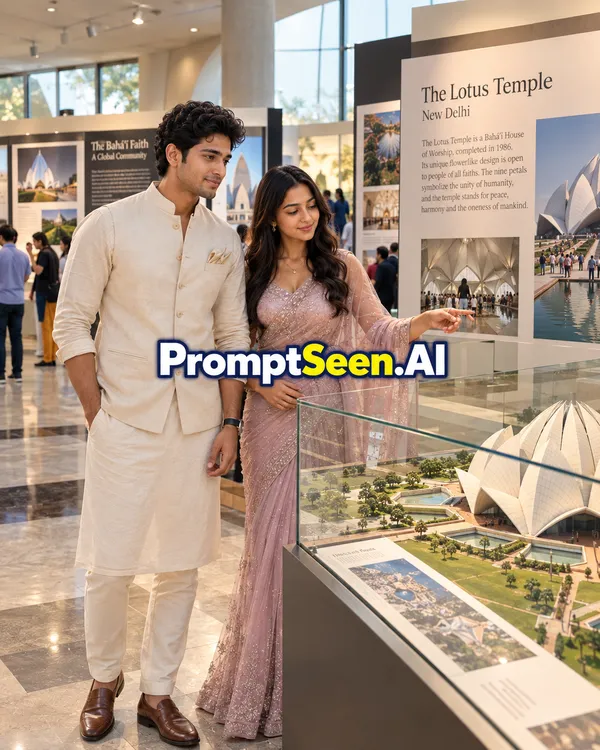
6. Lotus Temple Museum Documentary Portrait
For a quiet, cultural aesthetic, this prompt places you inside a realistic museum or visitor center context, examining the architectural history of the Lotus Temple with a documentary-style camera perspective.
REFERENCE & IDENTITY LOCK — HIGHEST PRIORITY
Use the uploaded photo as the ONLY identity reference for the subject.
Preserve exactly:
• Same recognizable facial identity
• Same facial structure and natural proportions
• Same skin tone
• Same hairstyle and natural hair texture
• Same body proportions
• Same overall appearance
• Do not modify, replace or beautify the face
Create an ultra-photorealistic documentary-style travel photograph of the subject inside the Lotus Temple's visitor museum, exhibition or information area in New Delhi, only if such an accessible area is present at the location.
CORE CONCEPT:
This is a quiet CULTURAL-DOCUMENTARY photograph inside a museum/exhibition environment.
The subject is exploring the exhibits naturally rather than posing directly for the camera.
The image should feel like an authentic photograph captured during a real visit.
COMPOSITION:
• Subject positioned slightly to one side of the frame
• Camera approximately at natural eye level
• Subject standing naturally beside an exhibition display
• Body turned slightly toward the exhibit
• Face gently turned toward the camera
• Natural observational expression
• One hand may rest naturally near their side or lightly gesture toward the exhibit
• Avoid a formal portrait pose
• Avoid selfie composition
• Avoid exaggerated tourist posing
MUSEUM / EXHIBITION ENVIRONMENT:
• Realistic contemporary visitor exhibition space
• Clean, restrained architectural design
• Neutral walls and realistic museum flooring
• Authentic informational panels and educational displays
• Tasteful presentation of information about the Lotus Temple, Bahá¼í Faith and its architecture
• Realistic display cases or mounted exhibition material where appropriate
• Natural spacing between exhibits
• A small number of genuine visitors in the background
• Visitors should be naturally engaged with displays rather than posing
• No invented historical artifacts
• No fantasy objects
• No exaggerated luxury interior
IMPORTANT LOCATION REALISM:
Do not invent a grand traditional museum interior.
Do not add:
• Hindu idols
• Religious statues unrelated to the Bahá¼í context
• Ornate temple decorations
• Golden walls
• Chandeliers
• Fantasy architecture
• Fictional artifacts
• Imaginary historical objects
If a particular exhibit is not clearly established, keep it generic and realistic rather than inventing specific objects or claims.
LIGHTING:
Use realistic indoor museum illumination.
• Soft neutral ceiling lighting
• Gentle daylight entering from architectural windows where appropriate
• Balanced exposure across the subject and displays
• Natural soft shadows
• Subtle reflections on glass display surfaces
• Realistic brightness differences between exhibition panels and surrounding walls
• No dramatic cinematic spotlight
• No colored LED lighting
• No artificial golden glow
COLOR THEME:
Use a sophisticated but natural museum palette:
• Warm off-white walls
• Neutral light-gray architectural elements
• Natural wood or muted beige display details where appropriate
• Soft neutral daylight
• Accurate natural skin tones
• Restrained colors on exhibition graphics
• Moderate contrast
• Low-to-moderate saturation
Avoid:
• Purple-heavy grading
• Neon colors
• Teal-orange cinematic grading
• Excessive gold
• Oversaturated displays
• Artificial color casts
CAMERA STYLE:
• Professional full-frame documentary photography
• 35mm lens perspective
• Natural environmental framing
• Realistic depth of field
• Subject clearly detailed
• Background exhibits remain sufficiently recognizable
• Natural optical characteristics
• Subtle atmospheric softness
• Realistic exposure
• Mild professional color correction
• No artificial portrait-mode blur
AUTHENTIC HUMAN DETAILS:
• Natural skin pores
• Individual hair strands
• Realistic facial texture
• Natural clothing folds
• Accurate fabric texture
• Correct hands and fingers
• Natural body proportions
• Genuine expression
• Subtle facial asymmetry
• No beauty-filter effect
STRICT ANTI-AI REALISM:
The photograph must look like an authentic camera photograph taken inside a real museum.
DO NOT create:
• Plastic skin
• Wax-like face
• Perfect artificial skin
• Unrealistic eyes
• Excessive facial smoothing
• CGI surfaces
• 3D-rendered appearance
• Artificial depth blur
• Fake lens flare
• Excessive HDR
• Over-sharpening
• Impossible reflections
• Floating objects
• Distorted display cases
• Warped walls
• Duplicate exhibits
• Repeated visitors
• Extra fingers
• Deformed hands
• Fantasy museum architecture
REAL-WORLD PHOTOGRAPHIC IMPERFECTIONS:
Keep subtle imperfections that make a photograph believable:
• Slight variation in indoor exposure
• Natural glass reflections
• Tiny differences in lighting across surfaces
• Realistic floor reflections
• Natural visitor movement in the distance
• Minor perspective variation
• Genuine texture in walls and displays
FINAL LOOK:
The final image should look like a genuine travel photograph taken during an actual visit to a Lotus Temple visitor exhibition or museum area.
It should feel informative, quiet, natural and documentary rather than staged.
The subject should look like a real visitor exploring the cultural and architectural information around the Lotus Temple.
NO AI-GENERATED LOOK.
NO CGI.
NO FANTASY EXHIBITS.
NO STUDIO PORTRAIT.
NO HEAVY EDITING.
Aspect Ratio: 4:5
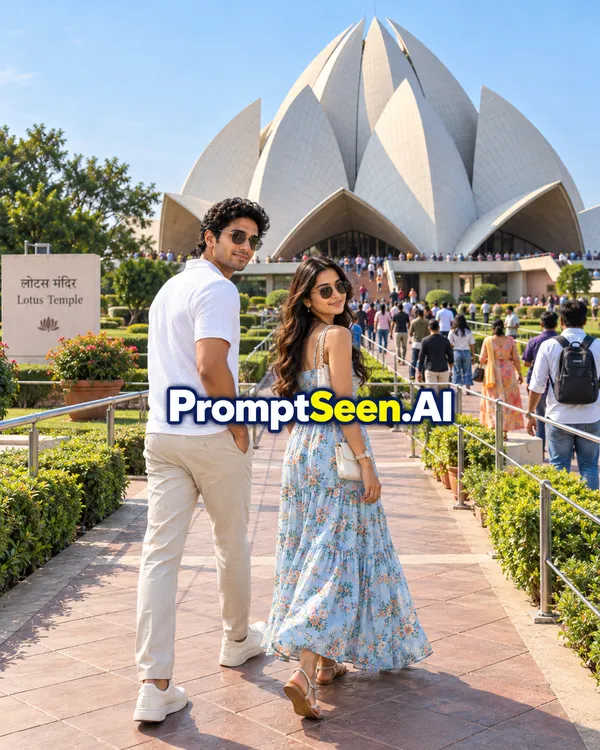
7. Lotus Temple Entrance Arrival Photograph
This template is designed to look like a spontaneous, candid moment captured just as you arrive at the temple grounds. It avoids the classic "posed" look for something much more natural and journalistic.
REFERENCE & IDENTITY LOCK — HIGHEST PRIORITY
Use the uploaded photo as the ONLY identity reference for the subject.
Preserve exactly:
• Same recognizable facial identity
• Same facial structure and natural proportions
• Same skin tone
• Same hairstyle and natural hair texture
• Same body proportions
• Same overall appearance
• Do not change, replace or beautify the face
Create an ultra-photorealistic travel photograph of the subject arriving at the entrance of the Lotus Temple in New Delhi, India.
CORE CONCEPT — ARRIVAL MOMENT:
This should look like a genuine travel photograph captured at the moment the subject is approaching the Lotus Temple entrance.
It is NOT a selfie.
It is NOT a studio portrait.
It is NOT a centered temple-background portrait.
The photograph should tell a small visual story: the subject has just arrived and is walking toward the entrance.
COMPOSITION:
• Use a natural three-quarter environmental composition
• Camera positioned several meters away from the subject
• Subject walking naturally toward the Lotus Temple entrance
• Subject slightly turned so the face remains visible to the camera
• Subject positioned toward one side of the frame
• Leave substantial negative space toward the entrance
• Use the entrance pathway as a natural leading line
• Lotus Temple architecture should gradually rise behind the entrance area
• Capture enough foreground pathway to establish depth
• Medium-wide travel photography framing
• Natural perspective rather than an artificially perfect symmetrical composition
SUBJECT:
• Natural walking posture
• One foot slightly ahead of the other
• Arms moving naturally while walking
• Relaxed shoulders
• Calm, authentic travel expression
• Subject may briefly look toward the camera
• No exaggerated smile
• No model-like pose
• No stiff standing position
• Clothing should move naturally with the walking motion
• Preserve realistic fabric folds and proportions
ENTRANCE ENVIRONMENT:
• Authentic Lotus Temple visitor approach and entrance environment
• Realistic pedestrian pathway
• Landscaped lawns and greenery
• Mature trees around the approach
• Natural stone or paved walking surfaces
• Realistic entrance/security area where appropriate
• Visitors naturally entering or leaving in the background
• Small groups of visitors at believable distances
• Realistic queue or visitor movement only if naturally appropriate
• Keep the environment clean but not unnaturally empty
LOTUS TEMPLE:
• Correct white marble petal-shaped architecture
• Architecturally accurate proportions
• Realistic scale relative to the entrance and people
• Natural perspective from the entrance approach
• Subtle atmospheric softness on distant architectural surfaces
• No distorted petals
• No fictional extensions
• No invented structures
LIGHTING:
Use natural early-evening outdoor light.
• Soft warm sunlight from a diagonal side direction
• Gentle illumination across the entrance pathway
• Natural shadows from trees and architectural elements
• Soft highlights on the white marble
• Realistic transition between sunlight and shade
• Slight natural atmospheric haze
• Balanced exposure between bright marble and shaded foreground
• No dramatic studio lighting
• No artificial rim light
• No fake sunset glow
• No excessive lens flare
COLOR THEME:
Create a realistic premium travel-photography palette:
• Natural white/ivory Lotus Temple
• Fresh but realistic green landscaping
• Warm neutral stone and pathway tones
• Soft blue sky
• Subtle warm sunlight
• Accurate natural skin tones
• Moderate saturation
• Natural contrast
• Realistic white balance
Avoid:
• Purple-heavy color grading
• Neon colors
• Teal-orange cinematic grading
• Excessive yellow/orange tint
• Oversaturated greenery
• Artificial color effects
CAMERA & PHOTOGRAPHY:
• Professional full-frame travel camera
• Approximately 35mm lens
• Natural environmental perspective
• Realistic optical depth
• Subject sharply focused
• Temple naturally detailed but slightly softer due to distance
• Realistic atmospheric perspective
• Natural background separation
• No artificial portrait-mode blur
• No excessive HDR
• No excessive clarity
• Subtle professional color correction
REAL HUMAN DETAILS:
• Natural skin pores
• Individual hair strands
• Realistic facial texture
• Natural clothing folds
• Accurate fabric texture
• Anatomically correct hands and fingers
• Realistic walking posture
• Natural facial asymmetry
• Genuine expression
• No beauty-filter appearance
AUTHENTIC LOCATION DETAILS:
Include believable small details such as:
• Natural variations in grass
• Slightly different visitor poses
• Realistic shadows from people
• Subtle pathway wear
• Natural tree shapes
• Different distances between visitors
• Realistic atmospheric depth
Do not make every object perfectly arranged or symmetrical.
STRICT ANTI-AI REALISM:
The final image must look like a genuine photograph taken during a real visit to the Lotus Temple.
DO NOT create:
• Plastic skin
• Wax-like face
• Perfect artificial skin
• Unrealistic eyes
• Excessive facial smoothing
• CGI appearance
• 3D-rendered architecture
• Artificial bokeh
• Fake lens flare
• Excessive HDR
• Over-sharpening
• Impossible shadows
• Distorted architecture
• Warped people
• Duplicate visitors
• Extra limbs or fingers
• Floating objects
• Artificially perfect landscaping
• Fantasy scenery
FINAL LOOK:
A believable, premium travel photograph capturing the subject's arrival at the Lotus Temple entrance.
It should feel like a real photographer happened to capture a natural travel moment while the subject was walking toward the entrance.
The scene must look geographically believable, physically realistic and naturally photographed.
NO AI-ART APPEARANCE.
NO CGI.
NO STUDIO LOOK.
NO HEAVY EDITING.
Aspect Ratio: 4:5
8. Lotus Temple Roadside Entrance View
Capture the anticipation of arriving at a famous landmark. This prompt frames the subject from the street level outside the complex, with the iconic white petals rising gracefully in the distance.
REFERENCE & IDENTITY LOCK — HIGHEST PRIORITY
Use the uploaded photo as the ONLY identity reference for the subject.
Preserve exactly:
• Same recognizable facial identity
• Same facial structure and natural proportions
• Same natural skin tone
• Same hairstyle and natural hair texture
• Same body proportions
• Same overall appearance
• Do not replace, redesign, beautify or alter the face
Create an ultra-photorealistic outdoor travel photograph of the subject standing on the public road-side approach outside the Lotus Temple, New Delhi, before entering the temple complex.
CORE CONCEPT — ROADSIDE ARRIVAL:
The photograph is taken from OUTSIDE the Lotus Temple complex, from the road/roadside approach.
The subject has arrived near the Lotus Temple entrance and is photographed naturally before entering.
This is NOT:
• an indoor photograph
• a selfie
• a drone photograph
• a helicopter photograph
• a museum photograph
• a close-up temple portrait
• a centered tourist pose
The image should feel like a genuine street-level travel photograph taken during a real visit.
CAMERA POSITION & COMPOSITION:
• Camera positioned from the roadside at natural human eye level
• Photograph the subject from a few meters away
• Subject positioned toward one side of the frame
• Lotus Temple entrance approach visible deeper into the composition
• Temple architecture visible beyond the entrance area rather than filling the entire background
• Use the road and pedestrian approach as natural leading lines
• Include realistic foreground road/sidewalk perspective
• Create a slightly diagonal composition rather than perfectly symmetrical framing
• Subject naturally facing the camera
• Medium-wide environmental travel photograph
• Leave enough surrounding space to communicate that the photograph was taken from outside the complex
SUBJECT:
• Subject standing naturally near the roadside/entrance approach
• Relaxed posture
• Natural facial expression
• Looking toward the camera as though a travel photographer has just captured the moment
• No selfie gesture
• No exaggerated smile
• No model-style pose
• Hands resting naturally
• Clothing remains exactly consistent with the uploaded reference unless naturally required by the scene
ROAD & OUTDOOR ENVIRONMENT:
Create a believable urban approach surrounding a major New Delhi landmark.
• Realistic paved road
• Natural roadside boundary and pedestrian area
• Appropriate entrance-side landscaping
• Green trees and maintained vegetation
• Realistic pavement texture
• Subtle road markings where naturally appropriate
• A small number of distant vehicles or visitors
• Naturally moving pedestrians in the distance
• Realistic traffic presence without making the scene crowded
• Authentic outdoor depth and perspective
• No fantasy cityscape
• No invented buildings dominating the background
LOTUS TEMPLE:
• Lotus Temple must remain recognizable
• Correct white petal-shaped architecture
• Realistic architectural proportions
• Temple positioned farther behind the entrance approach
• Natural atmospheric softness according to distance
• White marble should have realistic texture and reflected daylight
• Do not enlarge the temple unnaturally
• Do not create extra petals or fictional structures
• Do not distort the architecture
LIGHTING:
Use natural late-afternoon outdoor light.
• Soft sunlight coming from the side
• Natural illumination on the subject
• Realistic shadows falling across the road and pedestrian area
• Subtle highlights on the Lotus Temple's white marble
• Natural tree shadows
• Realistic sky illumination
• Balanced exposure between bright sky, road and white architecture
• No artificial studio lighting
• No dramatic cinematic rim light
• No fake sun rays
• No excessive lens flare
COLOR THEME:
Use an authentic New Delhi travel-photography color palette:
• Natural white/ivory temple
• Realistic green trees and landscaping
• Neutral gray asphalt
• Warm beige pedestrian surfaces
• Soft natural blue sky
• Accurate skin tones
• Slightly warm afternoon sunlight
• Moderate saturation
• Natural contrast
• Realistic white balance
Avoid:
• Purple-heavy color grading
• Neon colors
• Teal-orange cinematic grading
• Excessive orange/yellow tint
• Oversaturated green
• Artificially colorful surroundings
CAMERA STYLE:
• Professional full-frame travel camera
• 35mm environmental photography perspective
• Realistic optical depth
• Subject clearly focused
• Temple naturally detailed but slightly softer due to distance
• Genuine atmospheric perspective
• Natural background separation
• No artificial portrait-mode blur
• No excessive HDR
• No excessive sharpening
• Subtle professional color correction
REALISTIC STREET PHOTOGRAPHY DETAILS:
Include believable imperfections:
• Slight variation in pavement texture
• Natural shadows from trees and people
• Different distances between pedestrians
• Realistic vehicle placement
• Subtle atmospheric haze
• Natural variation in greenery
• Slightly uneven real-world composition
• No perfectly arranged background elements
• No artificial symmetry
AUTHENTIC HUMAN DETAILS:
• Natural skin pores
• Individual hair strands
• Realistic facial texture
• Natural clothing folds
• Accurate fabric texture
• Correct hands and fingers
• Realistic body proportions
• Natural facial asymmetry
• Genuine expression
• No beauty-filter appearance
STRICT ANTI-AI REALISM:
The final image must look like a genuine photograph captured from a real roadside location outside the Lotus Temple.
DO NOT create:
• Plastic skin
• Wax-like face
• Perfect artificial skin
• Unrealistic eyes
• Excessive face smoothing
• CGI appearance
• 3D-rendered architecture
• Fake road textures
• Impossible vehicle placement
• Distorted temple
• Warped people
• Duplicate pedestrians
• Extra fingers or limbs
• Floating objects
• Fake reflections
• Artificial bokeh
• Excessive HDR
• Over-sharpening
• Fantasy scenery
• AI-art appearance
PHYSICAL REALISM:
All elements must obey real-world perspective.
The roadside should be in the foreground.
The subject should be physically close to the camera.
The entrance approach should extend naturally into the background.
The Lotus Temple should appear farther away according to perspective.
Vehicles and pedestrians must have believable scale.
Shadows must follow one consistent sunlight direction.
FINAL LOOK:
The final photograph should look like an authentic travel photograph taken from the road outside the Lotus Temple just before entering the complex.
Natural, documentary, premium travel photography.
NO AI-GENERATED LOOK.
NO CGI.
NO FANTASY ENVIRONMENT.
NO STUDIO PORTRAIT.
NO HEAVY EDITING.
Aspect Ratio: 4:5
9. Lotus Temple Night Illumination Portrait
If you prefer evening aesthetics, a lotus temple night photo prompt instructs the AI to generate a deep blue twilight sky while bathing the white marble petals in soft, warm architectural lighting.
REFERENCE & IDENTITY LOCK — HIGHEST PRIORITY
Use the uploaded photo as the ONLY identity reference for the subject.
Preserve exactly:
• Same recognizable facial identity
• Same facial structure and natural proportions
• Same natural skin tone
• Same hairstyle and natural hair texture
• Same body proportions
• Same overall appearance
• Do not alter, replace, beautify or redesign the face
Create a highly photorealistic nighttime travel photograph of the subject outside the Lotus Temple in New Delhi, with the temple beautifully illuminated after sunset.
CORE CONCEPT — NIGHT LANDMARK PHOTOGRAPH:
This is a genuine evening travel photograph captured after dark.
The Lotus Temple is the main illuminated landmark in the scene, while the subject is naturally integrated into the environment.
This must NOT resemble:
• a daytime photograph converted to night
• a golden-hour portrait
• a selfie
• a drone photograph
• a studio portrait
• an AI-generated fantasy scene
COMPOSITION:
• Photograph from a natural pedestrian viewpoint several meters away
• Subject positioned in the lower-left third of the frame
• Lotus Temple occupies the central and upper portion of the composition
• Show a substantial amount of the surrounding evening landscape
• Subject standing naturally rather than posing like a model
• Subject looking toward the camera with a relaxed expression
• Use the illuminated pathways as subtle leading lines toward the temple
• Leave natural negative space around the architecture
• Keep the composition slightly asymmetrical and documentary-like
• The temple should visually dominate without making the subject tiny
NIGHTTIME ENVIRONMENT:
• Realistic Lotus Temple surroundings after sunset
• Darkening blue evening sky rather than completely black sky
• Naturally illuminated pedestrian paths
• Soft practical lighting around the visitor areas
• Realistic trees and landscaping visible under low light
• A few distant visitors naturally moving through the area
• Subtle distant city ambience
• No crowded festival atmosphere
• No artificial fireworks
• No fantasy skyline
LOTUS TEMPLE ILLUMINATION:
• White marble Lotus Temple naturally illuminated at night
• Architectural petals clearly defined by realistic lighting
• Soft warm-white architectural illumination
• Slight differences in brightness across the marble surfaces
• Natural falloff of light toward less illuminated areas
• Realistic shadows between architectural petals
• Avoid making the entire temple glow uniformly
• Preserve the real white marble appearance
• Architecture must remain accurate and recognizable
LIGHTING:
Create realistic mixed nighttime lighting.
• Soft warm-white illumination from the temple
• Subtle neutral pathway lighting
• Gentle ambient blue light from the evening sky
• Natural light falling on the subject's face from nearby practical lighting
• Realistic shadows around the subject
• Natural exposure transition between illuminated temple and darker surroundings
• Slight low-light atmospheric depth
• Realistic highlight control on the white marble
Do NOT use:
• Artificial sun
• Golden-hour sunlight
• Dramatic rim lighting
• Neon lighting
• Colored laser lights
• Fake light rays
• Excessive lens flare
COLOR THEME:
Use a sophisticated authentic night-travel palette:
• Warm ivory-white temple illumination
• Deep natural blue evening sky
• Dark but detailed green foliage
• Neutral gray pathways
• Warm subtle pathway lights
• Accurate natural skin tones
• Moderate contrast
• Controlled saturation
Avoid:
• Purple-heavy color grading
• Neon blue
• Oversaturated orange
• Teal-orange cinematic grading
• Excessive yellow
• Artificial glowing colors
CAMERA & PHOTOGRAPHIC CHARACTER:
• Professional full-frame low-light camera
• Approximately 35mm lens
• Realistic nighttime exposure
• Subject sharply focused
• Temple detailed and naturally illuminated
• Genuine optical depth
• Subtle natural low-light noise/grain
• Realistic highlight roll-off
• Natural shadow detail
• Moderate depth of field
• No artificial portrait-mode blur
• No excessive HDR
• No unrealistic clarity
The photograph should retain the tiny imperfections normally found in a real nighttime camera photograph.
REALISTIC HUMAN DETAILS:
• Natural skin pores
• Fine facial texture
• Individual hair strands
• Realistic clothing texture
• Natural fabric folds
• Correct hands and fingers
• Natural body proportions
• Genuine facial expression
• Subtle natural facial asymmetry
• No beauty-filter appearance
REALISTIC NIGHT PHOTOGRAPH IMPERFECTIONS:
Include subtle photographic characteristics such as:
• Very mild sensor grain in darker areas
• Slight softness in distant lights
• Natural exposure differences
• Realistic reflections on paved surfaces where appropriate
• Subtle light falloff
• Genuine atmospheric depth
• Small variations in background illumination
Do not make the image unnaturally perfect.
STRICT ANTI-AI REALISM:
The final photograph must look like an actual nighttime photograph captured by a professional travel photographer.
DO NOT create:
• Plastic skin
• Wax-like face
• Perfect artificial skin
• Unrealistic eyes
• Excessive face smoothing
• CGI appearance
• 3D-rendered architecture
• Fake night sky
• Artificially glowing trees
• Excessive bokeh
• Fake lens flare
• Impossible reflections
• Distorted temple petals
• Warped people
• Duplicate visitors
• Extra fingers
• Floating objects
• Excessive HDR
• Over-sharpening
• Fantasy lighting
• AI-art appearance
PHYSICAL & LIGHTING REALISM:
All illumination must obey real-world physics.
The temple should be brighter than the surrounding landscape.
Nearby surfaces should receive subtle reflected light.
Distant objects should become naturally darker and softer.
The subject's face should be illuminated by believable nearby environmental light.
Shadows must be consistent with the location of the practical lights.
FINAL LOOK:
Create the appearance of a genuine photograph taken during an evening visit to the Lotus Temple.
The viewer should feel that the subject is actually standing at the real Lotus Temple at night, surrounded by authentic architectural lighting and a naturally darkening New Delhi evening environment.
Premium travel photography, but still believable and documentary.
NO DAYLIGHT.
NO GOLDEN-HOUR LOOK.
NO AI-GENERATED AESTHETIC.
NO CGI.
NO FANTASY LIGHTING.
NO HEAVY EDITING.
Aspect Ratio: 4:5
10. Lotus Temple Midnight Low-Angle Perspective
For a highly dramatic and artistic result, this prompt positions the camera near the ground looking upwards. This forces the illuminated Lotus petals to tower above you, creating a majestic architectural portrait.
REFERENCE & IDENTITY LOCK — HIGHEST PRIORITY
Use the uploaded photo as the ONLY identity reference for the subject.
Preserve exactly:
• Same recognizable facial identity
• Same natural facial structure and proportions
• Same natural skin tone
• Same hairstyle and hair texture
• Same body proportions
• Same overall appearance
• Do not change, beautify, replace or redesign the face
Create a completely different, ultra-photorealistic nighttime travel photograph of the subject at the Lotus Temple in New Delhi.
CORE CONCEPT — LOW-ANGLE ARCHITECTURAL VIEW:
This photograph must be dramatically different from a normal front-facing night portrait.
The camera is positioned very low, approximately waist-to-knee height, and aimed slightly upward.
The Lotus Temple's illuminated architecture should dominate the upper part of the image, creating a strong sense of height and scale.
The subject is integrated into the architectural scene rather than presented as a conventional portrait.
CAMERA ANGLE & COMPOSITION:
• Very low camera position near ground level
• Camera tilted upward approximately 10–20 degrees
• Use a 24–28mm wide-angle full-frame perspective
• Subject positioned near the lower-right third of the frame
• Subject shown in a natural three-quarter profile
• Subject's face turned slightly toward the camera
• Lotus Temple rises dramatically behind and above the subject
• Large illuminated petals extend toward the top of the frame
• Use architectural lines to create a natural upward visual flow
• Do NOT center the subject
• Do NOT center the temple
• Do NOT use a conventional tourist portrait composition
• Include a small amount of foreground pathway for realistic scale
SUBJECT — NATURAL EVENING MOMENT:
• Subject standing casually as if pausing during an evening visit
• Body slightly angled toward the temple
• Head naturally turned toward the camera
• Calm, subtle expression
• No exaggerated smile
• No model pose
• Arms relaxed naturally
• Realistic clothing folds
• Natural posture
• Subject should appear physically present within the architecture
ARCHITECTURAL PERSPECTIVE:
• Lotus Temple must remain instantly recognizable
• Accurate white petal-shaped architecture
• Realistic architectural scale
• Natural perspective distortion caused by the low-angle wide lens
• Individual petals should remain structurally accurate
• Illuminated surfaces should reveal subtle marble texture
• Deep shadows between the architectural petals
• No invented extensions
• No fantasy structures
• No distorted geometry
NIGHT SKY:
• Deep natural navy-blue post-sunset sky
• Sky should retain subtle atmospheric detail
• Not completely black
• No stars unless naturally plausible
• No Milky Way
• No artificial celestial effects
• No dramatic clouds added purely for cinematic effect
LIGHTING — COMPLETELY DIFFERENT NIGHT MOOD:
Use architectural illumination rather than dramatic portrait lighting.
• Soft warm-white illumination across the Lotus Temple
• Gentle light spilling onto nearby pathways
• Subtle reflected light touching the subject's side of the face
• Natural falloff away from the temple
• Darker areas retain realistic detail
• Strong but believable contrast between illuminated marble and surrounding night
• No artificial rim light
• No colored spotlights
• No neon lighting
• No fake light beams
• No excessive lens flare
COLOR THEME:
Use a restrained architectural night palette:
• Warm ivory-white illuminated marble
• Deep navy-blue sky
• Natural dark green foliage
• Neutral charcoal-gray pathway
• Subtle warm-white practical lights
• Accurate natural skin tone
Color treatment must be realistic and restrained.
Absolutely avoid:
• Purple
• Magenta
• Neon blue
• Teal-orange cinematic grading
• Excessive orange
• Oversaturated colors
• Artificial glowing colors
CAMERA CHARACTER:
Make the photograph look like it was captured with a professional full-frame camera at night.
• 24–28mm wide-angle lens
• Low camera position
• Realistic perspective
• Moderate aperture
• Genuine low-light exposure
• Natural highlight roll-off
• Realistic shadow detail
• Subtle sensor noise in very dark areas
• Slight natural softness in distant lights
• Realistic optical characteristics
• No artificial computational blur
• No excessive HDR
• No oversharpening
IMPORTANT:
The wide-angle lens may naturally make the nearest architectural elements appear larger, but the distortion must remain optically believable.
REAL ENVIRONMENT:
• Authentic landscaped area around the Lotus Temple
• Realistic low-light greenery
• Natural paved pathway
• A few distant visitors as small background figures
• Visitors should have realistic scale and spacing
• Some distant pathway lights
• Natural nighttime atmosphere
• No artificial crowd
• No empty CGI-looking environment
PHOTOGRAPHIC REALISM:
Include subtle characteristics of a genuine night photograph:
• Mild sensor grain in deep shadows
• Slight highlight bloom around very bright practical lights
• Natural reflection on polished or slightly damp surfaces only where physically appropriate
• Realistic shadow softness
• Subtle atmospheric haze
• Natural exposure imperfections
• Fine but believable architectural detail
STRICT ANTI-AI REQUIREMENTS:
The final image must look like a real photograph.
DO NOT create:
• Plastic skin
• Wax-like face
• Perfect artificial skin
• Unrealistic eyes
• Beauty-filter effect
• Artificial facial symmetry
• CGI architecture
• 3D-rendered marble
• Fake night sky
• Impossible lighting
• Floating objects
• Warped temple petals
• Duplicate visitors
• Extra fingers
• Deformed hands
• Unrealistic body proportions
• Artificial bokeh
• Excessive HDR
• Excessive sharpening
• Fake lens flare
• Fantasy atmosphere
• AI-art appearance
PHYSICAL LIGHTING CONSISTENCY:
The illuminated Lotus Temple is the primary light source.
Therefore:
• Surfaces closer to the temple receive slightly more reflected illumination
• The subject's temple-facing side should be subtly brighter
• The opposite side can naturally fall into softer shadow
• Distant landscape becomes progressively darker
• Every shadow must agree with the architectural lighting
• No light source should appear from an impossible direction
FINAL VISUAL RESULT:
A striking but completely believable nighttime travel photograph captured from a very low camera position.
The viewer should see the subject as a real visitor standing beside the illuminated Lotus Temple, while the low-angle perspective makes the architecture rise dramatically into the deep blue night sky.
The image should feel like an authentic professional architectural-travel photograph — not a portrait template reused at night.
NO DAYLIGHT.
NO GOLDEN-HOUR LIGHT.
NO SELFIE.
NO DRONE VIEW.
NO HELICOPTER VIEW.
NO MUSEUM.
NO CONVENTIONAL FRONT-FACING PORTRAIT.
NO AI-GENERATED LOOK.
NO CGI.
NO FANTASY COLORS.
Aspect Ratio: 4:5
11. Lotus Temple Photos, History & Travel Info
If these lotus temple photos generated via AI inspire you to visit the actual location, here is some essential information you should know before planning your trip to New Delhi.
Lotus Temple Hindi Name
In Hindi, the monument is known as कमल मंदिर (Kamal Mandir). It is a Baháʼí House of Worship, notable for its flower-like shape and serves as the Mother Temple of the Indian subcontinent.
Lotus Temple History
Completed in 1986, the temple was designed by Iranian architect Fariborz Sahba. The Baháʼí Faith teaches that all religions are essentially one, which is why the Lotus Temple is open to all people, regardless of religion or any other qualification. The building is composed of 27 free-standing marble-clad "petals" arranged in clusters of three to form nine sides.
Lotus Temple Tickets, Timings & Closing Time
Visiting this architectural marvel is highly accessible:
Lotus Temple Tickets: Entry is absolutely free for everyone. There are no photography charges for basic smartphones or cameras, though commercial shoots require prior permission.
Lotus Temple Timings:
Summer: 9:00 AM to 7:00 PM
Winter: 9:00 AM to 5:30 PM
Lotus Temple Closing Time: The temple is closed every Monday. Make sure to plan your travel accordingly.
Lotus Temple Nearest Metro Station
The easiest way to reach the temple is via the Delhi Metro. The lotus temple nearest metro station is the Kalkaji Mandir Metro Station, which serves as an interchange between the Violet Line and the Magenta Line. The temple is just a short 5-minute walk from the station exit.
12. FAQ – Lotus Temple AI Photo Editing Prompts
What is a lotus temple ai photo prompt?
A lotus temple ai photo prompt is a specific text instruction you provide to AI image generators (like ChatGPT or Gemini) to realistically place your uploaded reference photo into a scene featuring the Lotus Temple.
Which AI is best for a lotus temple photo editing prompt?
Google Gemini Advanced and ChatGPT (DALL-E 3) are currently the best models for executing these prompts due to their strong identity-preservation features and architectural understanding.
Will the AI change my face when using a lotus temple picture prompt?
No. Our templates begin with strict 'IDENTITY LOCK' negative instructions that force the AI to preserve your original facial features, skin tone, and body proportions.
Can I use these templates for a lotus temple couple photo prompt?
Yes, while the primary prompts are designed for single subjects, you can easily adapt the 'Subject' section of the text to specify a couple by saying 'Use the uploaded couple photo...'
How does the lotus temple night photo prompt work?
Night prompts instruct the AI to change the environment from daylight to evening, adding a deep blue sky and subtle architectural illumination to the white marble petals of the temple.
What is the lotus temple hindi name?
In Hindi, the Lotus Temple is commonly referred to as 'कमल मंदिर' (Kamal Mandir). It is a Baháʼí House of Worship known for its flower-like shape.