Gandhi Jayanti Gemini Prompts: Selfie Photo With Gandhi Ji
G
By Gulshan Aggarwal|Category: Photo Editing Prompts|Last Updated: 29 September 2026
1. Gandhi Jayanti — A Real Tribute to Mahatma Gandhi
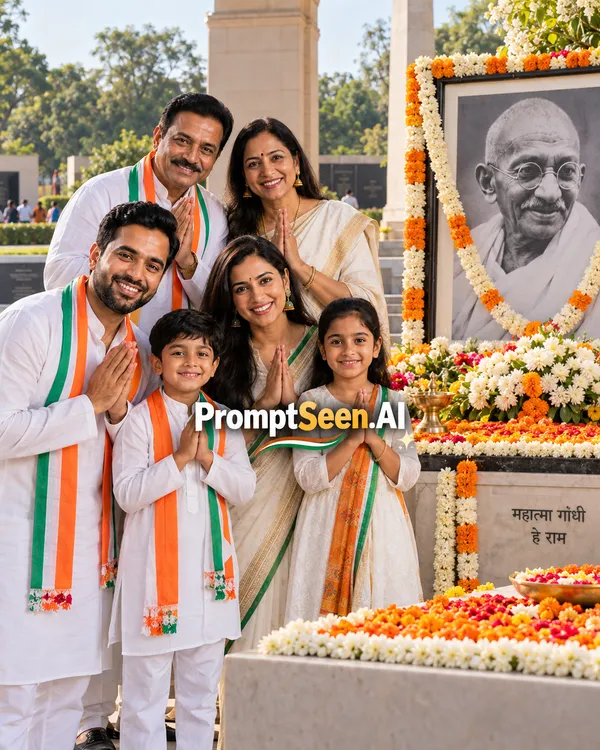
Start your day of remembrance with a serene documentary-style portrait. This gandhi jayanti photo prompt instructs the AI to place you in a peaceful memorial courtyard with fresh marigold flowers, offering a sincere "Namaste" tribute.
REFERENCE & IDENTITY LOCK — HIGHEST PRIORITY
Use the uploaded photo as the ONLY identity reference for the subject.
Preserve exactly:
• Same recognizable facial identity
• Same natural facial structure and proportions
• Same skin tone and complexion
• Same hairstyle and facial details
• Same age appearance
• Natural body proportions
• Do not beautify, reshape, or alter the face
Create a highly realistic documentary-style photograph of the person from the uploaded image paying a respectful tribute to Mahatma Gandhi on Gandhi Jayanti.
SCENE & COMPOSITION:
Place the subject at a real-looking Gandhi memorial setting in India, standing respectfully beside a simple floral tribute arrangement with fresh white and orange marigold flowers. In the background, include a tasteful, realistic framed black-and-white portrait of Mahatma Gandhi, subtly visible and naturally integrated into the environment.
The subject should stand with a calm, respectful expression and gently folded hands (Namaste), conveying genuine श्रद्धांजलि without looking theatrical or posed for a commercial photoshoot.
LOCATION:
A realistic outdoor Gandhi memorial courtyard in India during the early morning. Natural stone flooring, modest memorial architecture, a few real-looking trees, subtle greenery, and a peaceful atmosphere. The location must feel like an actual photographed place rather than a digitally constructed background.
LIGHTING:
Soft early-morning natural sunlight coming from one side, realistic shadows, gentle highlights on the face, natural ambient light, subtle atmospheric depth. No dramatic cinematic lighting, no artificial glow.
COLOR & MOOD:
Warm natural Indian colors — off-white, cream, muted saffron, soft green, natural stone gray and gentle floral orange. Keep the overall image bright, dignified and peaceful. Avoid overly dark colors, excessive orange, purple tones, neon colors, or dramatic red lighting.
CLOTHING:
Keep the subject's clothing realistic, elegant and appropriate for Gandhi Jayanti. Use simple traditional Indian styling in natural off-white/cream tones with subtle saffron or green detailing. Fabric texture must look physically real.
PHOTOGRAPHY STYLE:
Authentic professional documentary photography, full-frame camera look, realistic 50mm lens perspective, natural depth of field, subtle background separation, realistic skin texture, physically accurate fabric details, natural environmental reflections and shadows.
IMPORTANT REALISM:
The final image must look like an actual photograph captured at a real Gandhi memorial in India on Gandhi Jayanti.
Avoid:
• AI-generated appearance
• Plastic or overly smooth skin
• Unrealistic facial features
• Excessive HDR
• Over-sharpening
• Artificial bokeh
• Fake-looking flowers
• Fantasy background
• Excessive cinematic effects
• Unrealistic lighting
• Cartoon or illustration style
• Face distortion
• Extra fingers or malformed hands
• Duplicate people
• Artificial-looking Gandhi portrait
FINAL OUTPUT:
Ultra-realistic high-resolution photograph, authentic Indian environment, natural skin texture, realistic human anatomy, documentary photography quality, emotionally respectful Gandhi Jayanti tribute, visually clean and believable, as if captured with a professional camera in real life.
Aspect Ratio: 4:5
On the 2nd of October every year, India and the world celebrate Gandhi Jayanti. This day marks the birth anniversary of Mohandas Karamchand Gandhi, revered globally as the Father of the Nation. Many people ask, "Why is Gandhi Jayanti celebrated on 2nd October?" It is simply to honor his birth and his profound legacy of non-violence (Ahimsa) and truth. Although the Gandhi Jayanti date of death was January 30, 1948 (often referred to in searches around Gandhi jayanti death, which is technically observed as Martyrs' Day), October 2nd remains a day of pure celebration, peace, and national pride.
In 2026, paying tribute has taken a beautiful digital turn. With advanced AI tools, you no longer need complex Photoshop skills to create a respectful homage. By utilizing our specially crafted gandhi jayanti gemini prompts, you can instantly place your own photograph in serene memorial environments like Raj Ghat, or stand respectfully alongside a historically accurate representation of Mahatma Gandhi. These copy-paste text prompts ensure your facial identity is perfectly preserved while generating breathtaking, ultra-realistic heritage photography.
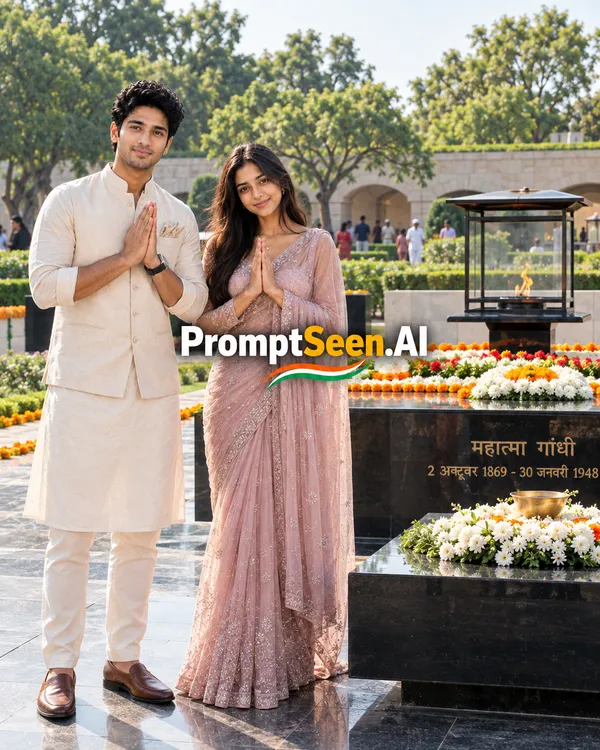
Raj Ghat in New Delhi is the ultimate symbol of remembrance. This gandhi jayanti ai photo editing prompt flawlessly places you beside the iconic black marble memorial with lush green surroundings, perfect for sharing your respects online.
REFERENCE & IDENTITY PRESERVATION — HIGHEST PRIORITY
Use the uploaded photo only as the visual identity reference for the person.
Preserve the person's recognizable identity naturally:
• Keep the same facial identity and facial proportions
• Keep the same natural skin tone
• Keep the same hairstyle and overall appearance
• Keep natural body proportions
• Do not change or exaggerate facial features
• Do not apply beauty-filter effects
• Do not make the person look like a different individual
Create a respectful, realistic documentary-style photograph showing the person visiting Raj Ghat in New Delhi and paying respects at Mahatma Gandhi's memorial.
SCENE:
The person is standing respectfully near the black marble memorial at Raj Ghat, with hands gently folded in a traditional Namaste gesture.
The scene should communicate quiet remembrance and respect. Keep the person's expression calm and natural, without exaggerated emotion or theatrical posing.
LOCATION:
Create a realistic outdoor Raj Ghat memorial environment with:
• The black marble memorial
• Natural green lawns
• Realistic trees and plants
• Clean stone pathways
• Subtle architectural details of the memorial grounds
• A peaceful morning atmosphere
The environment should look like a genuine location photograph rather than a digitally constructed scene.
COMPOSITION:
Use a natural three-quarter camera angle rather than a standard front-facing portrait.
Keep both the person and the memorial clearly visible. Use realistic environmental depth, with the surrounding greenery naturally framing the subject.
A few distant visitors may appear naturally in the background, slightly out of focus, without drawing attention away from the main subject.
LIGHTING:
Use soft natural morning daylight.
Create realistic illumination on the person's face, clothing, memorial and surrounding landscape. Shadows should be subtle and physically believable.
Do not use:
• Artificial studio lighting
• Dramatic spotlights
• Glowing effects
• Heavy cinematic lighting
• Excessive HDR
COLOR STYLE:
Bright, natural and realistic outdoor colors.
Preferred palette:
• Natural green
• Warm ivory
• Soft gray
• Earthy beige
• Subtle floral orange
Maintain natural color balance and realistic skin tones.
Avoid:
• Very dark color grading
• Neon colors
• Excessive saturation
• Purple-heavy color schemes
• Strong red lighting
• Artificial color effects
CLOTHING:
Keep the person's clothing realistic, simple and respectful for a visit to a memorial.
Use natural Indian clothing with realistic fabric texture, folds and stitching. The clothing should look physically photographed rather than digitally rendered.
FACIAL EXPRESSION:
Keep a peaceful, respectful and natural expression.
Avoid exaggerated sadness, dramatic emotional expressions or theatrical posing.
PHOTOGRAPHY:
Professional real-world documentary photography.
Use a realistic full-frame camera appearance with natural perspective, authentic depth of field, realistic skin texture, accurate shadows, natural hair detail and physically believable environmental lighting.
REALISM PRIORITY:
The final image should look like an authentic photograph captured at Raj Ghat.
Avoid:
• CGI appearance
• Illustration style
• Cartoon effects
• Plastic-looking skin
• Artificial facial details
• Excessive skin smoothing
• Unrealistic hands or fingers
• Distorted anatomy
• Fake-looking greenery
• Artificial background
• Excessive blur
• Over-sharpening
• Fantasy elements
Keep the text clearly readable while ensuring it does not cover the person's face, hands or the memorial.
FINAL RESULT:
A natural, respectful and photorealistic Gandhi Jayanti remembrance photograph at Raj Ghat, with the uploaded person's identity preserved accurately and the location appearing authentic and believable.
Aspect Ratio: 4:5
3. Gandhi Jayanti — Heritage Tribute Artwork
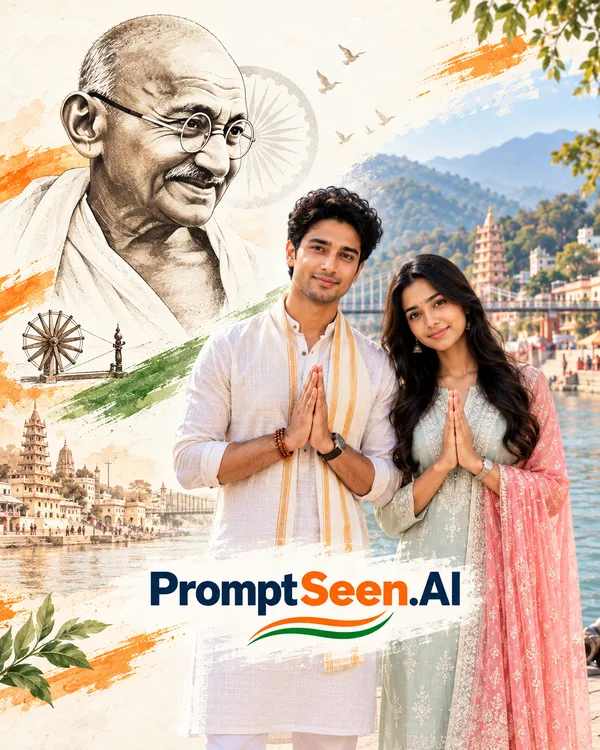
Looking for a creative mahatma gandhi poster prompt style? This instruction generates an elegant editorial-style poster that blends your realistic photograph with minimal, hand-drawn vector art of Bapu on a warm paper texture background.
REFERENCE IMAGE
Use the uploaded photograph as a general visual reference for the person appearing in the final artwork.
Keep the person naturally recognizable from the provided photograph, while maintaining a realistic photographic appearance.
Do not create an exaggerated likeness, caricature, celebrity-style portrait, or stylized recreation of the person's face.
CONCEPT
Create a sophisticated Gandhi Jayanti commemorative artwork combining:
• A realistic photographic portrait of the person from the uploaded image
• A tasteful historical vector-style representation of Mahatma Gandhi
• Minimal Indian-inspired artistic elements
• A clean editorial poster layout
COMPOSITION
Place the photographic portrait toward the lower-right portion of the artwork.
Place a small, elegant historical vector illustration representing Mahatma Gandhi toward the upper-left portion.
The two elements should remain visually separate, connected only through the overall composition and background design.
Use generous white space and an asymmetrical editorial layout so the design feels fresh and different from a conventional poster.
HISTORICAL VECTOR STYLE
Create a simple monochrome editorial illustration inspired by early 20th-century Indian historical portrait artwork.
Use minimal linework, soft charcoal-gray strokes and restrained shading.
The illustration should be respectful and documentary-inspired, without exaggerated facial features or caricature styling.
BACKGROUND
Use a clean warm-white paper background with subtle natural paper grain.
Add a few delicate hand-painted brush strokes in muted saffron and natural green around the edges.
Keep the center mostly white and uncluttered.
Do not create a large flag, political banner, campaign graphic or slogan.
COLOR PALETTE
• Warm white
• Ivory
• Soft beige
• Charcoal gray
• Muted saffron
• Natural green
• Very subtle earthy brown
Keep the colors bright, natural and sophisticated.
Avoid:
• Dark backgrounds
• Purple-dominant colors
• Neon colors
• Oversaturation
• Heavy gradients
• Glossy 3D effects
• Artificial glow
• Dramatic cinematic color grading
PHOTOGRAPHIC PORTRAIT
Keep the uploaded person's portrait realistic and naturally photographed.
Preserve realistic:
• Skin texture
• Hair
• Clothing
• Natural facial proportions
• Natural daylight
• Realistic shadows
Do not turn the photographic portrait into a cartoon, painting or vector illustration.
DESIGN QUALITY
The final artwork should resemble a professionally designed cultural magazine cover or commemorative editorial poster.
Use clean spacing, balanced proportions, subtle paper texture and carefully controlled visual hierarchy.
Avoid:
• AI-looking faces
• Plastic skin
• Distorted anatomy
• Excessive facial enhancement
• Unrealistic hands
• Random objects
• Fantasy scenery
• Heavy visual effects
• Excessive decorations
Place it near the lower-center area in a clean medium-sized modern typeface.
Keep it clearly readable but understated. Do not place it over either portrait.
FINAL RESULT
A clean, respectful Gandhi Jayanti commemorative artwork with a realistic photographic portrait, a restrained historical vector illustration and a bright handmade-paper aesthetic.
The design should feel authentic, elegant, minimal and professionally art-directed rather than looking like an AI-generated poster.
Aspect Ratio: 4:5
4. Gandhi Ji with India Map – Realistic Gandhi Jayanti Heritage Portrait
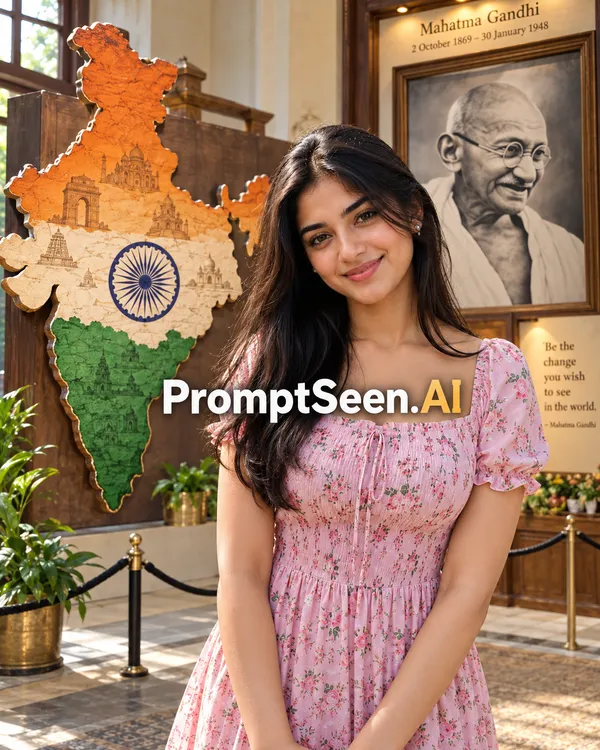
Perfect for patriotic displays, this mahatma gandhi ai photo prompt positions you inside a sophisticated cultural exhibition hall, standing proudly next to a beautifully carved wooden India map and a framed archival portrait.
ASPECT RATIO: 4 / 5
REFERENCE & IDENTITY LOCK — HIGHEST PRIORITY
Use the uploaded photo as the ONLY identity reference for the main subject.
Preserve exactly:
• Same recognizable facial identity
• Same natural facial structure and proportions
• Same skin tone and realistic skin texture
• Same hairstyle and facial characteristics
• No face reshaping, beautification, or artificial skin smoothing
• The person must remain clearly recognizable
SCENE & COMPOSITION
Create a highly realistic, authentic Gandhi Jayanti themed portrait featuring the uploaded person standing naturally beside a large, beautifully detailed representation of the INDIA MAP.
The composition should feel like a real heritage exhibition or professionally photographed Gandhi Jayanti installation rather than a digitally generated poster.
Place the India map slightly behind and to one side of the subject, large enough to be clearly visible but naturally integrated into the environment.
The India map should have an elegant physical appearance — subtle textured paper, carved wooden relief, or museum-style mounted map — NOT a glowing digital map and NOT a cartoon illustration.
Include a tasteful, realistic portrait of Mahatma Gandhi within the environment, such as a framed black-and-white archival photograph or a traditional Gandhi portrait mounted beside the India map.
Mahatma Gandhi should be recognizable and historically respectful:
• Round spectacles
• Simple white khadi clothing
• Natural archival-photo appearance
• No exaggerated facial features
• No fantasy styling
LOCATION & ENVIRONMENT
Set the scene inside an authentic Indian heritage gallery / old educational institution / cultural exhibition hall.
Use realistic architectural details:
• Warm wooden display panels
• Slightly aged cream-colored walls
• Natural stone or wooden flooring
• A few subtle heritage objects
• Soft daylight entering through large windows
The environment should look genuinely photographed in India.
Avoid futuristic interiors, artificial studios, neon lights, digital screens, fantasy backgrounds, or overly decorative political-poster aesthetics.
COLOR & LIGHTING
Use a refined Indian heritage color palette:
• Warm ivory
• Natural beige
• Muted saffron
• Soft green
• Deep earthy brown
• Small accents of navy blue
The India map may subtly incorporate India's tricolor tones, but keep them realistic and sophisticated rather than extremely saturated.
Use natural late-afternoon window light coming from one side.
Realistic shadows, natural skin highlights, subtle ambient reflections and authentic photographic exposure.
No excessive glow.
No HDR effect.
No cinematic color grading.
No artificial rim light.
PHOTOGRAPHIC REALISM
Make the entire image look like it was captured with a professional full-frame DSLR camera.
Natural depth of field.
Realistic lens perspective.
Accurate proportions.
Authentic skin pores.
Natural fabric texture.
Subtle environmental imperfections.
Realistic shadows and reflections.
The India map, Gandhi portrait, architecture and subject must all share the same physical lighting conditions and photographic perspective.
The final result must look like a genuine photograph taken inside an Indian heritage exhibition.
IMPORTANT:
Do NOT make it look like an AI-generated image.
Do NOT create plastic skin.
Do NOT use excessive sharpness.
Do NOT create artificial glowing edges.
Do NOT use fantasy lighting.
Do NOT distort the India map.
Do NOT alter the subject's face.
FINAL VISUAL MOOD
Respectful, patriotic, historical, educational and emotionally warm.
The overall design should communicate:
India • Heritage • Freedom • Gandhi Jayanti • Unity
Keep the composition elegant and uncluttered, with the uploaded subject remaining the primary visual focus while Gandhi Ji and the India Map provide the historical context.
5. Raj Ghat Selfie — Natural Drone Heritage Shot
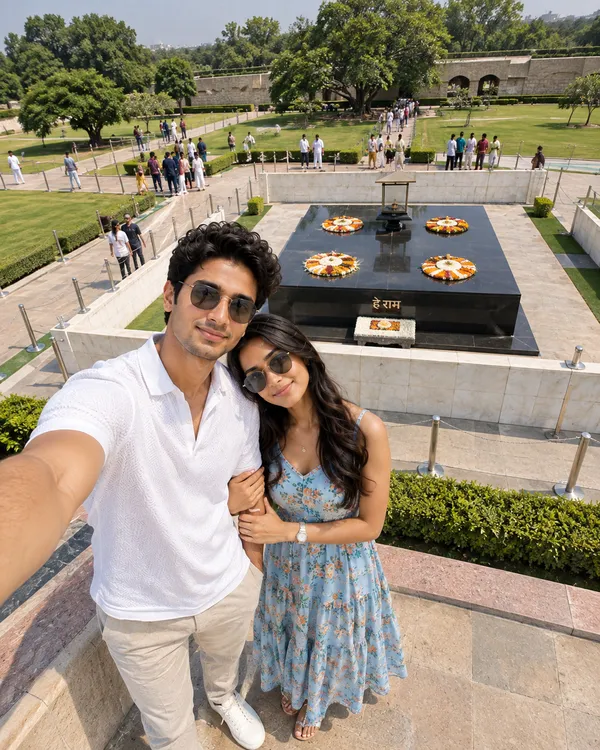
If you want a more modern approach to capturing a memorial visit, this gandhi ji selfie prompt uses an elevated drone camera perspective. It perfectly balances your face in the foreground while showing the vast, green expanses of Raj Ghat behind you.
ASPECT RATIO: 4 / 5
Create a highly realistic cinematic drone-style photograph of the person
from the uploaded image visiting Raj Ghat in New Delhi, respectfully taking
a selfie-style photograph with the memorial environment visible behind them.
REFERENCE & IDENTITY:
Use the uploaded image only as a visual reference for the person.
Preserve the person's recognizable facial characteristics, natural skin tone,
facial proportions, hairstyle and overall appearance.
Do not alter the person's identity or facial structure.
SCENE:
Place the person naturally within the outdoor memorial surroundings of
Raj Ghat, with the black marble memorial platform and its surrounding
landscape clearly visible in the background.
The location should feel like a genuine real-world photograph taken at
Raj Ghat.
Keep the memorial respectfully presented and avoid adding invented
monuments or unrealistic architectural details.
DRONE CAMERA CONCEPT:
Capture the scene from a high elevated drone perspective, slightly
diagonal rather than directly overhead.
The person should remain clearly visible while the surrounding memorial
garden and pathways establish the real location.
Create the visual impression of a memorable travel selfie captured using
a drone camera.
Use a natural wide-angle perspective with realistic spatial proportions.
COMPOSITION:
Place the person slightly off-center rather than directly in the middle.
Show enough surrounding landscape to communicate the location.
Maintain a natural amount of negative space around the subject.
The memorial should remain visible but should not overpower the person.
COLOR & ENVIRONMENT:
Use a bright natural daytime palette:
• Warm natural greens from the garden
• Soft beige and earthy stone tones
• Natural blue sky
• Neutral white clothing tones
• Subtle warm sunlight
Keep colors realistic and slightly subdued.
Avoid oversaturated greens, artificial orange skies or dramatic cinematic
color grading.
LIGHTING:
Natural late-morning sunlight.
Soft realistic shadows.
Natural skin highlights.
Authentic outdoor exposure.
Subtle atmospheric depth.
No artificial glow.
No HDR appearance.
No excessive contrast.
REALISTIC PHOTOGRAPHY:
Make the image resemble an authentic high-resolution photograph captured
by a professional drone camera.
Include realistic:
• Natural skin texture
• Fine clothing details
• Genuine vegetation
• Realistic stone and marble texture
• Natural shadows
• Slight atmospheric haze
• Accurate perspective
• Real-world environmental imperfections
The entire scene must share consistent lighting, perspective and depth.
IMPORTANT:
The result should look like a genuine travel photograph, not an AI-generated
image or fantasy scene.
Do not create:
• Futuristic buildings
• Fantasy landscapes
• Artificial monuments
• Excessive visual effects
• Unrealistic sky
• Plastic-looking skin
• Distorted hands or face
• Oversized objects
• Extra people positioned unnaturally
• Text, logos or watermarks
MOOD:
Peaceful, respectful, authentic Indian heritage travel photography.
The final composition should feel like a naturally captured personal
moment at Raj Ghat, photographed from an elevated drone viewpoint.
6. Gandhi Ji — Dove of Peace Natural Heritage Portrait
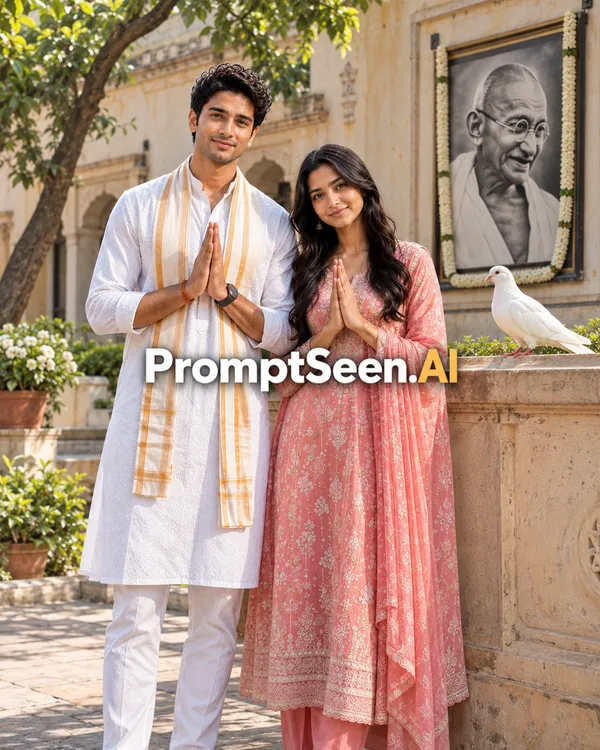
Embrace the philosophy of non-violence (Ahimsa) with this beautiful and serene prompt. It perfectly blends a documentary-style photo of you in a heritage courtyard with the symbolic presence of a white dove of peace.
ASPECT RATIO: 4 / 5
Create a realistic, respectful commemorative portrait featuring the person
from the uploaded image standing in an authentic Indian heritage setting,
with a white dove naturally present as a symbol of peace.
REFERENCE & IDENTITY:
Use the uploaded image only as a visual reference for the person.
Preserve the person's recognizable facial characteristics, natural skin tone,
facial proportions, hairstyle and authentic appearance.
Do not change the person's identity or facial structure.
MAIN CONCEPT:
Create a peaceful visual composition inspired by Gandhi Ji's philosophy
of peace and non-violence.
Place the person naturally in a quiet heritage courtyard with a tasteful,
framed black-and-white archival-style portrait of Mahatma Gandhi visible
in the background.
A real-looking white dove should be positioned near the person, either
resting gently on a nearby stone ledge or captured naturally in flight
slightly above shoulder level.
The dove must look like a real bird with detailed feathers, natural anatomy
and believable lighting.
LOCATION:
Use an authentic Indian heritage courtyard with:
• Aged cream-colored plaster walls
• Natural sandstone details
• Simple stone flooring
• A few mature green trees
• Softly weathered architectural surfaces
• Natural open-air surroundings
Keep the environment understated and realistic.
Do not create a fantasy monument or digitally perfect environment.
COMPOSITION:
Use a slightly low three-quarter camera angle.
Place the person on one side of the frame and allow the dove and Gandhi
portrait to create a natural visual balance on the opposite side.
Keep sufficient breathing space around the subjects.
The composition should feel like a professionally photographed cultural
heritage portrait rather than a poster.
COLOR THEME:
Use a bright, warm and natural Indian heritage palette:
• Ivory
• Warm cream
• Soft sandstone beige
• Natural leafy green
• Muted sky blue
• Pure white for the dove
Use extremely subtle saffron and green accents only where naturally present.
Avoid dark or overly saturated color schemes.
LIGHTING:
Natural early-morning sunlight entering from one side.
Soft realistic shadows.
Natural skin highlights.
Gentle sunlight on the dove's feathers.
Subtle atmospheric depth.
No artificial glow.
No neon lighting.
No excessive HDR.
No dramatic fantasy lighting.
PHOTOGRAPHIC REALISM:
Make the scene look like a genuine photograph captured with a professional
full-frame camera.
Use:
• Realistic skin texture
• Authentic fabric texture
• Detailed natural feathers
• Real stone and plaster surfaces
• Natural vegetation
• Accurate depth of field
• Realistic lens perspective
• Subtle environmental imperfections
All elements must share the same physical lighting and photographic
perspective.
IMPORTANT:
The final result should look naturally photographed, not AI-generated.
Avoid:
• Cartoon styling
• 3D-rendered appearance
• Artificially perfect skin
• Distorted faces
• Unrealistic bird anatomy
• Floating objects
• Fantasy backgrounds
• Excessive decorations
• Extra text
• Logos
• Watermarks
FINAL MOOD:
Peaceful, human, respectful and timeless.
The photograph should visually communicate peace, simplicity and harmony
through the natural interaction of Gandhi Ji's historical presence,
the white dove and the authentic Indian heritage environment.
7. Gandhi Portrait from Charkha — Authentic Craft Photography
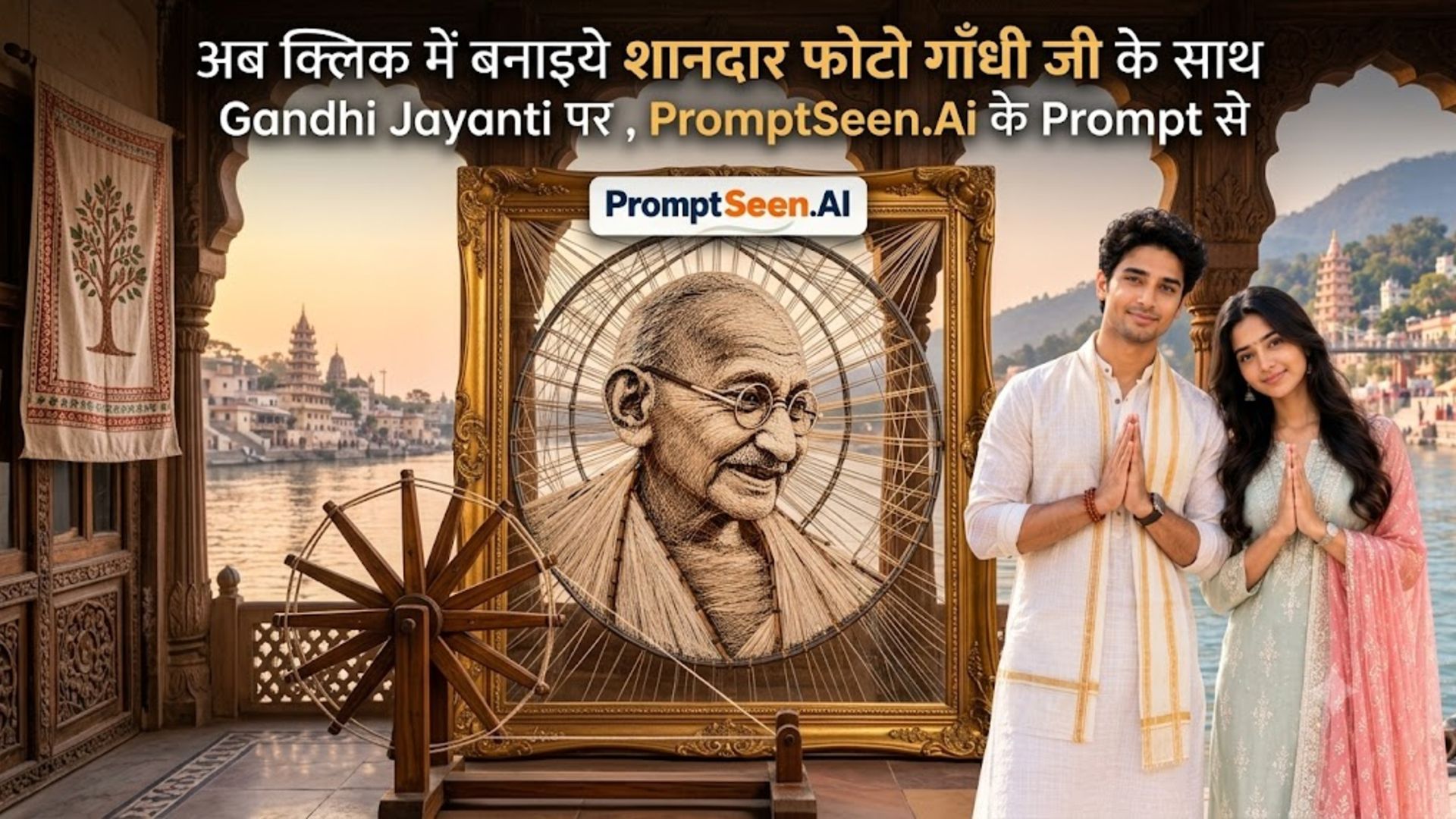
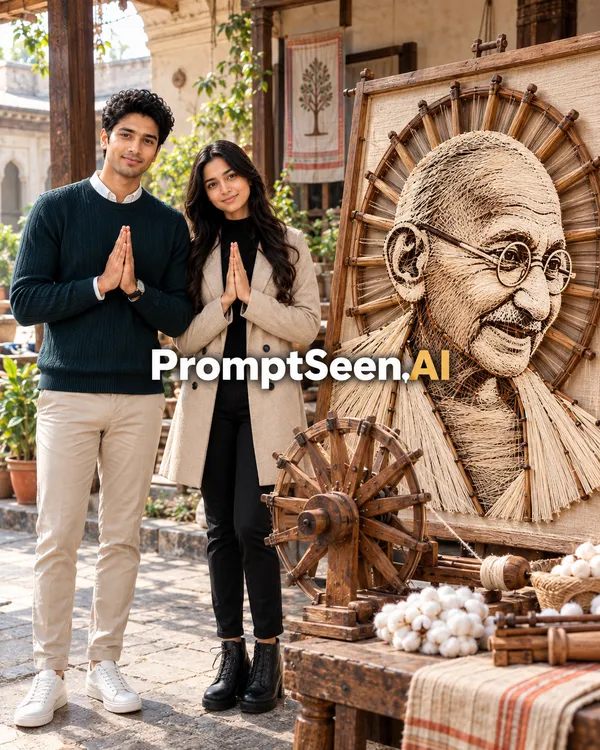
Celebrate the symbol of self-reliance (Swadeshi). This incredibly unique gemini ai image prompt creates an optical illusion where Mahatma Gandhi's portrait is formed physically from the cotton threads and wooden spokes of a traditional Charkha.
ASPECT RATIO: 4 / 5
Create a realistic Indian heritage photography scene using the uploaded
photo as the visual reference for the person appearing in the final image.
Keep the person looking natural and photographically realistic, including
their general appearance, hairstyle, beard, clothing style and natural
facial characteristics.
MAIN CONCEPT:
Show the person standing beside a large traditional Indian wooden charkha
(spinning wheel).
Create a beautiful handcrafted portrait of Mahatma Gandhi using the
physical structure of the charkha, natural cotton threads and wooden
elements.
The Gandhi portrait should appear to be an actual handmade craft artwork,
not a digital image placed onto the charkha.
The portrait can be formed through:
• Carefully arranged cotton threads
• Wooden spokes
• Fine natural fibers
• Circular charkha components
• Subtle woven thread patterns
The combination of these physical materials should create a recognizable
artistic representation of Gandhi Ji.
PERSON & COMPOSITION:
Place the person naturally beside the handcrafted artwork.
Use a relaxed standing pose and a genuine natural expression.
Keep the person clearly visible while allowing the complete charkha
artwork to remain the main creative feature.
Use an eye-level three-quarter photography angle rather than a straight
front-facing composition.
LOCATION:
Set the scene inside a real Indian handicraft exhibition space connected
to a traditional artisan workshop.
Include subtle authentic details:
• Natural wooden worktable
• Handwoven cotton fabric
• Raw cotton fibers
• Traditional craft materials
• Warm plaster walls
• Stone flooring
• A few green plants near an open courtyard
Keep the background simple and naturally imperfect.
Do not make the location look like a computer-generated studio.
COLOR THEME:
Use a bright and natural heritage palette:
• Warm ivory
• Natural cotton white
• Light wooden brown
• Soft beige
• Muted earthy green
• Very subtle saffron accents
Keep the colors realistic and lightly desaturated.
Avoid dark cinematic colors and avoid excessive saturation.
LIGHTING:
Use soft natural daylight coming through an open workshop window or
courtyard.
Create believable shadows beneath the charkha and around the person.
Natural highlights on the wooden surface and cotton fibers.
Natural outdoor-to-indoor ambient light.
No neon lighting.
No artificial glow.
No excessive HDR.
No dramatic fantasy lighting.
PHOTOGRAPHIC STYLE:
Make the final image resemble a genuine high-resolution photograph taken
by a professional documentary photographer.
Show realistic:
• Natural skin texture
• Real fabric folds
• Individual cotton fibers
• Authentic wood grain
• Small handmade imperfections
• Natural shadows
• Realistic depth of field
• Accurate perspective
The physical materials should look tactile and believable.
IMPORTANT:
The charkha artwork must be physically integrated into the scene.
Do not place a flat Gandhi photograph over the charkha.
Do not create floating threads or impossible geometry.
Avoid cartoon, anime, CGI or futuristic styling.
Avoid excessive decorative elements.
Keep the overall composition clean, authentic and respectful.
FINAL LOOK:
A sophisticated, authentic Indian craft photograph showing a person
beside an impressive handmade Gandhi portrait created from a traditional
wooden charkha and cotton threads.
The scene should look physically photographed in a real artisan workshop,
with natural materials, realistic daylight and subtle imperfections rather
than an artificial digital-rendered appearance.
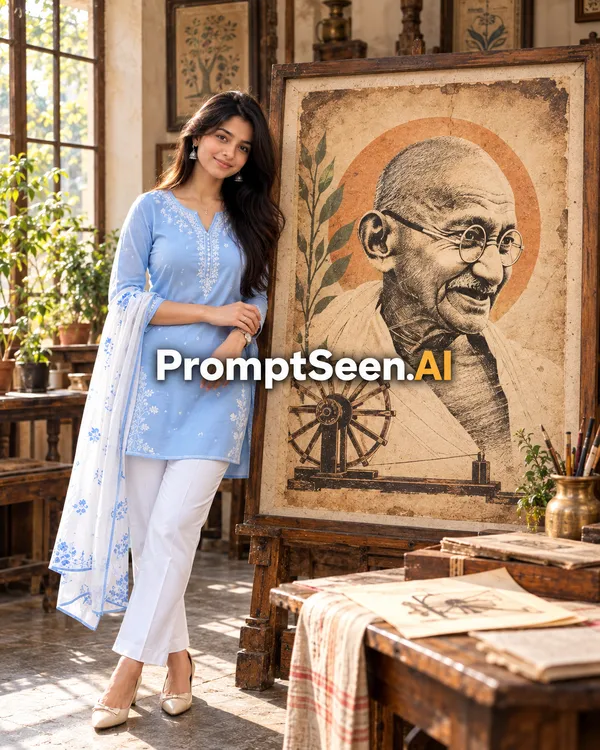
8. Gandhi Heritage Print — Original Vintage-Inspired Portrait
If you prefer an indoor, artistic look, this mahatma gandhi photo editing prompt sets you inside a rustic design studio, standing next to a large, hand-printed commemorative poster of Bapu.
ASPECT RATIO: 4 / 5
Create an original vintage-inspired Indian heritage photograph featuring
the person from the uploaded image standing beside a newly designed
commemorative artwork inspired by classic Indian print aesthetics.
REFERENCE:
Use the uploaded photograph as the visual reference for the person in the
scene.
Keep the person natural and realistic, with their general appearance,
hairstyle, beard, clothing and natural facial characteristics preserved in
a photographic way.
Do not turn the person into an illustration.
MAIN CONCEPT:
Place the person beside a large ORIGINAL commemorative Gandhi artwork
displayed as a physical printed art panel.
The artwork should feature a respectful artistic representation of
Mahatma Gandhi created specifically for this composition.
The design must be original and must not reproduce or imitate any
specific existing poster, photograph, artwork, book cover or historical
print.
GANDHI ARTWORK STYLE:
Create an elegant vintage-inspired illustration using:
• Simplified monochrome portrait treatment
• Fine hand-printed style linework
• Warm aged-paper appearance
• Subtle ink texture
• Slightly imperfect printing
• Traditional Indian graphic-design influence
• Restrained geometric framing
The artwork should feel historically inspired but clearly newly designed.
Do not copy any recognizable existing Gandhi poster or photograph.
SCENE:
Place the printed artwork inside a simple wooden display frame.
The person stands naturally beside the frame in a relaxed pose.
Use an asymmetrical composition with the person occupying one side and
the artwork occupying the other.
Keep enough surrounding environment visible to make the photograph feel
like a real location rather than a graphic mockup.
LOCATION:
Create a real-looking Indian heritage design studio with:
• Warm lime-plastered walls
• Aged wooden furniture
• Natural stone floor
• Handmade paper samples
• Simple wooden display stands
• A few potted green plants
• Soft daylight entering through a large window
Keep the environment authentic, modest and uncluttered.
COLOR THEME:
Use a fresh but vintage-inspired palette:
• Warm ivory
• Antique cream
• Natural teak brown
• Soft charcoal
• Muted olive green
• Small muted saffron accents
Keep the colors naturally faded rather than highly saturated.
Avoid dark cinematic grading and avoid neon or artificial colors.
LIGHTING:
Use soft natural morning daylight.
Create realistic shadows from the person, frame and furniture.
Natural highlights on the printed paper.
Subtle paper texture.
Realistic ambient light.
No artificial glow.
No HDR effect.
No neon lighting.
No fantasy lighting.
PHOTOGRAPHIC REALISM:
Make the final scene look like a genuine photograph taken inside a
small Indian heritage design studio.
Include:
• Natural skin texture
• Real clothing folds
• Authentic wood grain
• Physical paper texture
• Slightly uneven printed ink
• Natural wall imperfections
• Realistic perspective
• Subtle camera depth of field
The artwork must physically exist as a printed panel within the scene.
IMPORTANT ORIGINALITY REQUIREMENT:
Create a completely new visual composition.
Do not reproduce, trace, recreate or closely imitate any existing Gandhi
poster, photograph, illustration, painting, publication artwork or
commercial design.
Use only the broad visual idea of an Indian heritage-inspired print.
Keep it subtle and clearly readable without covering the person's face or
the Gandhi artwork.
Do not add any other modern branding or slogans.
AVOID:
• Copying an existing poster
• Recreating a famous photograph
• Replica artwork
• Specific historical poster layouts
• Watermarks from other sources
• Cartoon appearance
• CGI appearance
• Artificial skin
• Excessive decorations
• Fantasy architecture
• Neon colors
• Extra prominent people
• Unrelated text
FINAL LOOK:
A realistic photograph of a person visiting an Indian heritage design
studio, standing beside an ORIGINAL vintage-inspired Gandhi commemorative
print.
The result should combine authentic Indian materials, warm natural
lighting, subtle aged-paper texture and contemporary photographic
realism while remaining clearly an original artwork.
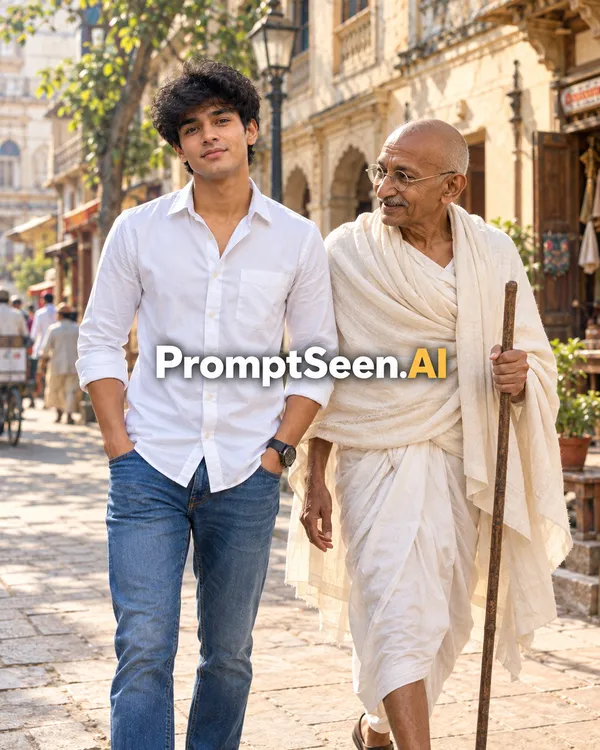
9. Gandhi Heritage Walk — Natural Historical Documentary Portrait
Merge past and present. This prompt generates a beautiful, peaceful scene where you are walking respectfully on a historic street alongside a tasteful, artistic representation of Mahatma Gandhi.
ASPECT RATIO: 4 / 5
Create a realistic historical-inspired documentary photograph featuring
the person from the uploaded image walking alongside a respectful artistic
representation of Mahatma Gandhi during a peaceful heritage march.
REFERENCE:
Use the uploaded photograph as the visual reference for the person.
Keep the person natural and photorealistic, including their general
appearance, hairstyle, clothing and natural facial characteristics.
Do not transform the person into an illustration.
CORE SCENE:
Show the person walking naturally beside a historically inspired
representation of Mahatma Gandhi on a quiet Indian heritage street.
Both figures should be walking in the same direction at a comfortable,
natural pace.
The moment should feel like a candid documentary photograph rather than
a staged poster.
GANDHI REPRESENTATION:
Show Gandhi Ji in simple traditional khadi clothing with his recognizable
round spectacles and calm expression.
Present him as a respectful historical artistic representation.
Do not recreate any specific existing photograph, painting, poster or
archival image.
Create a fresh original composition.
MARCH ENVIRONMENT:
Set the scene on a broad old Indian street near a heritage district.
Include subtle realistic details:
• Aged cream and sandstone buildings
• Simple balconies and wooden windows
• Natural stone pavement
• A few trees along the roadside
• Small traditional shops in the distance
• Soft morning activity in the background
Keep the surroundings authentic and understated.
Avoid a crowded political-rally atmosphere.
The scene should represent a peaceful historical heritage walk.
COMPOSITION:
Use a side-front three-quarter camera angle, approximately at eye level.
The person should be slightly closer to the camera while Gandhi Ji walks
naturally beside them.
Capture both subjects from approximately knee level upward while retaining
enough background to establish the location.
Use natural walking posture and realistic movement in clothing.
Do not create exaggerated poses.
COLOR THEME:
Use a bright, natural Indian heritage palette:
• Warm cream
• Soft sandstone
• Natural beige
• Muted olive green
• Gentle sky blue
• Small natural saffron accents
Keep colors realistic and slightly warm.
Avoid overly dark grading, neon colors, purple-heavy tones or excessive
saturation.
LIGHTING:
Natural early-morning sunlight.
Soft directional shadows from nearby buildings and trees.
Natural highlights on skin and clothing.
Gentle atmospheric depth in the distance.
No artificial glow.
No dramatic studio lighting.
No excessive HDR.
No fantasy lighting.
PHOTOGRAPHIC REALISM:
Make the scene look like a genuine documentary photograph captured with a
professional full-frame camera.
Include realistic:
• Natural skin texture
• Genuine fabric folds
• Realistic walking motion
• Natural street surfaces
• Weathered building textures
• Subtle environmental imperfections
• Accurate perspective
• Realistic depth of field
• Natural atmospheric haze
All elements must share consistent lighting, scale and perspective.
IMPORTANT:
The scene should be completely original.
Do not reproduce or closely imitate any famous historical photograph,
poster, painting, film scene or archival composition.
Do not create a political rally, campaign scene, party event or propaganda
poster.
Keep the moment peaceful, respectful and documentary in nature.
AVOID:
• Political slogans
• Party symbols
• Campaign banners
• Modern advertising
• Extra prominent text
• Cartoon styling
• CGI appearance
• Artificial skin
• Unrealistic architecture
• Floating objects
• Excessive crowd density
• Dramatic cinematic effects
FINAL VISUAL DIRECTION:
A natural, peaceful Indian heritage documentary photograph showing the
person from the uploaded image walking alongside a respectful historical
representation of Mahatma Gandhi.
The photograph should feel candid, physically realistic and naturally
captured on a real Indian heritage street, with authentic architecture,
soft morning light and believable environmental details.
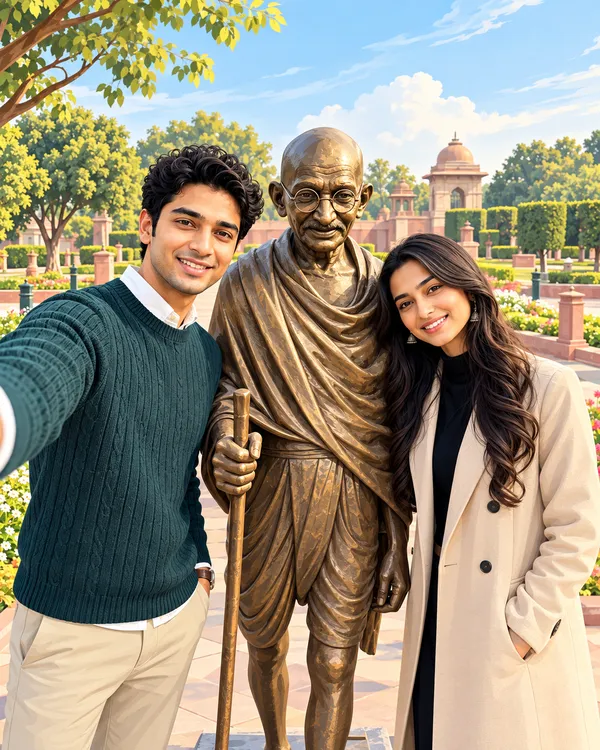
10. Gandhi Ji Statue Garden Portrait
If you want to include someone else in the memory, use this couple-friendly gandhi jayanti photo generator prompt. It frames two uploaded subjects perfectly on either side of a beautiful outdoor Gandhi memorial statue.
REFERENCE IMAGE & IDENTITY
Use the uploaded couple photo as the visual reference for the two main subjects. Preserve both people's recognizable facial appearance, natural facial proportions, hairstyle, skin tone, age, and overall likeness. Keep their identities consistent with the uploaded reference image.
SCENE & COMPOSITION
Create a realistic close selfie featuring the uploaded couple standing on both sides of a Mahatma Gandhi Ji statue.
The Gandhi Ji statue must be positioned clearly in the center of the composition, fully recognizable and visually prominent. The uploaded woman stands naturally on one side of the statue and the uploaded man on the other side, with all three subjects fitting naturally into the close selfie frame.
The couple is standing close to the statue as if they are happily taking a memorable selfie together. Both people are looking toward the camera with natural, relaxed expressions.
STATUE DETAILS
Mahatma Gandhi Ji's statue should have a recognizable traditional appearance, including his round spectacles, bald head, simple traditional clothing, and peaceful expression.
The statue should look like a real outdoor public monument, with realistic stone or bronze texture and natural surface details.
SELFIE PERSPECTIVE
Make the image feel like a genuine smartphone close selfie taken by one member of the couple.
Use a natural wide-angle selfie perspective while keeping all faces and the Gandhi Ji statue clearly visible. Avoid excessive fisheye distortion.
The couple should appear slightly closer to the camera while the statue remains clearly visible in the center behind/between them.
BACKGROUND
Use a realistic Indian public location such as a clean memorial garden, civic square, or Gandhi memorial area.
Include subtle environmental details such as trees, pathway, landscaped surroundings, or a simple monument area. Keep the background realistic but not distracting.
LIGHTING & REALISM
Natural daylight, realistic skin texture, authentic clothing details, accurate statue material, soft natural shadows, realistic depth of field, documentary photography style, and lifelike colors.
The final result should look like a real photograph captured on a smartphone, not an illustration, painting, CGI render, or artificial-looking composite.
IDENTITY PRESERVATION
Do not change the couple's recognizable facial features. Do not merge faces, duplicate people, distort facial proportions, or replace the uploaded subjects with different people.
Keep both uploaded subjects clearly recognizable throughout the image.
TEXT
Add "PromptSeen.AI" in medium-sized, clean typography at the center of the image, positioned tastefully so it does not cover the couple's faces or the important details of Gandhi Ji's statue.
FRAMING
Close selfie composition, couple on both sides, Gandhi Ji statue clearly centered between them, all important facial and statue details visible, natural headroom, balanced composition, realistic smartphone photography.
Aspect Ratio: 4:5
11. How to Use Gandhi Jayanti Gemini Prompts
Using these prompts to create your own tribute is incredibly easy. Google Gemini Advanced natively supports reference image uploads combined with text instructions.
Upload a Clear Photo: Make sure you choose a well-lit photograph of yourself where your face is clearly visible, preferably without sunglasses.
Copy the Template: Click the "Copy" button below any of the gandhi jayanti gemini prompt copy paste templates above that match the aesthetic you want (e.g., Raj Ghat, India Map, or Charkha).
Paste and Generate: Paste the text directly into the Gemini prompt box along with your photo. Press generate, and let the AI do the heavy lifting!
12. Tips for Creating Realistic Gandhi Jayanti AI Photos
If you want to ensure your gandhi jayanti photo editing looks like a real memory rather than a cartoonish AI generation, keep these technical tips in mind:
Identity Lock is Crucial: Notice how our prompts always begin with "Preserve exactly recognizable facial identity." This forces the AI to map your real face onto the generated body instead of inventing a random one.
Demand Natural Lighting: AI loves adding artificial, glowing cinematic lights. By specifying "soft early-morning natural sunlight" or "documentary photography quality," you force the image to look raw and authentic.
Avoid Political Extremes: Stick to peaceful, heritage-focused environments. Asking the AI to generate large political rallies or protests can trigger safety filters on Gemini and ChatGPT, blocking the generation entirely.
13. FAQ – Gandhi Jayanti Gemini Prompts
What is Mahatma Gandhi Jayanti in Hindi?
Mahatma Gandhi Jayanti in Hindi is simply referred to as 'गांधी जयंती' (Gandhi Jayanti). It is a national holiday observed with deep respect and various cultural programs across India.
What is the exact Gandhi Jayanti Date of Birth?
Mohandas Karamchand Gandhi was born on October 2, 1869, in Porbandar, Gujarat. We celebrate Gandhi Jayanti every year on this exact date to honor his birth.
When is the Gandhi Jayanti Date of Death?
Mahatma Gandhi was assassinated on January 30, 1948. While October 2nd is a celebration of his birth, his date of death (Jan 30) is observed solemnly as Martyrs' Day (Shaheed Diwas) in India.
How can I create realistic Gandhi Jayanti Images using AI?
You can create incredibly realistic Gandhi Jayanti Images by uploading your reference photo to Google Gemini Advanced or ChatGPT and pasting our engineered copy-paste prompts provided above. The AI will seamlessly blend your face into historical or tribute settings.
What are the key topics to cover in a Gandhi Jayanti Speech?
A strong Gandhi Jayanti Speech should highlight his core philosophies of Ahimsa (Non-violence) and Satya (Truth). You can also discuss his pivotal role in the Indian independence movement, the Dandi March, and his vision for Swadeshi (self-reliance).
How do you wish someone a happy Gandhi Jayanti in English?
A polite and respectful way to wish someone Gandhi Jayanti in English is: "May the spirit of truth and non-violence inspire you today and always. Happy Gandhi Jayanti!"
Can I use these AI prompts as a reference for a Gandhi Jayanti Drawing?
Yes, absolutely! While these prompts generate photorealistic images, artists often use the final generated results as perfect visual references for lighting, composition, and proportions when creating a physical Gandhi Jayanti Drawing or painting.