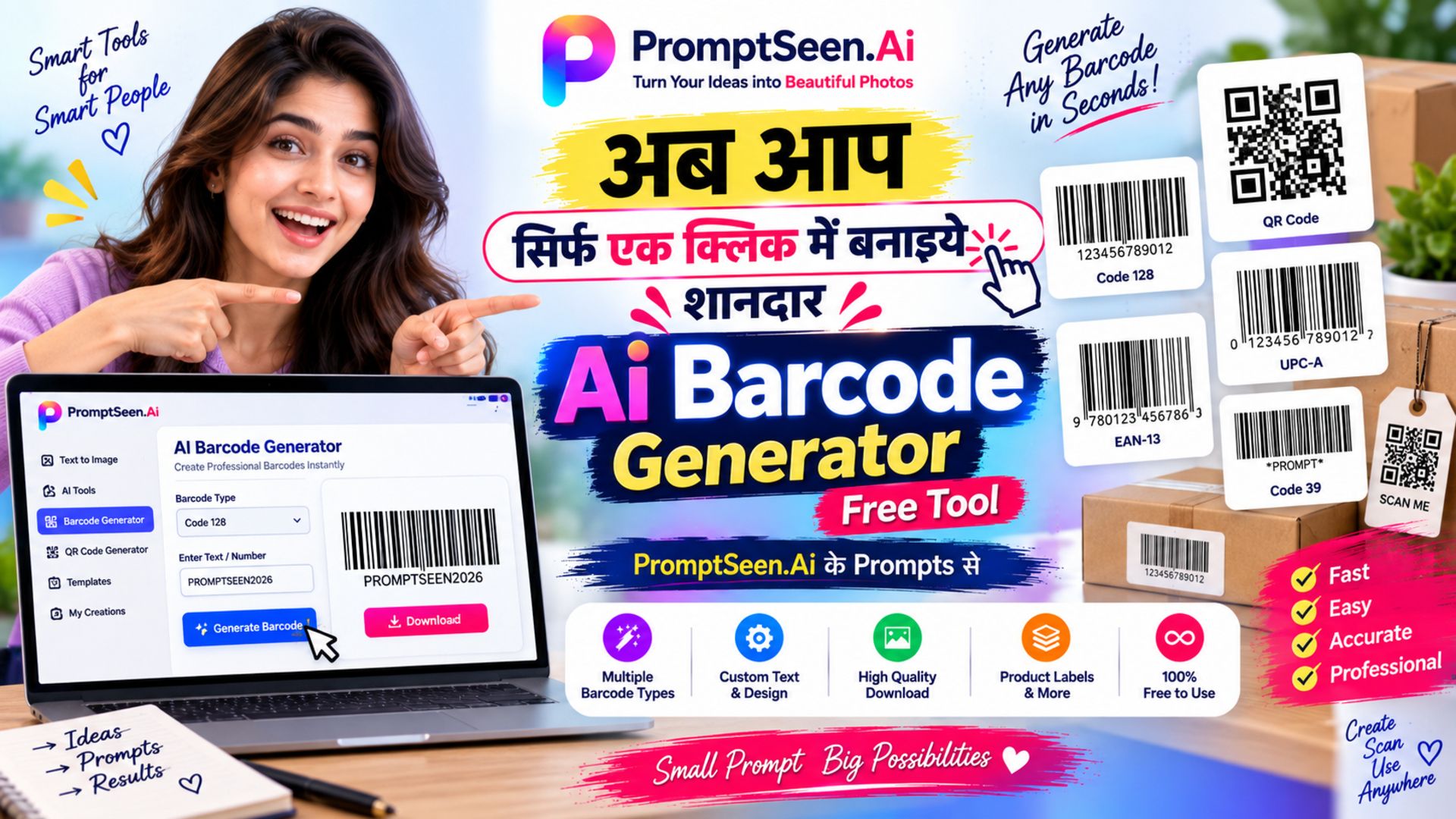
Managing inventory, organizing retail products, and running a successful supply chain all require one universal element: scannable product identification. If you are handling hundreds of items, generating labels one by one is an exhausting waste of time. That is exactly where a barcode generator bulk free tool becomes an absolute necessity.
Whether you are a warehouse manager looking to create a barcode 128 for shipping cartons, or a small retail shop owner wanting to print a barcode sticker for new inventory, creating these codes in batches will save you hours of manual labor. Let us dive deep into how you can utilize a barcode multi generator to streamline your business operations instantly.
⚙ Live Barcode Generator Tool
1. AI Barcode Generator Bulk Free
Imagine having to create individual product codes for a new shipment of items. Doing this manually is not just boring; it leaves massive room for human error. A barcode generator bulk free tool is specifically designed to eliminate this friction. By simply pasting a list of your SKUs (Stock Keeping Units) or serial numbers, the system processes the data and outputs hundreds of scannable images simultaneously.
These tools are incredibly efficient because they operate entirely online. You do not need to download heavy enterprise software or pay expensive monthly subscriptions to generate basic tracking codes. You can effortlessly barcode making tasks into a five-minute job.
2. Create Multiple Barcodes in Bulk
Using a barcode multi generator is remarkably straightforward. Most modern platforms allow you to input your data in a few different ways:
- ✅ Manual Paste: Copy a column of numbers from Excel or Google Sheets and paste it directly into the generator box.
Once the barcode is generated, you can preview it and download the barcode image in PNG or SVG format, ready for printing or digital use.
3. Barcode 128 Generator
When it comes to versatility, the Code 128 symbology is the undisputed king. A barcode 128 generator allows you to encode all 128 characters of the ASCII character set. This means you are not limited to just numbers; you can include uppercase letters, lowercase letters, and punctuation marks.
Because of its high-density data compression, barcode 128 is widely used in shipping, logistics, and supply chain management. It takes up very little physical space on a label but can hold a vast amount of tracking information, making it the preferred choice for complex serial numbers and tracking IDs.
4. Generate Barcode 128 in Bulk
If you are fulfilling online orders or managing warehouse bins, you will frequently need to generate barcode 128 in bulk. By utilizing a free barcode 128 generator, you can instantly turn your daily shipping manifests into scannable routing labels.
Simply select "Code 128" from the tool's format dropdown, paste your unique tracking numbers, and hit generate. The resulting batch will be universally readable by almost every commercial barcode reader available on the market today.
5. Barcode for Products
Generating a barcode for products is a mandatory step if you plan to sell items in retail stores or on major e-commerce platforms like Amazon. These codes act as the digital fingerprint for your physical goods. They help retailers manage stock, speed up the checkout process, and track sales performance accurately.
Furthermore, customized labels can include critical consumer information, such as the barcode expiry date for food and pharmaceutical products, ensuring safety and compliance in the retail sector.
6. Barcode PNG & Image Download
Quality matters when it comes to scanning. A blurry or pixelated label will frustrate cashiers and bring your inventory system to a halt. This is why downloading your generated files as a high-resolution barcode png is highly recommended.
PNG formats support lossless compression, meaning the crisp, hard edges of the black bars and white spaces are preserved perfectly. Whether you are generating a standard 1D linear code or using a barcode qr code generator, always save your final output as a PNG or SVG to guarantee 100% scan success rates.
7. Barcode Label & Sticker
Once you have your PNG files downloaded, the next logical step is physical application. A barcode label or a barcode sticker is the physical medium that connects your digital database to your real-world product.
Depending on your industry, you might need a simple paper barcode tag for clothing apparel, or a durable, waterproof vinyl sticker for items stored outdoors or in freezers. The clarity of your generated barcode image ensures that no matter what material you print on, the scanner will read it flawlessly.
8. Different Barcode Types
Not all barcodes are created equal. Different industries rely on specific symbologies based on the type of data they need to encode. A robust barcode create platform will offer multiple formats:
- 📦 Code 128: The universal standard for alphanumeric data. High density and highly reliable.
- 📦 Code 39: An older, simpler alphanumeric format. You will often need a barcode 39 generator for internal inventory and automotive parts.
- 📦 Code 93: A more compact and secure version of Code 39.
- 📱 PDF417: A stacked linear 2D barcode used heavily in transportation, identification cards, and inventory management.
- 📱 2D Barcode & QR Code: A barcode qr code generator creates matrix codes capable of holding massive amounts of data, including full URLs, contact cards, and detailed product descriptions.
9. Barcode Reader & Scanner
Generating the code is only half the battle; reading it is where the magic happens. A barcode reader translates the optical image of the black and white bars into digital text that your computer can understand. Businesses utilize various forms of hardware depending on their needs:
- 🖥 Barcode Handheld Scanner: The classic "gun-style" scanner seen in retail stores. Fast, reliable, and ergonomically designed for repetitive use.
- 📡 Barcode Wireless Scanner: Essential for warehouse workers who need mobility to scan pallets without being tethered to a desk.
- ⚙ Barcode Scanner Machine: Fixed-mount scanners used in self-checkout lanes and automated conveyor belts.
If you are looking to purchase hardware, the barcode reader price can range from very cheap USB plug-and-play models to expensive ruggedized warehouse computers.
10. How to Read a Barcode
If you are wondering barcode how to read without expensive equipment, the answer is already in your pocket. Modern smartphones act as incredibly efficient scanners. By using a mobile app or your native phone camera (especially for QR codes), the software acts as a barcode finder, automatically detecting the edges of the code, translating the contrast between the bars, and outputting the numeric value onto your screen.
11. Barcode Printing
To move your generated codes into the physical world, you need a dedicated barcode printing machine. While standard laser printers can print on sticker sheets, thermal printers (like Zebra or Dymo) are the industry standard for generating individual labels on demand.
These thermal printers do not use ink; instead, they use heat to activate chemically treated paper, resulting in incredibly sharp, smudge-proof lines. The barcode printer price varies, but investing in a dedicated thermal barcode machine will save businesses massive amounts of time and ink costs in the long run.
12. Barcode Usage
The barcode usage across different sectors is staggering. They are the invisible backbone of modern commerce:
- 🏥 Barcode Hospital: Used extensively to track patient wristbands, medication dosages, and medical equipment to prevent life-threatening errors.
- 🛒 Retail & Supermarkets: For instant checkout, inventory tracking, and managing the barcode expiry date of perishable foods.
- 📄 Government & Contracts: Often required when fulfilling a barcode tender or government supply contract.
- 🏢 Barcode India: The adoption of GS1 standards and digital tracking has revolutionized retail and logistics across India.
13. What Is a Barcode?
If you are completely new to this and wondering barcode kya hota hai (what is a barcode)? Simply put, it is a visual representation of data. By using a specific pattern of parallel black lines and white spaces, a barcode machine can optically "read" those lines and instantly convert them into a string of numbers or letters. This simple technology eliminates manual data entry, dropping the human error rate from 1 in 300 keystrokes to virtually zero.


